Most algae live in water. Their structure is very simple; each visible individual lacks the distinction of roots, stems, and leaves—it is a thallus. Algae vary greatly in size. For example, diatoms living in the ocean are very small; they are phytoplankton, while kelp is a large group of seaweeds, these brown algae can grow up to 4 meters long, and Sargassum fusiforme can grow to tens of meters long. Algae also have different shapes: some are simple lines (straight or branched), while others are flat or spherical with uneven edges.
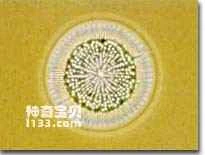
Diatoms
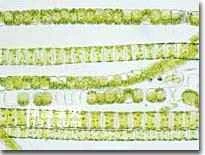
Scenedesmus
Based on pigment color, algae can be divided into three categories: green algae, brown algae, and red algae. Green algae (such as sea lettuce and Spirogyra) contain only green pigment—chlorophyll; brown algae (such as plants of the genus Fucus) contain only brown and yellow pigments; and red algae contain red and blue pigments. Algae obtain energy from pigments, and their growth also requires water and light. Brown algae can only grow in seawater, while green and red algae can also grow in freshwater. Some algae manage to live out of water, such as Chlorella, which lives on tree bark or damp old walls.
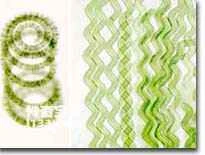
Spirulina
Algae reproduce in a variety of complex ways. A typical example is *Fucus vesiculosus*, a brown alga that grows on rocks. *Fucus vesiculosus* can be male or female, or both simultaneously. At certain times, the edges of its thallus swell, enclosing the reproductive organs used to produce reproductive cells (or gametes). These reproductive cells are released into the water, where fertilization occurs—the male and female gametes fuse to form a single cell—a zygote—which then grows into a new plant.
Chinese scholars generally classify algae into 11 phyla: cyanobacteria, red algae, cryptophytes, dinoflagellates, golden algae, yellow algae, diatoms, brown algae, euglenoids, green algae, and charophytes.