Invertebrates are a relatively primitive group of animals, corresponding to vertebrates, and their most distinctive feature is the absence of a vertebral column. Invertebrates are incredibly diverse and numerous. In terms of habitat, they can be found in oceans, rivers, lakes, swamps, and on land. In terms of lifestyle, some are free-living, some are parasitic, and some are symbiotic. Regarding reproduction, some species reproduce asexually, some sexually, some both asexually and sexually, and a few even engage in parthenogenesis or larval reproduction. Following the evolutionary order of invertebrates, they include protozoa, spongiformes, coelenterates, flatworms, nematodes, annelids, mollusks, arthropods, and echinoderms.
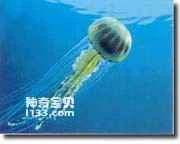
jellyfish

Cladosporids
Sea sprites, jellyfish, and corals are primitive animals. They originated 700 million years ago and have a very simple body structure, unlike any other invertebrate.
freshwater hydra
Despite their unusual shape, sponges are a type of animal. They are composed of many undifferentiated cells and have one or more sacs with openings or holes. Cnidarians, including jellyfish, corals, hydroids, and sea cucumbers, all have sponge-like sacs with a single opening that serves as both mouth and anus. Their bodies are externally covered with tentacles that secrete venom containing needle-like stingers—miniature harpoons—which allow them to paralyze and capture prey. Cnidarians have two life forms: jellyfish move by swimming, while corals, hydroids, and sea cucumbers attach themselves to supports such as rocks.

starfish
Sponges are truly remarkable animals. They do not move. They do not react when touched. They can live in both warm and cold oceans, attaching themselves to the seabed or underwater rocks. A continuous stream of water enters the sponge's body through small pores, circulates within, and exits through a larger pore—the exhalation pore. This water provides the sponge with food (plant and animal debris) and oxygen for respiration. Sponges possess a skeleton composed of independent parts, various shapes of spicules, a vestigial nervous system, and reproductive cells. They reproduce through both fission and fertilization. The fertilized egg develops into a swimming larva, which is carried out of the sponge's central pore by the water flow, then anchors in one place and grows into a new sponge. Based on the nature of their skeleton, sponges can be divided into two categories: those with a calcareous skeleton and those with a siliceous skeleton. Some sponges lack rigid materials in their composition—bathing sponges are an example of this type.

Copepods
Jellyfish are composed of colloidal substances, which are mostly transparent. They come in a variety of shapes and sizes. Some species are as wide as an armchair, shaped like an umbrella, with tentacles extending from the edges. Although jellyfish often drift with ocean currents, they can also move forward by contracting their bodies. Most jellyfish live in shallow waters, where they find their food: small crustaceans and small fish. Some species of jellyfish secrete venomous substances that can cause intense pain and sometimes even be fatal. Jellyfish are either male or female. Female jellyfish lay their eggs in the water, while male jellyfish release sperm onto the eggs in the water. The fertilized eggs develop into larvae, or planktonic larvae. These drift with the current, eventually attaching to the seabed and becoming coral polyps. These polyps grow and divide, producing several jellyfish.
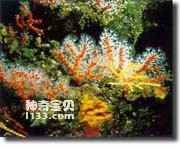
coral
Corals are primarily composed of a calcareous (calcareous) skeleton, which protects the living parts of the coral polyps. Due to their appearance and immobility, they were once mistaken for plants. Most coral polyps live in clusters. Some species, such as stony corals, even gradually accumulate their skeletons to form enormous structures—the coral reefs we know today. The survival of coral reefs is closely related to microalgae. They live in warm, clear, shallow waters, especially at depths of about 50 meters in the Pacific or Indian Oceans. Other groups, such as brightly colored sea fans, have skeletons formed from keratin-like substances, which are not as rigid as calcareous skeletons. Red corals are similar to sea fans. Corals reproduce in different ways. Some species produce buds that separate from the parent and develop into new coral polyps; others reproduce by fertilized eggs, which develop into swimming larvae and then undergo metamorphosis to become coral polyps.