Around 260 million years ago, some mammals returned to the ocean, likely descendants of carnivores and ungulates. Some scientists believe the prehistoric ancestors of marine mammals were otters, while others think it was bears. Regardless of their ancestry, these mammals largely adapted to marine life: their bodies gradually lengthened, their feet became webbed, and then shortened into flippers. However, they retained basic mammalian characteristics: fur and mammary glands, and a constant body temperature. Marine mammals are mainly divided into two categories: pinnipeds (seals, walruses, and sea lions) and cetaceans (whales and dolphins).

Baiji dolphin
Pinnipeds are descendants of carnivores, feeding on fish and sometimes cuttlefish, squid, and octopus. They are not as strong swimmers as cetaceans and do not give birth in water. Some pinnipeds care for their young for a very short time, leaving after three weeks to allow them to learn to swim and hunt independently. Pinnipeds have blade-like flippers supported by long phalanges. They live in groups. Seals comprise 19 species, including the Greenland seal, which primarily inhabits the harsh climates of the Arctic and Antarctic. The elephant seal is a giant seal, reaching 6.5 meters in length and weighing up to 3 tons. Male seals gather many females together as their harem. Walruses are large pinnipeds, closely related to sea lions, and have two incisors that grow into tusks. Sea lions are faster on land using all fours and have different external ears than seals. Sea lions are abundant in the Southern Hemisphere, but extremely rare in the North Pacific Ocean. During the breeding season, sea lions gather in large groups. Pinnipeds are found in almost every ocean, but due to extensive hunting by humans for their skin and blubber, some species are endangered; for example, the monk seal in the Mediterranean Sea is almost completely extinct.
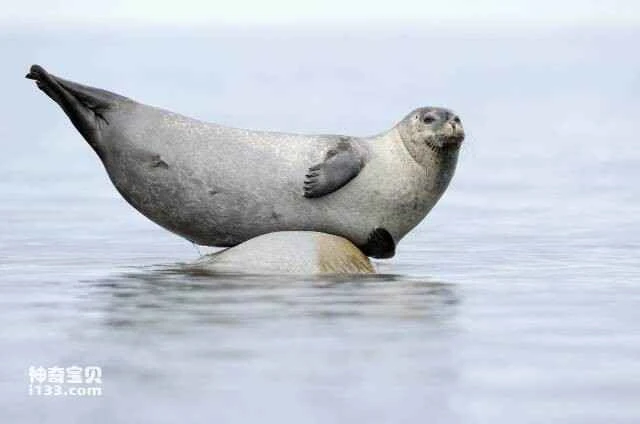
seal
The Baiji, belonging to the order Cetacea and the superfamily Dolichophyton, is a rare aquatic mammal endemic to China, found only in the middle and lower reaches of the Yangtze River. With an evolutionary history of over 20 million years, it is often referred to as a "living fossil." As early as the Han Dynasty, more than two thousand years ago, the Chinese people had already provided fairly accurate descriptions of the Baiji's morphology and behavior. Throughout history, the Baiji has been imbued with various mysterious and legendary qualities by the people along the Yangtze River, becoming a goddess of the Yangtze in their hearts.

whale
Cetaceans are a branch of prehistoric ungulates who later returned to the ocean and are now unable to live on land. They mate, reproduce, and care for their calves all take place in the water. The largest cetacean is the blue whale, an adult reaching 35 meters in length and weighing 150 tons. All cetaceans have a cone-shaped body, a horizontal tail fin, completely degenerated hind legs, and forelegs that have evolved into flippers. Their blowholes are located on the top of their heads, and they expel waste gases through openings called blowholes. Cetaceans can dive to depths of hundreds of meters and hold their breath for up to an hour. Some cetaceans can emit ultrasonic waves for communication and to detect prey. Cetaceans can be divided into two main groups: baleen whales and toothed whales. The suborder Baleen whales includes humpback whales and warm whales. They lack teeth but possess baleen plates, or keratinous jaws, used to filter seawater and select fish and shrimp. The suborder Toothed whales includes the family Delphinidae (including orcas), hook-mouthed whales, and sperm whales. They all possess dozens of identical conical teeth used for hunting squid and other fish. They are found in all oceans, with some species living in freshwater. The family Delphinidae comprises over 40 species, preferring to live in groups and communicating through language, which scientists are working to decipher. Dolphins are social animals and will help injured or sick companions. Sperm whales can dive to depths of 1000 meters to catch large squid; the digestive residue accumulates in their stomachs, forming ambergris, widely used in the perfume industry.