The IUCN classifies species into eight categories based on their endangered status: Extinct, Extinct in the Wild, Critically Endangered, Endangered, Vulnerable, and Least Concern. The giant panda, a national treasure familiar to many, has been downgraded from Endangered to Vulnerable thanks to years of conservation efforts. So, what other rare and endangered animals are currently facing extinction? Today, I'll present a list of endangered rare and endangered animals in China, including the South China tiger, Chinese crested tern, Hainan black-crested gibbon, Chinese sturgeon, pangolin, green peafowl, and white-headed langur. Let's take a look.
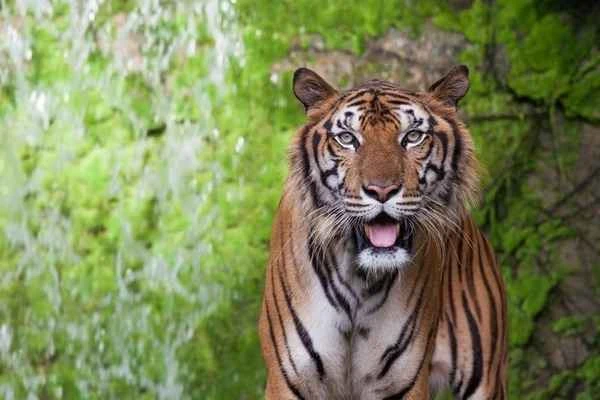
1. South China Tiger
Among China's top ten endangered rare animals, the South China tiger is one of the most endangered species, listed as a Class I protected animal in China and critically endangered on the IUCN Red List. In 1989, the "Wildlife Protection Law of the People's Republic of China" listed the South China tiger as a Class I protected animal, while the "Convention on International Trade in Endangered Species of Wild Fauna and Flora" issued by the United Nations in 1996 designated it as the number one endangered species, ranking first among the world's ten most endangered species. The South China tiger once widely inhabited the mountains and forests of southern China; however, due to hunting and environmental destruction by humans, the wild South China tiger is now on the verge of extinction.
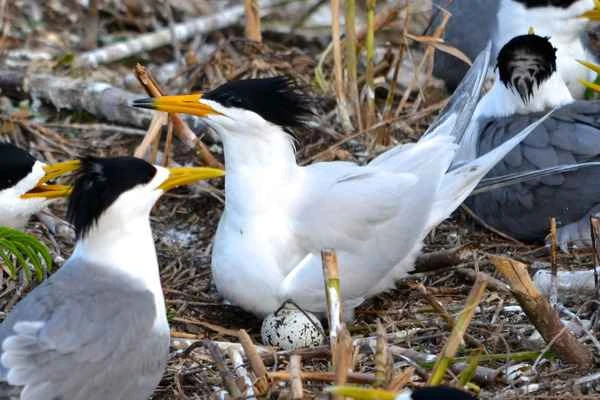
2. Chinese Crested Tern
The Chinese Crested Tern is one of China's endangered species, considered one of the rarest birds in the country. It is listed on the IUCN Red List as Critically Endangered, the highest level of danger, meaning it is facing extinction. According to Wedand International's Global Waterbird Population Assessment, the global population of the Chinese Crested Tern is estimated to be less than 50 individuals. First recorded in 1861, the species remained extremely rare and was widely believed to be extinct until 2000. However, in 2000, four adults and four juveniles were rediscovered in the Matsu Islands off the coast of Fujian Province, becoming a major news event in the ornithological community that year.
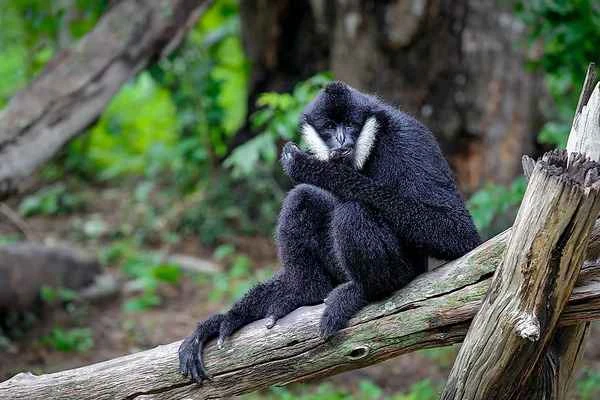
3. Hainan Black Crested Gibbon
Many endangered animal species in China do not receive the same widespread attention as pandas, but their endangered status is equally alarming. In 1999, the Chinese Primate Specialist Group drafted the "Action Plan for Primate Conservation in China," listing the Hainan black-crested gibbon as one of China's most endangered primates. In 2002, the Hainan black-crested gibbon ranked fifth among the 25 most critically endangered primate species globally. When determining the conservation status of primates in China, the Hainan black-crested gibbon was listed first. By 2020, the Hainan gibbon population had recovered from a historical low of fewer than 10 individuals in the 1970s to over 30, a new high in nearly 40 years.
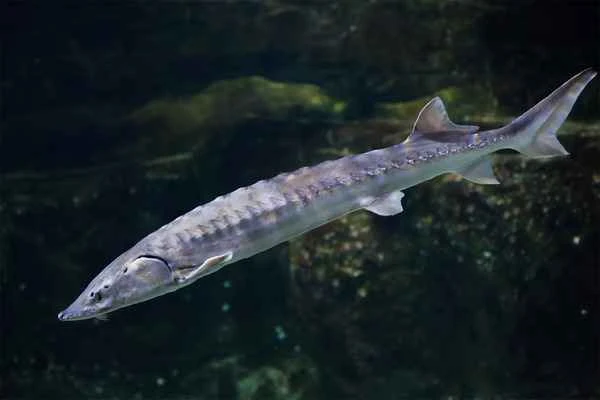
4. Chinese Sturgeon
The following text has been modified for original content: (Among China's endangered animals, the Chinese sturgeon is known as the "giant panda of the water." It has a long lifespan, reaching up to 40 years, and is distributed in China, Japan, South Korea, Laos, and North Korea. It is mainly distributed along the Yangtze River from the Jinsha River downstream to its estuary, and occasionally appears in other river systems such as the Gan River, Xiang River, Min River, Qiantang River, and Pearl River. In 2008, the estimated breeding population was less than 200 individuals, and the wild population was critically endangered. In 2013, no signs of natural spawning by wild Chinese sturgeon were observed, marking the first time in nearly 32 years that no natural spawning had been detected, indicating that the wild Chinese sturgeon population faces the danger of extinction.)
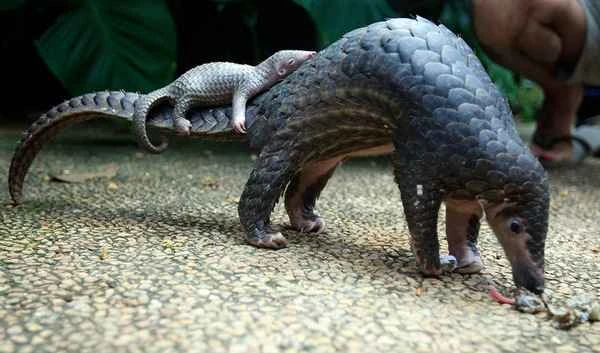
5. Pangolin
When I was a child, pangolins were not rare animals, but now they face the fate of extinction in China. According to the IUCN Red List of Threatened Species, pangolins are listed as critically endangered. These animals have low reproductive rates, typically producing only one litter per year, with only one offspring per litter, and the reproductive lifespan of a female is estimated to be a maximum of 15 years. Currently in China, illegally hunting, smuggling, or selling pangolins can be punished with imprisonment of more than five years, and in serious cases, even life imprisonment. In 2020, pangolins were upgraded from a Class II protected wild animal to a Class I protected wild animal in China, and they are no longer included in the Chinese Pharmacopoeia, but the situation has not improved.
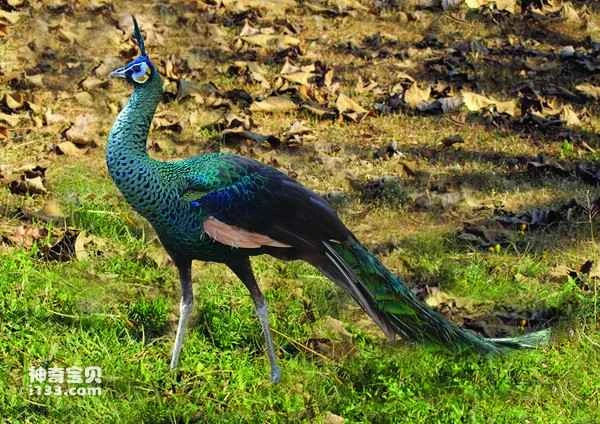
6. Green Peacock
The green peafowl is the largest species in the peafowl family, found only in western, central, and southern Yunnan Province in China. According to 1995 data, the population of green peafowl in Yunnan Province was approximately 800 to 1100 individuals. However, by 2014, it had become extremely rare to know the distribution range of the green peafowl. Without immediate conservation measures, wild green peafowl in Yunnan are likely to become extinct within the next decade. Furthermore, on May 22, 2017, "International Day for Biological Diversity," the Yunnan Provincial Environmental Protection Department's Environmental Protection Publicity and Education Center issued a statement listing the green peafowl as a critically endangered species.
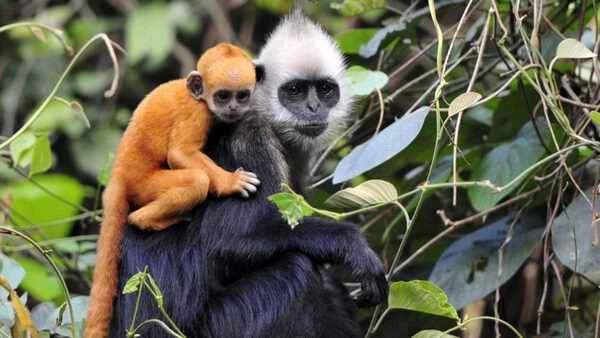
7. White-headed langur
The white-headed langur is considered one of China's ten rarest animals. They typically live in groups of five to nine, led by an adult male. These animals are diurnal, foraging from dawn onwards, primarily feeding on leaves, buds, flowers, bark, and some fruit. The average lifespan of a white-headed langur is about 25 years. With a narrow distribution range and a small population (currently only a few hundred individuals remain), they are one of the world's 25 most endangered primates and widely considered one of the rarest monkey species. In the *China Red Data Book of Endangered Animals* (Mammals), the white-headed langur is listed as an endangered species, and it is also classified as critically endangered in the *IUCN Red List of Threatened Species*.
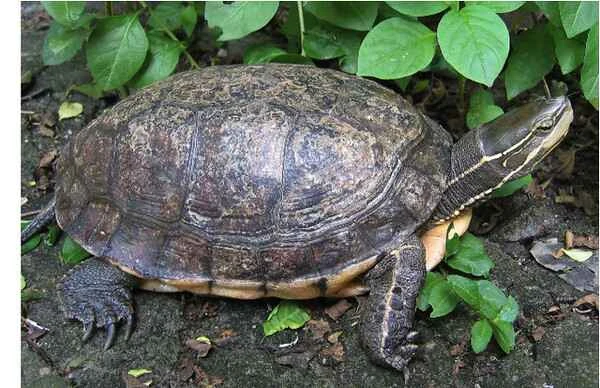
8. Yunnan Box Turtle
First discovered in 1906, the Yunnan box turtle was not seen again until 1946, and then disappeared for more than 50 years, leading the International Union for Conservation of Nature (IUCN) to classify it as extinct. In 2010, a group of scientists accidentally discovered a small wild population of the Yunnan box turtle during a field survey. However, due to the fragmented and ineffective nature of species protection efforts in China, this significant discovery did not receive the attention it deserved from relevant departments, resulting in the Yunnan box turtle's disappearance once again. Excessive deforestation, changes in the natural ecosystem, and overhunting by humans have severely threatened the survival and reproduction of the Yunnan box turtle, making its wild population extremely scarce.
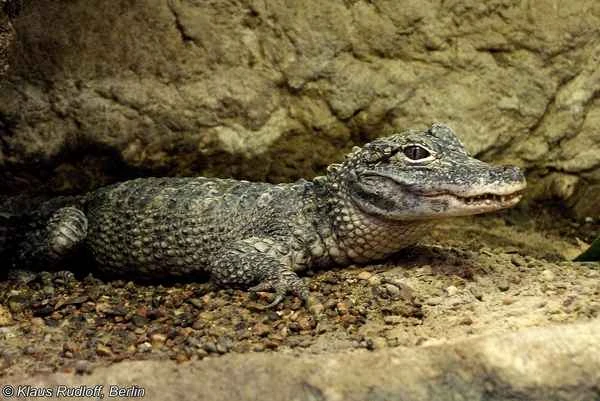
9. Yangtze alligator
A species of crocodile endemic to China, the Yangtze alligator is considered one of the smallest crocodile species in the world. This ancient crocodile is extremely rare, making it one of the world's most endangered reptiles. Because it primarily inhabits the Yangtze River basin, it is known as the "Yangtze alligator." The Yangtze alligator retains many characteristics of early dinosaur-like reptiles, thus earning it the title of "living fossil." The Chinese government has listed the Yangtze alligator as a Class I protected animal and strictly prohibits its hunting. It is estimated that only 130 to 150 wild Yangtze alligators remain, and their numbers are declining at a rate of 4% to 6% annually.
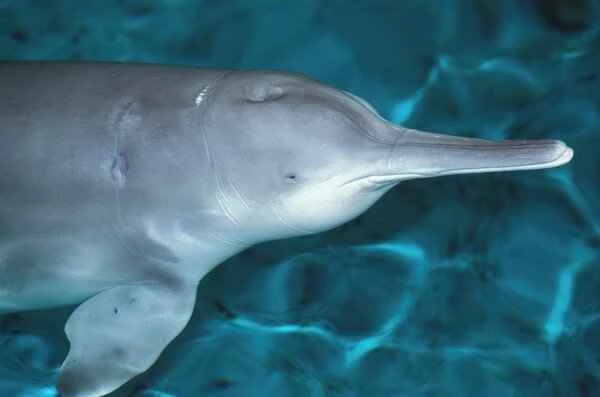
10. Baiji Dolphin
The Baiji dolphin is a small freshwater cetacean endemic to China, forming its own family. It is an ancient, surviving species, with fossil records indicating its origins dating back to the late Miocene epoch, 5.3 million years ago. This species already existed in the Yangtze River basin. Since the late 20th century, severely threatened by human activities, the Baiji dolphin population has declined dramatically. In 1988, it was listed as one of China's key protected wild animals. Despite this, their population continues to die, making them the first cetacean species to go extinct due to human activity. It was declared functionally extinct in 2006, but the updated IUCN Red List of Threatened Species on November 14, 2018, did not confirm its extinction, maintaining its original "critically endangered" rating.