The rhinoceros beetle, also known as the stag beetle, is a type of insect belonging to the family Scarabaeidae, possessing a unique appearance and lifestyle. Below is a detailed introduction to the rhinoceros beetle and its lifestyle:
1. Physical characteristics:
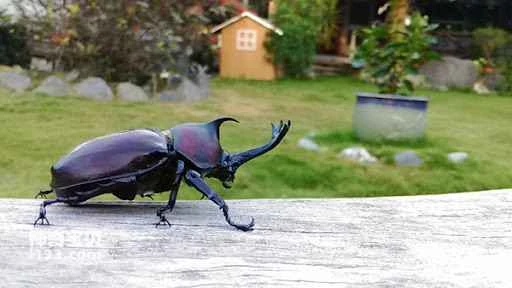
Size : Rhinoceros beetles are usually large, about 3-12 centimeters long, and some species can even have horns that are longer than their bodies.
Appearance : Rhinoceros beetles have a hard exoskeleton, usually black or brown, with obvious longitudinal grooves and protrusions on their bodies, giving them a skeletal appearance.
Horns : The rhinoceros beetle is known for its long horns on its head. Male individuals have curved horns, used for fighting and intimidating enemies. Female individuals generally have short horns that stand upright.
2. Living habits:
Diet : Rhinoceros beetles are saprophagous insects, feeding mainly on decaying plant matter, feces and other organic matter, playing an important role as decomposers.
Reproduction : Rhinoceros beetles lay their eggs in piles of decaying plants. After hatching, the larvae feed on decaying plant matter and pupate into adults after the larval stage.
Ecological role : Rhinoceros beetles are important decomposers, promoting the decomposition and recycling of organic matter and playing a vital role in the health and balance of ecosystems.
Habitat : Rhinoceros beetles are widely distributed around the world and are commonly found in environments rich in decaying organic matter, such as under trees, in grasslands, and in compost heaps.
3. Cultural significance:
Symbolic meaning : In some cultures, the rhinoceros beetle is seen as a symbol of good fortune and luck, representing qualities of strength, protection, and perseverance.
Artistic Representation : As an insect with a unique appearance and lifestyle, the rhinoceros beetle frequently appears in works of art, legends, and literature.
Rhinoceros beetles have garnered significant attention due to their unique appearance, lifestyle, and important ecological functions. As vital decomposers in nature, they play an indispensable role in ecosystems. Hopefully, this introduction has helped you better understand this fascinating insect. If you have any further questions or require more information, please feel free to contact me.