The barn owl ( Tyto alba ) , often called lechuza común in Spanish, is also known as the "bell tower owl" (because it is frequently found in bell towers, barns, and other similar buildings). Its most distinctive features are its heart-shaped face , completely black eyes , and almost silent flight . Not only is it "mysterious and beautiful," but it is also ecologically very important: the barn owl is a natural rodent controller , greatly benefiting farmland and rural environments.
Barn owls have a very wide distribution, found almost everywhere in the world except Antarctica . They are highly adaptable to human environments, so they can be seen near farms, barns, old churches, abandoned buildings, and rural houses .
Below, we've organized the information that users search for and care about most in a more readable structure.
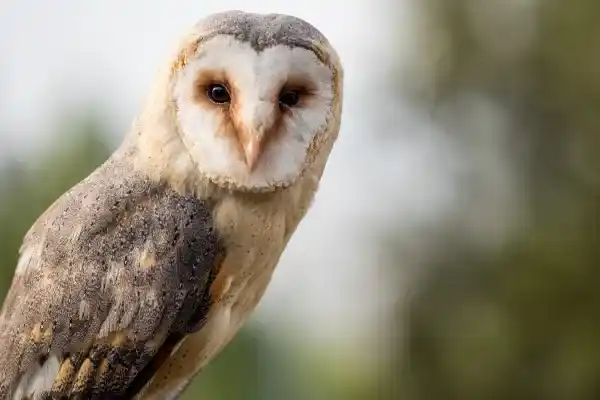
1) What kind of bird is a barn owl? Classification and basic introduction.
Barn owls belong to the order Strigiformes, but they are not "typical owls of the family Strigidae" but belong to the family Tytonidae . Therefore, they are significantly different in appearance and call from the "owl" that many people are familiar with.
Taxonomy
Kingdom: Animalia
Phylum: Chordata
Class: Aves
Order: Strigiformes
Family: Tytonidae
Genus: Tyto
Species: Barn Owl (Tyto alba)
2) What does a barn owl look like? Body size and physical characteristics.
Many people ask: How big is a barn owl?
Body size data (common range)
Body length : Approximately 33–40 cm
Wingspan : Approximately 80–95 cm
Weight : Approximately 300–550 g ( females are usually larger and heavier )
The most easily recognizable physical features
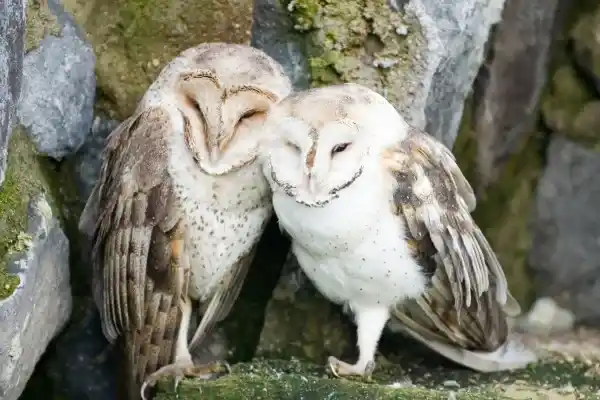
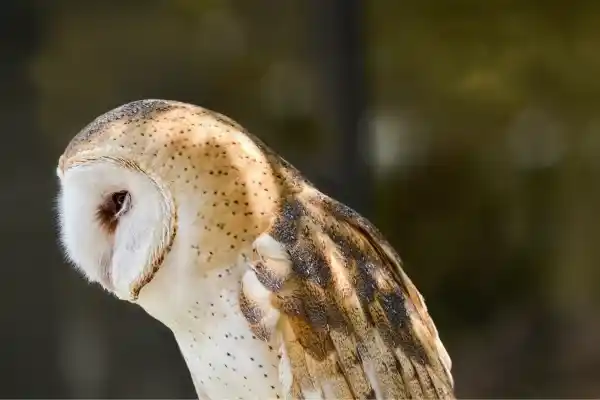
Heart-shaped face (white/off-white "mask"-like face)
The eyes are almost completely black (which is more advantageous in low-light environments).
The back is mostly mottled with golden brown and gray , while the abdomen is whitish or light-colored.
Long legs , suitable for catching small prey
Its flight is extremely quiet : the special structure on the edges of its feathers reduces airflow noise → This allows it to stealthily approach its prey at night, increasing its hit rate.
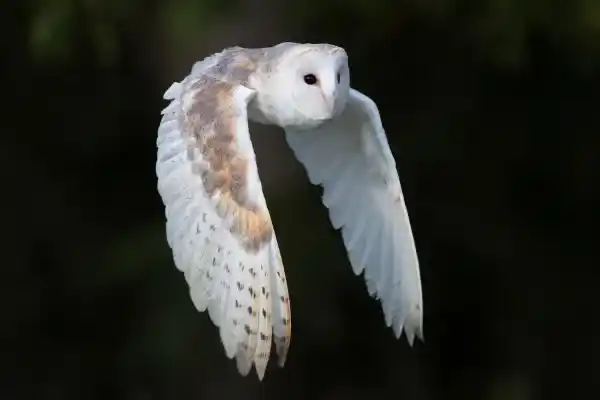
3) Where do barn owls live? Habitat and common locations.
Barn owls are very adaptable to their environment, but they generally have two core needs:
Open space (facilitating hunting)
Safe caves/building crevices (for hiding and breeding)
Common habitats and activity areas
open areas such as farmland, grassland, and plains
Forest edges and sparse woodlands
Agricultural planting areas and pastures
Barns, sheds, attics, clock towers, abandoned buildings
Tree holes, earthen slope caves, natural rock caves, etc.
4) What do barn owls eat? Why are they considered "expert rodent hunters"?
Barn owls are carnivorous birds of prey, and their diet consists mainly of small mammals (especially rodents).
Main food
Various types of small mice, including field mice and house mice.
Small mammals such as shrews and moles
Small rodents (small rats)
Occasionally: small birds, large insects
Small quantities: lizards, etc. (depending on the region)
What are "food balls" (the "owl balls" that are spat out)?
Barn owls often swallow small prey whole, and regurgitate indigestible bones, hair, etc., forming pellets (also called "vomit pellets/stridial pellets") .
Researchers often analyze which animals a preys on in a particular area by examining its diet pellets, which can also indirectly provide insights into the local small animal communities.
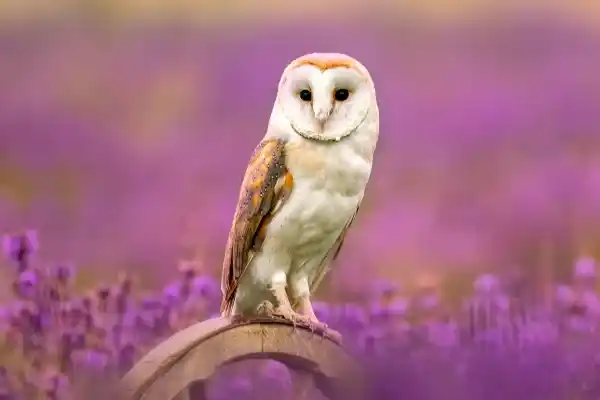
5) Barn Owl Behavior: Nocturnal, quiet, but protective of their young.
Typical behavior
Primarily nocturnal , but may also be active at dusk/dawn.
More territorial during the breeding season
Extremely quiet flight and stealthy operation
Many individuals will use the same hunting grounds and habitats for many years.
Call <br/>The barn owl's call is not the familiar "whoo-whoo-", but rather a sharp screech/howl , which sounds somewhat "eerie". This is one of the reasons why it is often misunderstood in folk tales.
6) How do barn owls reproduce? Breeding season, egg count, and chick rearing.
Breeding season varies by region, but in many areas it is more common from spring to summer (around March to July).
Breeding Process (Overview)
Nest selection : The male bird will take the female bird to see several locations, and the female bird will ultimately choose one.
Pairing relationships : Commonly, they are "paired for breeding" during the season, but some may repeat pairing for many years.
Number of eggs laid : Generally 4–7 white eggs
Incubation period : approximately 29–34 days (primarily incubated by the female).
Chick development : Chicks are blind and covered in white down when they hatch; they begin to be able to fly around 8–10 weeks old .
An interesting phenomenon : in years when rodents are very abundant, some areas may experience two litters in the same breeding season .
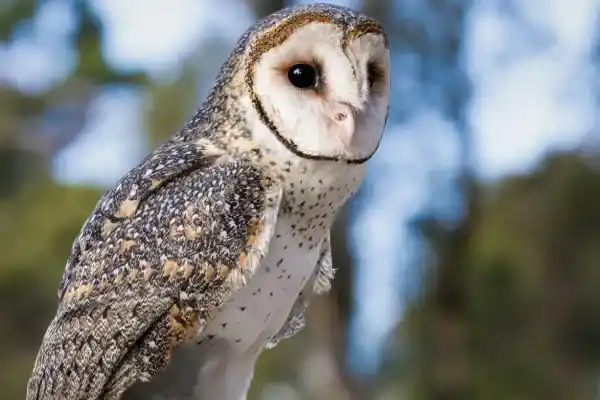
7) What does a barn owl's nest look like? Why does it "rarely build nests"?
Barn owls typically do not build complex nests , relying more on "ready-made safe spaces".
Common nest sites
Tree holes, rock crevices, and caves on earthen slopes
Clock tower, attic, barn
Rural building mezzanine
Artificially set nest boxes (commonly used in conservation programs)
The nest usually contains only some compacted residue and food pellets, but as long as the burrow is safe, dry and hidden, it is enough for successful breeding.
8) Is the barn owl endangered? Threats and conservation methods
On a global scale, barn owls are still relatively common and are generally assessed as Least Concern (LC) .
However, in some countries or regions (especially where agricultural practices have changed significantly), their numbers have indeed shown a downward trend .
Main threats
Rodenticide/Pesticide
Less prey
Barn owls may suffer secondary poisoning from eating "poisonous" rodents.
Traditional farmland and grassland habitats are decreasing
Road collision (feeding animals at low altitudes are easily hit by vehicles).
Nesting sites decreased
Old building renovations close off entrance
The felling of old trees has reduced the number of tree cavities.
Competition exists with other nocturnal birds of prey in some areas.
Common protective measures
Nest boxes were set up in rural areas and farmland.
Promote more eco-friendly agricultural management and reduce dependence on poison bait.
Science Popularization: Barn Owls are harmless to humans and beneficial to farmland.
Proper rodent control (to avoid secondary poisoning of birds of prey)
9) Barn Owl Trivia (Interesting Points Readers Love)
The head and neck can rotate approximately 270° (not 360°).
With exceptional hearing, it can locate its prey in low light or even near darkness.
It is one of the most widely distributed nocturnal birds of prey (except in Antarctica).
Although often misunderstood by superstition, it is very beneficial to the ecology.
Many individuals can remember and reuse hunting routes and hunting grounds for a long time.
References
BirdLife International. 2025. Barn Owl (Tyto alba). IUCN Red List of Threatened Species 2025: e.T22688504A280909370. Website: https://www.iucnredlist.org/species/22688504/280909370
Little Common Owl (Lechuza). Birdwatching guide for Spain. Website: https://www.birdwatchinginspain.com/index.php/es/component/content/article/35-ficha/3381-lechuza-comun-
Barn Owl (Tyto alba). Cim d'Aligues. Website: https://cimdaligues.com/es/tyto-alba/
Barn Owl (Tyto alba). Owl Research Institute. Available at: https://www.owlresearchinstitute.org/copy-of-barn-owl
Barn Owl (Tyto alba). Royal Society for the Protection of Birds (RSPB). Available at: https://www.rspb.org.uk/birds-and-wildlife/barn-owl