World Monkey Day is observed annually on December 14th.
This day was established to raise awareness of monkeys and other primates, reminding us that they face multiple threats, including habitat destruction, illegal hunting and trade, and being kept as pets or performing objects.
If you want to figure out when World Monkey Day is, why we celebrate it, and what we can do , you can use this article as a concise and practical guide.
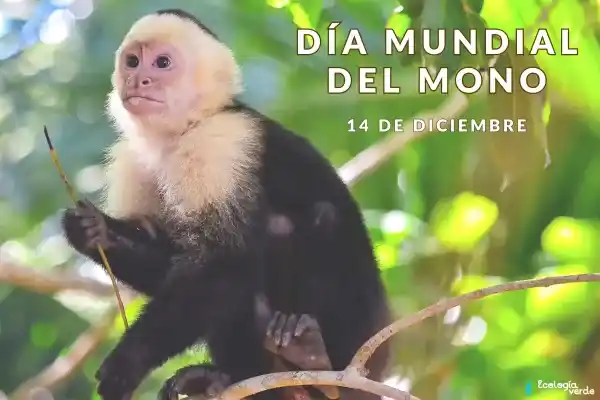
What day is World Monkey Day?
World Monkey Day is celebrated on December 14th every year.
The main objectives of this day include:
Raise public awareness of the abuse suffered by monkeys and other primates, especially:
Keeped as a pet
Used for performance, photography, and entertainment
We urge everyone to pay attention to:
Habitat loss and fragmentation
poaching and illegal trade
Wild populations are declining rapidly.
Monkeys belong to the order Primates and have the following typical characteristics:
High intelligence
Complex social structure
Highly evolved behavior and communication styles
There are currently about 260 species of monkeys worldwide, mainly distributed in:
Africa
Asia
America
Mainly tropical and subtropical regions.
However, a significant portion of them are already in crisis:
Many species are listed as threatened or endangered.
It is estimated that at least 25 species of monkeys are in critical condition, primarily due to the following reasons:
Habitat loss caused by deforestation, farmland expansion, etc.
Habitat fragmentation
Human hunting and illegal trade
Some of the most threatened primates include:
Blue-eyed black lemur ( Eulemur flavifrons )
Eastern lowland gorilla ( Gorilla beringei graueri )
Spider monkey ( Ateles spp.)
Capuchin monkey ( Sapachus spp.)
Dollman's Diana monkey ( Cercopithecus diana dollmani )
Lundo dwarf shrew ( Galagoides rondoensis )
World Monkey Day serves as a reminder that not only "celebrity" species, but also many lesser-known monkeys urgently need protection.
The origin of World Monkey Day: Why celebrate it?
Unlike many environmental commemorative days that are officially established by the United Nations or international organizations, World Monkey Day did not originate from an official institution, but rather from a "spontaneous" grassroots movement.
The story dates back to 2003 :
A group of art students at Michigan State University casually wrote "Monkey Day" on their calendars, which was originally just a joke among friends.Unexpectedly, this joke quickly became a regular activity on campus:
Artistic Creation
Theme parties and costumes
The exhibition and performances both revolve around "monkeys".
As time goes by:
World Monkey Day has spread from campus culture to a wider social circle ;
Artists, animal rights activists, and environmental organizations began to take the initiative to "take over" this day;
The focus of the activities gradually shifted from simply having fun to:
Focus on the survival crisis of primates
Call for habitat protection
Oppose captivity, abuse, and illicit trade
Today, World Monkey Day is regarded as an important public awareness platform for:
Exposing the problems facing primates
Emphasizing their crucial role in the ecosystem
Promote more practical conservation actions (such as the establishment of protected areas, anti-poaching, and standardized tourism).
How can we participate in World Monkey Day?
World Monkey Day is not just about "sharing a cute monkey photo"; it's an opportunity to encourage everyone to take action and support primate conservation .
1. Learn and share reliable information
Cognition is the first step in protection.
you can:
Learn about different kinds of monkeys:
Their distribution, habits, social structure, and the threats they face;Share science content through the following channels:
Social media (WeChat Moments, Weibo, WeChat Official Accounts, etc.)
School or community bulletin board
Personal blog or classroom presentation
The things that can be done include:
Share or create your own simple and easy-to-understand science articles/short videos
Clarifying common misconceptions (e.g.: Are monkeys suitable as pets? — Actually, they are not suitable at all).
The focus is on endangered species and the importance of protecting them.
2. Support primate conservation organizations
Many organizations around the world are working to protect monkeys and their habitats, such as:
A rescue and rehabilitation center for monkeys and other primates illegally kept in captivity.
Organizations that establish and maintain nature reserves in tropical rainforest areas
NGOs focused on combating poaching and illegal trade
Foundations that fund scientific research and local community conservation projects
You can support us in the following ways:
Small or regular donations
Participate in volunteer activities (in person or online)
Help these organizations forward promotional materials, sign joint letters, or issue initiatives.
Even small acts of support, when accumulated, can have a real impact.
3. We do not support using wild animals as "pets" or "props".
For ordinary people, one of the most direct and powerful actions is to refuse to participate in or condone hidden harm to primates .
Consciously do the following:
Do not buy or keep any wild primates as pets;
Not going:
Tourist attractions or businesses offering "photo opportunities with monkeys"
A place where monkeys perform "street shows" and "acrobatic shows" is a popular tourist destination;
Try not to share or like videos that treat monkeys as toys or funny props—this kind of content often stimulates demand and, in turn, encourages illegal capture and breeding.
As more and more people refuse to pay for these practices, market demand decreases, and illegal trade will naturally be cracked down on.
4. Promote environmental education
Environmental education is a key long-term means of changing social attitudes and behaviors.
you can:
Between school, community, company, or relatives and friends:
Organize or participate in lectures or sharing sessions on the theme of "monkeys and primates".
Art activities such as painting, crafts, and photography are offered, with monkeys and rainforests as the theme.
Different approaches should be used for different age groups:
For children: stories, picture books, role-playing, crafts, etc.
For teenagers: documentary screenings, seminars, speech contests, etc.
For adults: science lectures, public welfare salons, book clubs, etc.
Through these activities, more people will realize:
Monkeys are not toys or pets, but an important part of the ecosystem;
Protecting them means protecting the forests, the climate, and the future of humanity itself.
Summary: The significance of World Monkey Day
World Monkey Day, celebrated annually on December 14th , is both a lighthearted and fun "monkey-themed day" and a reminder to us:
Understanding primates
Concern about the threats they face
An opportunity to take action to support conservation efforts
Whether it's forwarding a serious science post, donating a small amount of money, or refusing a seemingly "fun" animal performance, it all adds a glimmer of hope for monkeys and their habitat.
Celebrating "World Monkey Day" in this way is a way of expressing our feelings through action:
We are willing to share a safer and more friendly Earth with these intelligent and sensitive forest neighbors.