The Bulwer's Pheasant (scientific name: *Lophura bulweri*) is a beautiful and mysterious bird. Its unique appearance and habitat have made it a focus of attention for bird enthusiasts and naturalists. This bird holds a special place in the wild with its magnificent plumage and distinctive behavioral habits. The Bulwer's Pheasant is not only a jewel of the tropical rainforest, but also receives protection and research due to its rarity and habitat changes.
Scientific classification
Kingdom: Animalia
Phylum: Chordata
Class: Aves
Order: Galliformes
Family: Phasianidae
Genus: Lophura
Species: Lophura bulweri
Scientific name: (Lophura bulweri)
Foreign name: (Bulwer's Pheasant)
Other names: Bulwer Pheasant, Bulwer's Winged Pheasant, Winged Pheasant, or White-tailed Winged Pheasant
The scaly-backed pheasant belongs to the pheasant family and is widely distributed in the tropical forests of Southeast Asia. Compared with other pheasant species, it has a more magnificent appearance and plumage, and its unique temperament makes it a favorite among bird enthusiasts and ecologists.
1. History of Species
The scaly-backed pheasant was first described by scientists in the 19th century, discovered and named by British zoologist Robert Bulwer. Bulwer encountered this remarkable bird while exploring Southeast Asia, marveling at the beauty of its plumage and its distinctive physical characteristics. The scaly-backed pheasant gets its name from its well-developed and distinctive tail feathers and back feathers, which have been the subject of extensive scientific research.
In the 20th century, the Scaled Pheasant gradually attracted the attention of ornithologists, especially in the study of its habitat, behavior, and breeding habits. With the continuous development of its habitat, the Scaled Pheasant population has gradually declined, therefore, more and more research has been dedicated to its conservation.
2. Morphological characteristics
Appearance
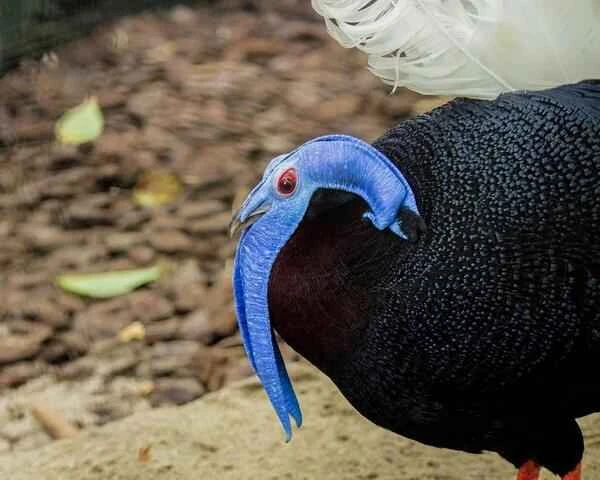
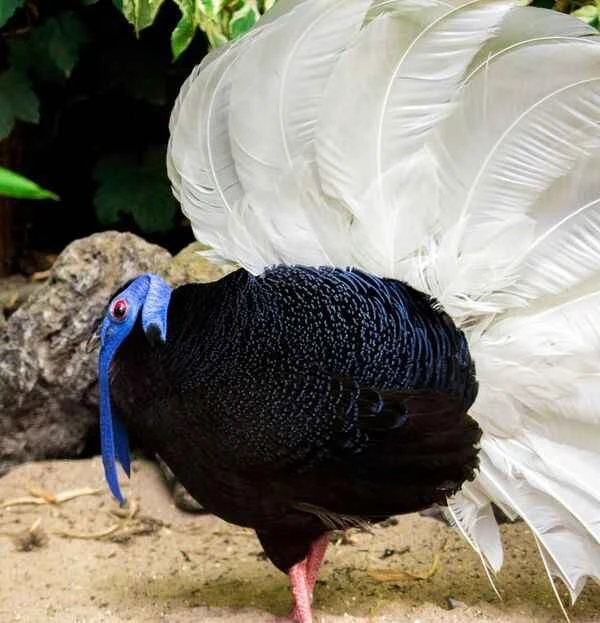
The Scaled Pheasant is a medium-sized bird, with males being more striking than females. The male's plumage is brightly colored, with distinctive scale-like patterns on its back and tail feathers, hence its name. Its long, curved tail feathers display beautiful color and structure, especially during the mating season when the male displays its tail feathers to attract females. Females, on the other hand, are relatively more understated, with simpler plumage, primarily grey, brown, and tan, to better blend into the forest environment.
Size and weight
The Scaled Pheasant is of medium size, with males reaching up to 70 cm in length, their tail feathers making up the majority of their length. Males weigh approximately 800 grams to 1 kilogram, while females are slightly smaller, typically about 50 cm in length and weighing around 600 grams. The differences in size between males and females are quite noticeable, especially in the length and shape of their tail feathers.
life
The lifespan of the scaly pheasant is generally 10 to 15 years. In the wild, its lifespan is affected by various factors, including predators, habitat conditions, and food resources. Due to habitat destruction and changes, the lifespan of some scaly pheasants has been shortened. In captivity, if the environment is suitable, their lifespan can sometimes reach around 20 years.
3. Habitat
The scaly pheasant primarily inhabits the tropical rainforests and humid forests of Southeast Asia, especially the low-altitude mountainous regions of Malaysia, Indonesia, and the Philippines. They prefer dense forests and are typically active on the ground, but can also dart swiftly among the trees. The scaly pheasant has high habitat requirements, particularly a humid environment and abundant food resources.
Because of their high environmental requirements, the scaly pheasant is greatly affected by problems such as deforestation and habitat loss. Habitat destruction is one of the main reasons for the decline in the scaly pheasant population.
4. Lifestyle Habits
feeding habits
The scaly-backed pheasant is an omnivorous bird, primarily feeding on fruits, seeds, insects, and small invertebrates. They typically forage on the ground, using their beaks to peck at food. The scaly-backed pheasant also eats fruits and seeds in trees and bushes, and occasionally consumes small insects and beetles.
In their tropical rainforest habitat, the scaly pheasant uses its highly acute sense of smell and vision to find food. They often forage in groups, but can also hunt alone.
Behavior
The scaly pheasant is a relatively shy bird, especially when faced with humans, and usually hides or flies away quickly. However, during the breeding season, male scaly pheasants exhibit very conspicuous behaviors, such as displaying their tail feathers, singing, and competing with other males to attract females.
The Scaled Pheasant is particularly active during the breeding season, with the male displaying a series of dances with its tail feathers spread to attract females. During this display, the male also emits a distinctive call that can travel long distances and attract nearby females.
5. Distribution range
The distribution of the Scaled Pheasant is mainly limited to Southeast Asia, especially parts of Malaysia, Indonesia, and the Philippines. They typically inhabit low-altitude tropical rainforests, usually at altitudes not exceeding 1000 meters. The Scaled Pheasant prefers humid and warm environments, thus its distribution is closely related to these ecological conditions.
Due to habitat loss and destruction, the distribution range of the Scaled Pheasant has gradually shrunk. Now, the Scaled Pheasant's habitat is mainly concentrated in some protected areas and national parks, while in other areas, their numbers have decreased significantly.
6. Reproduction methods
Courtship behavior
During the breeding season, male scaly pheasants attract females through a series of unique courtship behaviors. The males raise their tail feathers and display and dance on branches. In this way, they demonstrate to the females their healthy genes and strong courtship abilities. During this process, the males also emit complex calls, which often include imitations of the calls of other animals.
Reproduction
The breeding season for the Scaled Pheasant typically begins at the start of the rainy season, with males attracting females through various means. After mating, the female will build a nest on the ground or in bushes, laying 2 to 4 eggs. The eggs incubate for about 3 weeks, and the chicks usually take about 6 to 8 weeks to become independent.

7. Species Classification
The genus *Lophura* currently includes several species and subspecies, the most famous of which is *Lophura bulweri*, the scaly pheasant we are discussing today. The following is a classification of species within the family Lophuraidae:
| Species name | Distribution area | Feature Description |
|---|---|---|
| Scaly Pheasant (Lophura bulweri) | Malaysia, Indonesia and the Philippines | The feathers on the back have a scale-like texture, and the male's tail feathers are long and curved. |
| White-necked Pheasant (Lophura nycthemera) | India, Nepal, Bangladesh | The tail feathers are short and the colors are rather plain. |
| Lophura hamiltoni | Southwest China | The feet are orange, and the tail feathers are relatively long. |
8. Protection Level
Due to habitat destruction, illegal hunting, and deterioration of its living environment, the Scaled Pheasant is listed as a "Near Threatened" species by the International Union for Conservation of Nature (IUCN). In some areas, the Scaled Pheasant faces serious threats to its survival due to inadequate habitat protection measures. To protect this rare bird, many countries and regions have implemented conservation measures, including protecting the Scaled Pheasant's habitat within nature reserves.
By learning about the Scaled Pheasant, we can not only appreciate the beauty and mystery of this bird, but also recognize the importance of ecological conservation. It is hoped that through the joint efforts of people around the world, the Scaled Pheasant will continue to soar freely through the forests in the years to come.