The desert tree frog ( Breviceps macrops ) is a fascinating amphibian that inhabits the arid regions of southern Africa. With its unique appearance, distinctive calls, and adaptability to harsh environments, the desert tree frog has attracted widespread attention from researchers and nature enthusiasts. This article will provide a comprehensive overview of the desert tree frog , exploring its habitat, physical characteristics, behavioral habits, and conservation status.
What is the desert rain frog?
Scientific classification
The scientific classification of the desert rain frog is as follows:
Kingdom : Animalia
Phylum : Chordata
Class : Amphibia
Order : Anura
Family : Brevicipitidae
Genus : Breviceps
Species : Desert Tree Frog ( Breviceps macrops )
Significant features
Body structure :
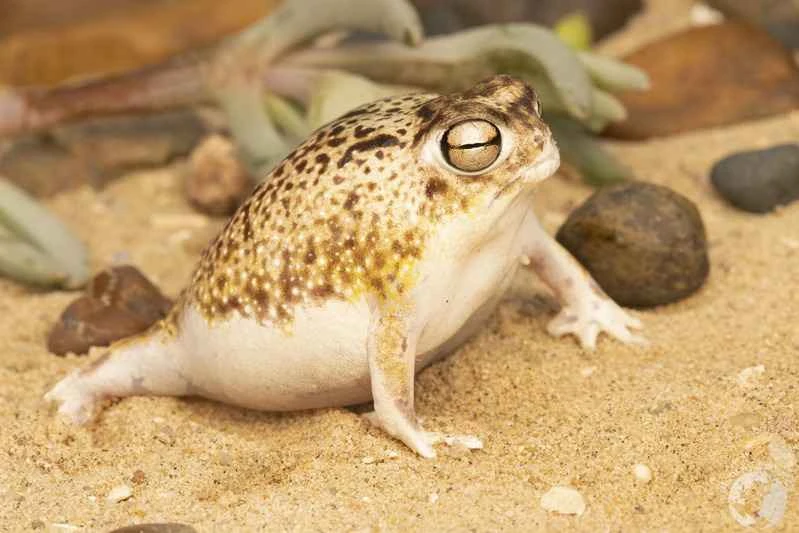
The desert rain frog has a round body, short limbs, and a flat face.
Big eyes :
The desert rain frog is known for its prominent, large, round eyes, which help with night vision.
Size :
It is about 4-6 centimeters long, small but full of power.
Special calls
The desert rain frog is known for its high-pitched, sharp call, which is described as a squeaking sound similar to a toy and is often used for mating or territorial disputes.
Habitat and distribution of the desert rain frog
Geographical distribution
The desert tree frog is endemic to the coastal deserts of Namibia and South Africa, with a limited distribution, found only in sandy areas of these countries.
Ideal habitat
Coastal sand dunes :
Desert rain frogs live in sandy coastal dunes and avoid extreme temperatures by digging burrows.
Vegetation area :
They also appear in areas with sparse vegetation cover, which provides additional cover.
Proximity to water source :
Despite its name, the desert rain frog does not rely on rainwater, but obtains moisture from fog and dew.
Environmental challenges
Desert rain frogs live in one of the driest environments on Earth, and they face the following challenges:
Extreme temperature difference.
Water resources are scarce.
High risk of predation on sandy ground.
Behavioral habits and adaptability of the desert rain frog
Living in a cave
Desert rain frogs spend most of their time underground:
Cave depth :
They typically dig burrows 10 centimeters deep to escape the high temperatures of the day.
Nighttime activities :
Desert rain frogs are nocturnal animals, active only at night to reduce water loss and predation threats.
Moisture preservation
To survive in arid environments, the desert rain frog has developed a unique water-retention capacity:
Water absorption :
It absorbs moisture from fog and dew through the skin.
Thick skin :
The skin can effectively reduce moisture evaporation, which is an important characteristic of adaptation to desert environments.
Diet and Predation
Desert tree frogs are insectivorous animals, and their main diet includes:
Ant :
Ants are the main food source for the desert rain frog.
Small insects :
It also preys on beetles, termites, and other small invertebrates.
Defense mechanism
Body swelling :
When threatened, the desert tree frog inflates its body to appear larger, thus scaring away predators.
High-pitched cry :
Its screams can surprise potential predators.
Reproduction and life cycle of the desert tree frog
Mating behavior
Breeding season :
Reproduction typically occurs under humid conditions, often influenced by coastal fog.
Courtship calls :
Male frogs attract females with their loud calls, while also displaying their territory and health status.
Egg laying method
Unlike many amphibians, the desert rain frog does not depend on water for egg-laying:
Buried eggs :
The female frog lays her eggs in damp sand.
Direct development :
The eggs hatch directly into tadpoles, bypassing the tadpole stage, which is an important evolutionary adaptation to arid environments.
Frog growth
The desert rain frog did not exhibit obvious parental care behavior, but the sand burrows provided sufficient protection for the eggs.
The role of the desert tree frog in the ecosystem
Predator-prey relationship
The desert tree frog is both predator and prey:
As a predator :
They help control pest populations by preying on insects.
As prey :
They are an important food source for birds, snakes, and small mammals.
Soil improvers
By digging burrows, the desert rain frog promotes soil aeration, contributing to the health of its habitat.
Ecological health indicator species
Because of its extreme sensitivity to environmental changes, the desert rain frog is considered an important indicator species of ecosystem health.
Conservation status of the desert rain frog
Current protection status
The desert tree frog is listed as a "near threatened" species by the International Union for Conservation of Nature (IUCN), mainly due to its limited distribution range and threatened habitat.
Main threats
Habitat loss :
The development of coastal areas and the exploitation of sandy land seriously threaten their living environment.
Climate change :
Rising temperatures and changes in rainfall patterns further jeopardize their survival.
Human interference :
Increased human activity has disrupted its normal burrowing and nocturnal behavior.
Protective measures
Habitat protection :
Efforts are currently underway to protect the coastal sand dune ecosystem.
Research projects :
Research on the desert rain frog aims to gain a deeper understanding of its ecological habits and the threats it faces.
Public awareness :
Raising public awareness of the uniqueness and importance of the desert rain frog will help in its conservation.
Fun facts about desert tree frogs
Unique call :
The desert rain frog has become an internet sensation due to its screaming sound and is known as "one of the cutest amphibians".
Misunderstandings about the name :
Despite having "rain" in its name, the desert rain frog primarily survives on fog rather than rainfall.
Endemic species :
It is one of the few amphibians that are fully adapted to the desert environment.
Frequently Asked Questions about Desert Rain Frogs
1. Why is it called the desert rain frog?
The name reflects its ability to adapt to desert environments and its dependence on moisture for survival.
2. Where do desert rain frogs live?
The desert rain frog lives in the coastal desert regions of Namibia and South Africa.
3. Do desert rain frogs need water?
It does not require standing water; instead, it absorbs moisture from dew and mist through the skin.
4. Why do desert rain frogs scream?
Screams are used for courtship or to scare away predators.
5. Is the desert rain frog endangered?
The desert rain frog is currently listed as a "near-threatened" species, but ongoing threats to its habitat may exacerbate its risk.
Conclusion: The Wonderful World of the Desert Tree Frog
The desert tree frog is an amazing amphibian that has survived in some of the harshest environments on Earth through its unique behaviors, calls, and ecological adaptations. Protecting the desert tree frog not only helps the species survive but also maintains the balance of its ecosystem. By raising awareness and supporting conservation efforts, we can create a better future for this lovely species, allowing its calls to continue to echo through the deserts of southern Africa.