Sea cucumbers, though they appear to be molluscs lying quietly on the seabed, actually possess some very unique defense mechanisms that enable them to survive in the highly competitive marine environment. Whether through spraying venom, self-repair, or "voluntarily" sacrificing body parts, sea cucumbers demonstrate remarkable adaptability.
This article will take you deep into the five unique defense mechanisms of sea cucumbers, exploring how these amazing creatures cope with various threats in the ocean.
Sea Cucumber Introduction
Sea cucumbers are mollusc-like marine organisms belonging to the class Holothuroidea and the phylum Echinodermata. They typically live on the seabed, obtaining nutrients by ingesting sediment. Although sea cucumbers often appear inconspicuous, they play a vital role in marine ecosystems. They help clean the seabed, decompose organic matter, and thus promote nutrient cycling.
However, the life of sea cucumbers is not all "peaceful". In the ocean, an environment full of natural enemies, sea cucumbers must rely on unique defense mechanisms to protect themselves and ensure their survival.
Five unique defense mechanisms of sea cucumbers
Sea cucumbers possess a wide variety of defense mechanisms, each with its own unique biological principles and survival significance. Next, we will detail five of the sea cucumber's unique defense mechanisms to see how they cleverly cope with the threats from marine predators.
1. Voluntary removal of internal organs (autoresection)
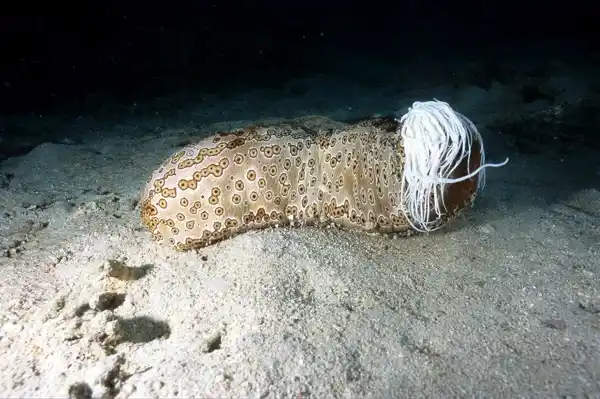
The most well-known defense mechanism is "voluntary evisceration" (also known as visceral ejection). When sea cucumbers feel threatened, they can eject their internal organs (including the digestive system) from their bodies using an amazing ability. This behavior is called "autoresection".
Sea cucumbers use this behavior to confuse and escape predators, such as starfish or certain fish. The ejected internal organs often contain toxins, which not only interfere with the predator's attack but also effectively make the predator uncomfortable for a period of time, giving the sea cucumber a chance to escape. Most remarkably, sea cucumbers can regenerate new internal organs within days or weeks, almost unharmed.
Although this mechanism seems extreme, it is one of the important means for sea cucumbers to survive.
2. Secrete toxins to protect itself
Another powerful defense mechanism of sea cucumbers is their ability to secrete toxic substances. Some sea cucumber species can release toxic liquids or other chemicals to scare away predators. Their toxins are usually secreted through specialized glands that store a certain amount of venom or mucus, which is only released when threatened.
For example, Cuvierian tubules, a special toxic secretion, can be rapidly released when sea cucumbers are threatened. They stretch out like fine threads, quickly and viscously binding the predator, making it feel unable to escape or poisoned, thus losing its interest in attacking the sea cucumber.
This defense mechanism not only effectively protects sea cucumbers from predators but also helps them avoid overfishing, thus maintaining population stability.
3. Regenerative ability: Lost limbs can regrow.
Sea cucumbers' regenerative ability is one of their most unique biological characteristics. When sea cucumbers are preyed upon or injured, they can rapidly regenerate lost parts of their bodies. For example, when their tentacles or a vital organ are attacked, sea cucumbers can regrow them through biological mechanisms.
This regeneration process, while time-consuming, ensures that sea cucumbers recover and survive after an attack. This ability makes sea cucumbers more resilient than many other organisms, enabling them to survive and reproduce in the dangerous marine environment.
4. Camouflage: blending seamlessly into the seabed.
Sea cucumbers' camouflage ability is also one of their important defense mechanisms. Sea cucumbers can blend well into their surroundings, especially in terms of their appearance and texture. Their bodies usually have a similar color and shape to the seabed or rocks, which allows them to effectively hide themselves in sandy, muddy, or coral reef areas.
This camouflage strategy allows them to avoid detection by predators, especially those with keen eyesight such as fish and seabirds. Through this passive defense strategy, sea cucumbers successfully reduce the risk of being attacked.
5. Self-protection: secreting mucus
Sea cucumbers not only protect themselves by spraying venom or removing their internal organs, but they also defend themselves by secreting large amounts of mucus. This mucus makes it more difficult for predators to catch them and can even prevent some predators from digesting them properly.
In addition, the mucus secreted on the surface of sea cucumbers helps reduce their friction, allowing them to slide quickly on sand and rocks and escape predators.
Sea cucumbers' natural enemies: Who threatens them?
Despite their robust defense mechanisms, sea cucumbers still face numerous threats. Their main natural enemies include the following:
1. Starfish
Starfish are one of the main predators of sea cucumbers. Starfish use their powerful grips and highly acidic gastric juices to "tear" sea cucumbers apart and suck out their internal organs. Although sea cucumbers are capable of escaping by self-mutilation, this behavior is not always successful, so they are still threatened by creatures such as starfish.
2. Fish
Some large fish also feed on sea cucumbers, especially bottom-dwelling fish. Although sea cucumbers move slowly, fish often attack very quickly, so they have to rely on defense mechanisms such as camouflage and toxin secretion.
3. Crab
Crabs are also a potential predator of sea cucumbers. They use their powerful pincers to grab sea cucumbers and tear them into small pieces. Crab attacks can be very sudden, making it difficult for sea cucumbers to detect them beforehand.
The role of sea cucumbers in the ecosystem
Although sea cucumbers are often food for other animals, they play an indispensable role in the ecosystem. By consuming organic waste and humus on the seabed, sea cucumbers help clean up debris in the marine subsurface ecosystem and convert these substances into nutrients for other marine life.
In addition, sea cucumber excrement provides abundant nutrients for microorganisms on the ocean floor, promoting the reproduction and growth of marine life.
Current Status of Sea Cucumber Conservation
Despite their numerous defense mechanisms, sea cucumbers face severe survival pressures. Overfishing and illegal trade are among the main reasons for their declining populations. Sea cucumbers are not only consumed by humans in many regions but are also frequently used in traditional medicine, further contributing to their dwindling numbers.
To protect sea cucumbers, we need to strengthen conservation measures for their populations, including restricting fishing, establishing marine protected areas, and raising public awareness. Only in this way can sea cucumbers continue to play their vital role in the marine ecosystem.
Conclusion: Protect sea cucumbers, protect marine ecosystems.
Sea cucumbers possess unique defense mechanisms that are among the most adaptable in nature. They protect themselves from predators through self-excision, toxin secretion, regeneration, and camouflage, while playing a vital role in marine ecosystems. To protect these remarkable marine creatures, effective conservation measures are needed to ensure their continued survival and prosperity in future marine environments.
Hopefully, this article has given everyone a deeper understanding of sea cucumbers and will encourage greater attention to marine ecological protection, allowing these amazing marine creatures to continue to survive on our planet.