Among the mammals we are familiar with, rabbits are perhaps one of the most common pets, and hare meat has long been a part of the human diet. They, along with the adorable pika, belong to a special animal group— Lagomorpha . Many people often mistake them for rodents, but in fact, the two are fundamentally different. This article will provide a detailed introduction to typical examples of Lagomorpha, their morphological characteristics, their differences from rodents , and an analysis of their importance in the natural ecosystem.
What are lagomorphs? Main characteristics
Lagomorpha is a separate order within the class Mammalia, comprising three main types : hares, rabbits, and pikas . They are placental mammals , generally medium-sized, with long ears, short tails , and powerful hind legs.
Key characteristics of lagomorphs include:
Its body is covered with soft, long hair , which helps it adapt to different climates.
They are terrestrial animals with a wide distribution, commonly found in forests, grasslands, deserts, farmlands, and other environments.
It is a purely herbivorous animal , whose main food consists of grass, roots, fruits, bark, and bulbs.
They engage in fecal reabsorption (cecal coprophagia) to maximize nutrient absorption.
They have two pairs of upper incisors : a large, continuously growing pair in the front and a smaller pair in the back, which is one of the key differences from rodents.
It has a total of nine toes : five on the forelimbs and four on the hindlimbs, with well-developed tibiae in the hind legs, making it adept at jumping.
Typical representatives of lagomorpha (with Chinese scientific names)
There are currently about 78 species of lagomorphs worldwide, belonging to two families:
Ochotonidae : A family of small, round-bodied, short-legged animals.
Leporidae : Includes wild rabbits and domestic rabbits.
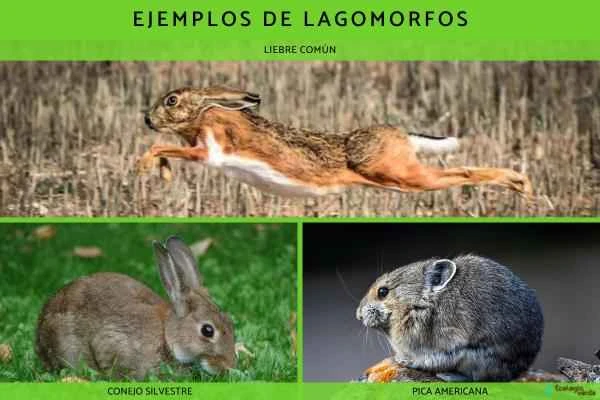
The following are some representative lagomorpha:
Iberian hare (scientific name: Lepus granatensis )
Active at night, they roost in open fields or farmland during the day, using their fur color for camouflage.
Living alone, quick to react, and leaping rapidly, it is a typical escape-type prey.
It is larger than a rabbit, with longer ears and hind legs.
The ancestor of the European wild rabbit (scientific name: *Oryctolagus cuniculus *)
They inhabit shrubs or soft soil and are adept at digging underground burrows to live in groups.
They are nocturnal, have a social hierarchy, and are male-dominated.
It is the original species of rabbit that has been widely domesticated in the world.
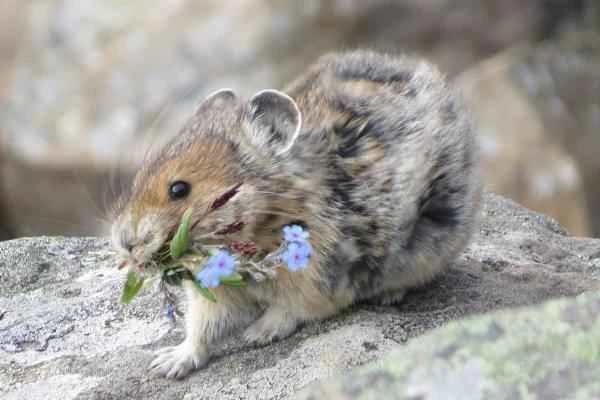
American pika (scientific name: Ochotona princeps )
It is one of the smallest lagomorphs.
Distributed in the high mountain regions of North America, commonly found in rock crevices or tundra, it prefers cold and humid environments.
They are diurnal and exhibit a monogamous behavior pattern.
Differences from Rodents: The distinction between Lagomorpha and Rodents
Although lagomorphs resemble rodents (such as squirrels, mice, and guinea pigs) in appearance, their physiological structure and evolutionary path are completely different.
| Feature comparison | Lagomorpha | rodents |
|---|---|---|
| Number of incisors | The two pairs above, the next pair below | A pair |
| Ear size | The ears are noticeably large (for heat dissipation). | Usually smaller |
| Upper lip structure | Obvious cleft lip (harelip) | Usually no obvious splitting |
| scrotum position | Located at the front of the penis | posterior of the penis |
| Hair on limbs and tail | Completely covers thick hair | Some species have bare limbs and tails. |
| Does it have a penile bone (báculo)? | none | have |
Therefore, based on tooth structure, the location of reproductive organs, and body hair coverage, it can be determined that Lagomorpha are not rodents.
Ecological and cultural value of lagomorphs
Rabbits, hares, and pikas play important roles in both the natural ecosystem and human society.
Core member of the food chain : a key prey for many predatory animals (such as foxes, eagles, and snakes).
Regulating plant populations : Influencing plant structure and diversity through foraging.
Dispersing plant seeds : Feces contain seeds, which helps plants spread.
Human food source : an important meat resource in many cultures around the world.
Cultural symbolism : In some cultures, it symbolizes reproduction and harvest, such as the Chinese traditional Year of the Rabbit, which signifies good fortune and blessings.
summary
Lagomorpha is a group of animals that we have close daily contact with, yet is easily misunderstood. By understanding their unique morphological characteristics, ecological roles, and differences from rodents, we can not only classify these mammals more scientifically, but also pay more attention to their place in the natural environment and cultural traditions.
References
Camps J. (2000). Iberian rabbit. Evolution and classification of Leporidae, and the Iberian-specific origin of wild and domestic rabbits. Accessible at: https://ddd.uab.cat/pub/jcamps/jcampsactpro/jcampsactpro_052.pdf
Camps J. (nd). From "alilepus" (Iberian rabbit) to "cuniculus" (cave rabbit). Available at: https://www.historiaveterinaria.org/update/origconi-1456742015.pdf
Soriguer RC, Palacios F. (1996). Iberian Lagomorpha: Hare and Rabbit. Accessible at: https://www.researchgate.net/publication/256068496_LOS_LAGOMORFOS_IBERICOS_LIEBRES_Y_CONEJOS
(nd). (nd). Understanding and protecting lagomorphs in Mexico. *Ecofronteras*, pp. 22-25. Accessed at: file:///C:/Users/user/Downloads/753-Texto%20del%20art%C3%ADculo-786-1-10-20131129.pdf