In the vast ocean, there is a unique type of fish that can "hitch a ride" with other large marine creatures to traverse the underwater world—this is the remora, also known as the ray (scientific name: *Remora remora *). They do not rely on their own swimming ability, but instead utilize a unique evolutionary structure to attach themselves to hosts such as sharks, whales, or sea turtles, achieving "free travel."
This article will take you on an in-depth journey into the morphological characteristics, habitats, dietary habits, and fascinating symbiotic relationship between remoras and sharks.

I. Morphological characteristics of suckerfish
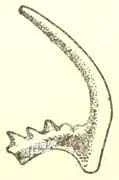
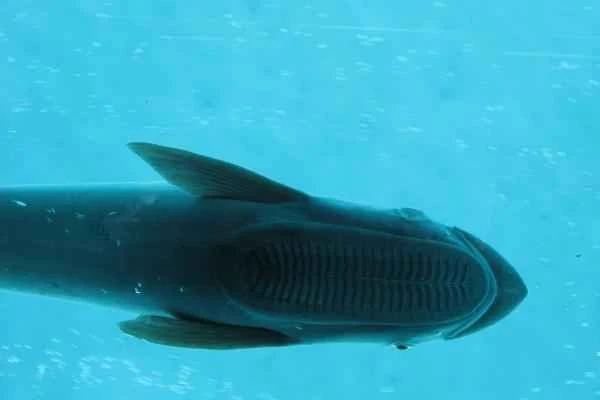
Remoras belong to the family Echeneidae and are a group of marine fish that live in warm waters. Their most distinctive feature is a special sucker-like organ on the top of their head, which actually evolved from their first dorsal fin.
The main characteristics of suckerfish include:
The suction cup has a well-developed structure : the suction cup is located on the top of the head, is oval in shape, and consists of 10 to 28 horizontally stacked plates, which can flexibly extend and retract, and firmly adhere to the surface of the host.
Lack of swim bladder : Unlike most fish, suckerfish do not have a swim bladder and cannot float on their own, so they must rely on other objects to move.
Slender and laterally flattened body : The body is long and thin, making it suitable for attaching to large hosts.
Its head is flat and broad , with brush-like teeth that aid in eating.
Body color is not fixed : color differences can occur even within the same species, and there is usually a distinct light-colored longitudinal stripe on the back.
Fish scales cover the entire body : They have typical hard scales that protect the body.
In addition, suckerfish are used in some cultures for "sea hunting": fishermen tie them with ropes and put them in the water so that they can attach to sea turtles, and then pull them back to the fishing boat to complete the hunt.
II. Habitat of the Repulsatile
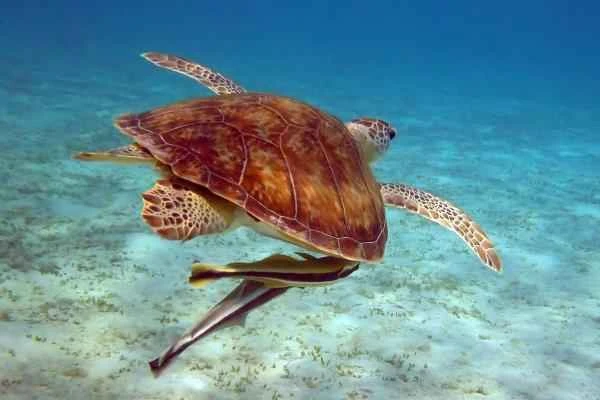
Remoras are widely distributed in tropical and subtropical waters , mainly concentrated in coastal areas of the Pacific and Atlantic Oceans and waters near coral reefs, typically at depths between 1 and 100 meters . They usually choose to live alongside large animals, such as:
shark
whale
sea turtle
Ray
Manatee (Dugong)
Human-made vessels (which can also attach to artificial objects)
Some suckerfish species even exhibit specific host dependence, choosing only certain species as their "vehicles".
III. Dietary Habits of Suckerfish
Remoras are omnivorous , with a wide and unique diet, primarily including:
Plankton (such as zooplankton and phytoplankton)
Small crustaceans (such as copepods and roepods)
Food scraps dropped by the host
corpses or organic debris
Parasites that live on a host (such as copepods found on sharks).
They possess the ability to filter their food : they open their mouths wide, allowing water to flow through their brush-like teeth, trapping plankton. Some individuals even exhibit mild cleaning behavior , removing skin parasites from their hosts.
IV. Reproduction Methods of Suckerfish
Suckerfish reproduce through external fertilization:
The male and female fish release sperm and eggs into the water, respectively.
After sperm and egg unite, a fertilized egg is formed , which contains the nutrients needed for the embryo.
The hatchlings are not yet fully mature.
During their growth stage, they may parasitize the gills of other fish.
Once mature, it possesses a complete sucker and is capable of reproduction.
V. The symbiotic relationship between remoras and sharks: symbiosis or free-riding?
Sharks are one of the most common hosts of remoras, and their relationship can be categorized into the following two types:
1. Mutualism
Repulse fish help sharks remove parasites from their bodies, acting as "cleaners."
Sharks provide remoras with food, transportation, and natural protection.
2. Commensalism
The remora fish benefits unilaterally: it obtains leftover food dropped by its host, swims on its back, and gains safety;
The shark neither benefits nor is harmed.
Since sharks are apex predators in the ocean, their "escort" role greatly increases the survival probability of suckerfish.
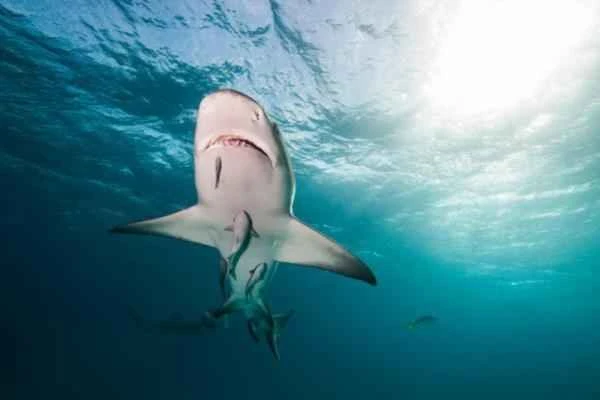
VI. Conclusion: Remoras – “Free Passengers” of the Underwater World
Remoras, with their unique adhesive mechanisms, flexible symbiotic strategies, and wide distribution, have become important subjects for studying marine ecological symbiosis. Their subtle relationships with marine giants such as sharks not only demonstrate the wisdom of nature but also provide us with more windows into the complexity of marine ecosystems.
bibliography
Prandtl, M. (2015). Grouperidae, distribution, and new records in the waters of Uruguay and adjacent regions. URL: https://www.colibri.udelar.edu.uy/jspui/bitstream/20.500.12008/8453/1/uy24-17534.pdf
McEachran, JD and Fechhelm, JD (2021). Amaranthidae. Gulf Fishes, Vol. 2 (pp. 253-262). University of Texas Press.