Although gophers and groundhogs are often mistaken for two different burrowing animals, they have significant differences. Whether you are a wildlife enthusiast, a homeowner dealing with yard problems, or simply curious about these fascinating creatures, this guide will help you understand the unique characteristics of gophers and groundhogs.
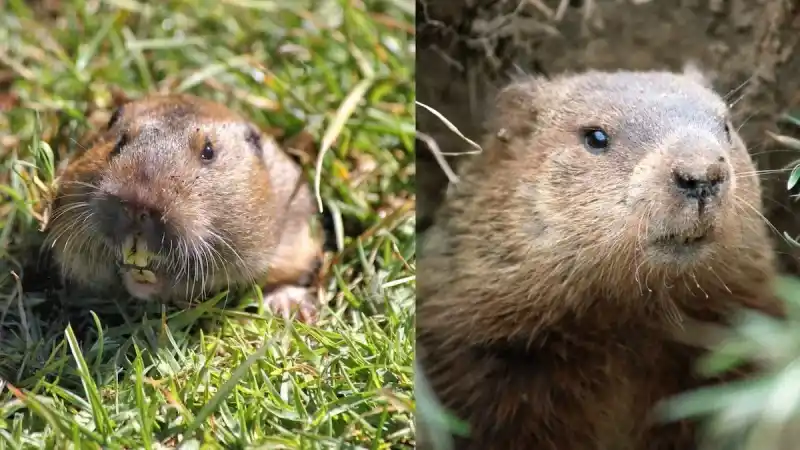
Groundhogs and Marmots: Physical Differences
One of the simplest ways to distinguish between gophers and groundhogs is by their appearance. Here is a brief analysis:
| Function | Gopher | Groundhog |
|---|---|---|
| size | Small to medium (6-14 inches) | Larger (16-26 inches) |
| fur | Short, smooth fur, usually light brown or brownish-black. | Coarse hair, usually brown or gray |
| Tail | Short, almost non-existent | Long and thick tail |
| teeth | Protrusion, visible outside the mouth | Smaller in size, less prominent |
Main differences :
Compared to the larger marmot with its thicker tail, the ground squirrel is smaller and has a shorter tail.
Ground squirrels also have large, prominent teeth, which they use to dig burrows effectively.
Behavioral habits and habitat preferences
Groundhog: The Secret Digger
Gophers are solitary animals , known for their tireless digging. Their behavior is as follows:
Digging : Gophers dig extensive underground tunnels in search of food, mainly roots and tubers.
Activity : They are active year-round, but their burrowing activity is more frequent in spring and autumn.
Habitat : Gophers typically live in open fields, meadows, and gardens , where they can easily burrow into the soil.
Marmot: A social, burrowing animal
Groundhogs exhibit slightly different social behaviors:
Burrowing : While groundhogs do burrow, their tunnels are typically deeper and wider than those of gophers. They may dig multiple chambers within their burrows for hibernation and nesting.
Activity : Groundhogs are primarily diurnal (active during the day) and are often seen sunbathing or foraging. They hibernate in winter, unlike ground squirrels.
Habitat : Marmots prefer woodlands, fields, and urban gardens , and their burrows are usually located in grasslands or near fences.
Main differences :
Ground squirrels are relatively secretive and active throughout the year, while marmots hibernate in winter and are more social.
Gophers dig more complex tunnels, while marmots tend to build larger, deeper burrows for hibernation.
Diet: What do groundhogs and prairie dogs eat?
Both ground squirrels and prairie dogs are herbivores, but their diets and feeding behaviors differ slightly:
Ground squirrels : Ground squirrels primarily feed on roots, tubers, and underground plant parts . They frequently gnaw on plant roots, causing damage to gardens and crops.
Groundhogs : Groundhogs have a more diverse diet, including grasses, leaves, fruits, and vegetables . They also feed on flowers and shrubs, often causing damage to ornamental plants in gardens.
Main differences :
Gophers focus on eating the underground parts of plants, while marmots eat a wider variety of plants, including fruits and leaves above ground.
Impact on property: Which one causes greater loss?
When it comes to property damage, both gophers and groundhogs can cause serious harm, but in different ways:
Gophers : Gophers are notorious for their habit of burrowing underground, which damages lawns, gardens, and crops. Their tunnels weaken soil structure and harm roots and plants.
Groundhogs : Groundhogs like to eat ground plants, including flowers, vegetables, and even fruit trees in gardens. Because their tunnels are larger and deeper than those of gophers, their digging can damage structures such as retaining walls and foundations.
Main differences :
Gophers cause greater underground damage to plants and structures, while marmots are more likely to cause above-ground damage to plants and may even affect buildings by digging burrows.
Conclusion: Gopher or Groundhog – how to tell the difference?
| Features | Gopher | Groundhog |
|---|---|---|
| size | Smaller, 6-14 inches | Larger, 16-26 inches |
| Tail | Short, almost non-existent | Long and thick |
| cave | small and shallow tunnel | Large, deep caves, with caverns |
| diet | It feeds on underground rhizomes | They eat grass, leaves and vegetables. |
| social behavior | Living alone, walking at night | They live in groups, are diurnal, and hibernate in winter. |
Quick identification techniques :
Look at the size : Gophers are smaller and have shorter tails, while marmots are larger and have furry tails.
Burrow location : If you find a larger, more obvious burrow with the entrance above ground, you've most likely encountered a groundhog. If you see a smaller, round burrow that's mostly underground damage, it's likely a gopher.
Feeding habits : Marmots usually feed on above-ground plants, while ground squirrels focus on the underground parts of plants.