In 1985, paleoanthropologist Lin Yipu discovered some ancient mammal fossils in fissure deposits at the Shuimushan quarry in Shanghuang Town, Liyang County (now Liyang City). Upon returning to Beijing, he provided these fossils to Qi Tao, an expert on Tertiary mammals at his institute. Qi Tao identified some of the teeth as similar to those of the ancient mouse-deer found in Inner Mongolia, thus determining that the animals possessing these teeth lived in the Early Tertiary period (between 65 million and 24 million years ago). Subsequently, Qi Tao and other researchers visited the site again and published a preliminary research report, reporting fossils of animals such as *Lu's slender-toothed beast* and *Lu's rabbit* from Luohe, and based on this, determined the age of the Shanghuang Old Tertiary mammals to be the Ildinmanha-Early Shalamuren stage of the Middle Eocene, approximately 45 million years ago.
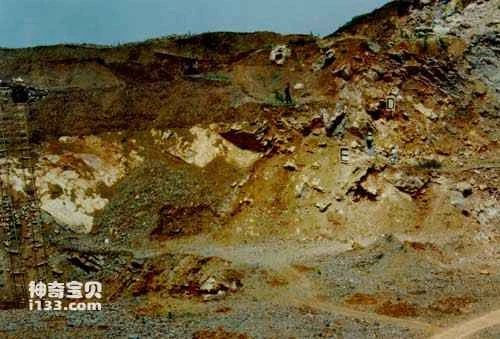
Shuimushan Quarry
In the following years, Qi Tao persisted in fieldwork in Shanghuang, excavating a large number of fossils, which he named the Shanghuang Fauna. Among them, some small teeth are particularly noteworthy because they are similar to primates in some ways, but retain many very primitive, even insectivorous, features.
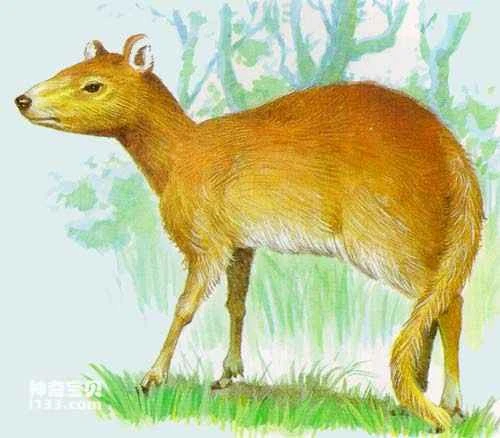
Ancient mouse deer
Qi Tao's research attracted the attention of his American colleagues. Starting in 1992, Mary Dawson, a renowned paleontologist at the Carnegie Museum of Natural History, along with primatologist Christopher Beard and Qi Tao, Wang Banyue, Li Chuankui, and Guo Jianwei from the Institute of Vertebrate Paleontology and Paleoanthropology, formed a joint research team to conduct further field investigations in the Shanghuang area and related regions, and to carry out in-depth research on the Shanghuang fauna and related fauna rich in primates.
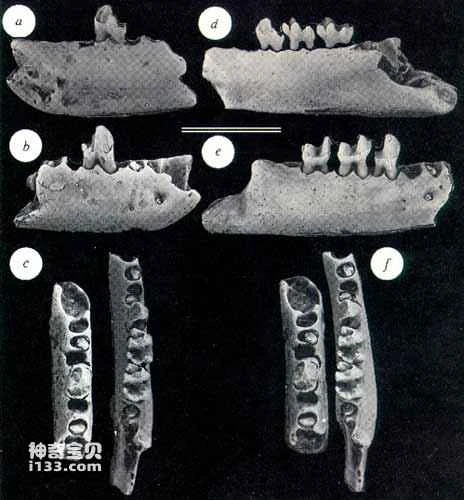
fossil of Eosimias sinensis
Subsequent work uncovered at least four species of higher primates! One of them was named *Eosimias sinensis*, while the other three required further excavation and research at the time due to insufficient data.
The fossil material of *Eosimias sinensis* consists only of a fragment of the right mandible with three teeth and some scattered teeth. However, it dates back to the Middle Eocene, 45 million years ago, nearly 10 million years earlier than the higher primates of Fayoum. This suggests that the origin of higher primates was more likely in the East, specifically in China. The term "Eosimias" means "the dawn of apes."