Here are the world's ten most beautiful fish. Among the more than 20 million known fish species globally, they are renowned for their unique shapes and colors. Whether it's angelfish, clownfish, lionfish, clown triggerfish, discus, triggerfish, butterflyfish, or Surabaya rosefish, they are all beloved for their beauty. Let's admire their charm together.
1. Angelfish
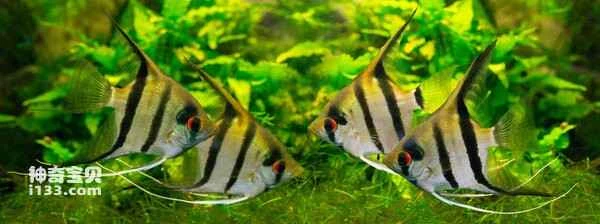
Angelfish, with their profile resembling a flying swallow, are also known as swallowfish. They are gentle in nature, swim gracefully, and come in many varieties, each with its own unique characteristics, making them beloved by many. Among them, the red-eyed diamond angelfish is predominantly silver-white, with neatly arranged scales that shimmer like jewels under the light, creating a mesmerizing diamond-like luster. The mandarin duck angelfish has a silver-white or grayish-white front half and a completely black hind half, creating a striking contrast.
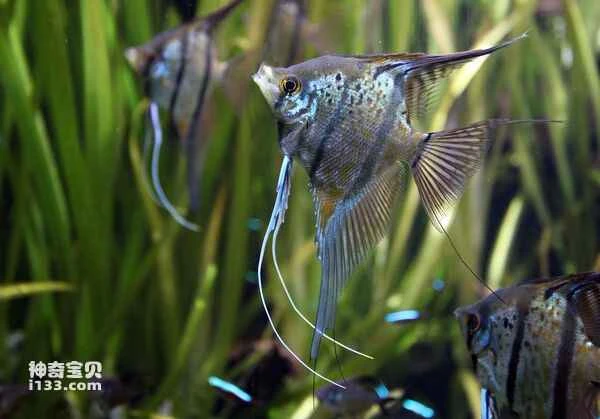
The Golden-headed Angelfish is characterized by its large anal fin and flowing long pelvic fins. Its entire body is silvery-white, but its head is golden yellow, making it extremely attractive when swimming. As for the Tricolor Angelfish, its body is primarily silvery-white with several black spots of varying sizes, and its head is golden yellow, giving it a unique panda-like pattern, hence its nickname "Panda Angelfish."
2. Clownfish
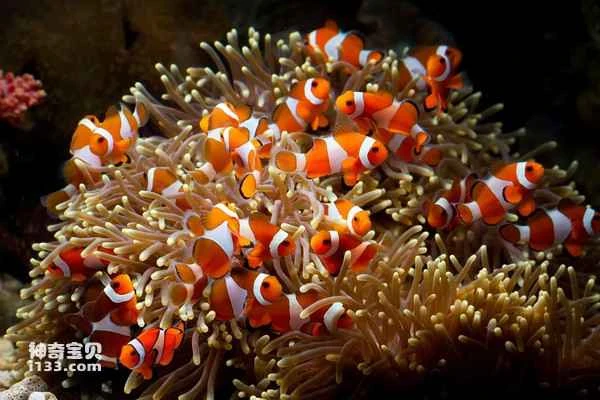
Clownfish get their name from the one or two white stripes on their faces, resembling clowns in traditional Chinese opera. However, clownfish are actually quite beautiful, with many different species, each with its own unique characteristics. For example, the clownfish has an orange-red body with three silver-white bands around its sides. The white stripe in the center of its dorsal fin forms a perfect triangle on the side, and its fins are orange-red with black edges, making it look like a character from an anime, with a small and adorable body.
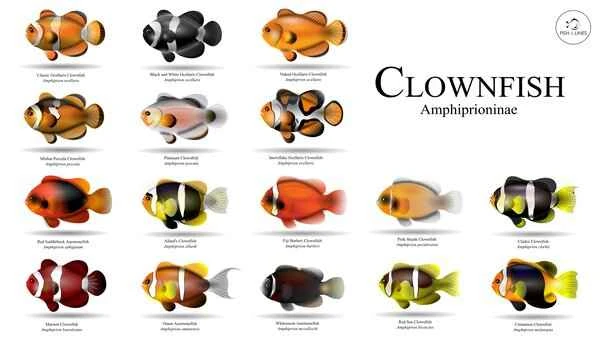
As for the Black Double-banded Clownfish, its body is a striking mix of purplish-black and yellow, adorned with three silver-white bands, making it uniquely charming. The Indian Ocean Silver-lined Clownfish, on the other hand, is entirely orange, with a single, continuous white band extending from its head to the top of its tail, resembling a warrior painted in camouflage, always ready for battle.
3. Lionfish
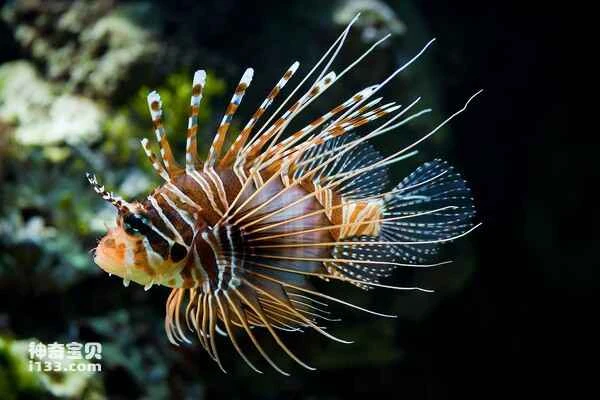
Lionfish, scientifically known as *Spathidon spp.*, defy most people's traditional understanding of fish with its unique body shape. Lionfish are brightly colored, with a yellow body and red and brown stripes. Its dorsal, anal, and caudal fins are transparent and have black spots.
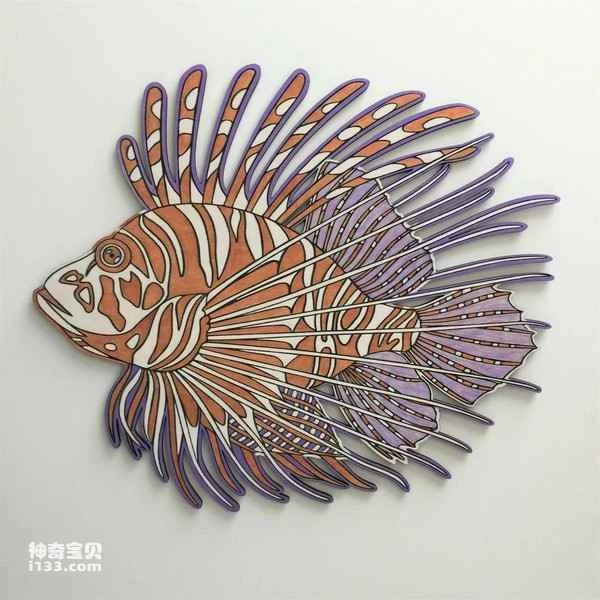
Lionfish have 13 venomous spines on their backs, a tall dorsal fin with long, slender spines, feathery pectoral fins that are both long and large, a rounded caudal fin, and three spines on their anal fin. Overall, lionfish resemble both winged creatures and a water hedgehog, their bodies covered in spines, making them appear exceptionally large.
4. Clown Cannonball
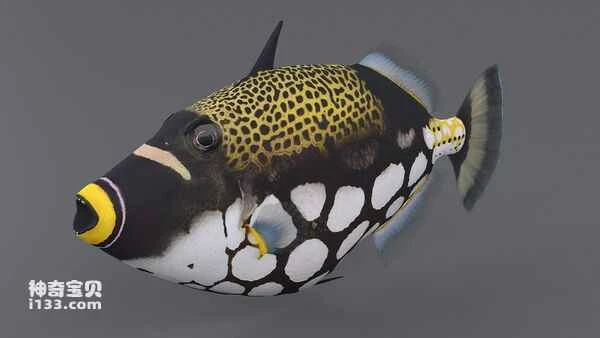
The clown cannonball, scientifically known as *Tetraodon spp.*, is a stunningly beautiful fish. Its body is a greyish-brown, accented with bright yellow lips and snow-white teeth, while its caudal fin is colorless. Of its two prominent dorsal fins, the first is a deep black, while the second, pectoral, and anal fins shimmer with pure white light. Most striking are the large white spots covering its black belly, and a broad yellow band adorns its caudal peduncle, creating a vibrant and picturesque scene.
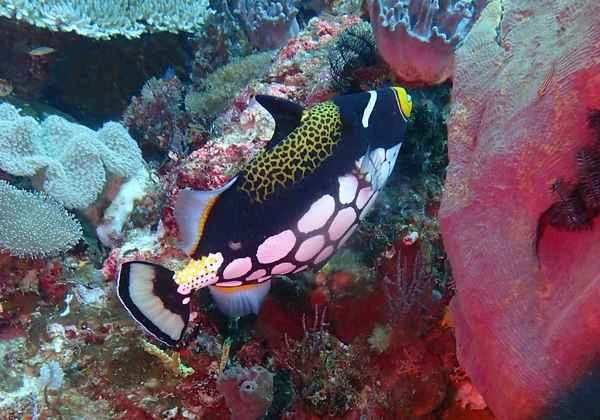
Keeping these beautiful creatures in an aquarium, and seeing them hovering like helicopters in a specific area, will undoubtedly create a uniquely adorable spectacle. Even more captivating is how they will turn their eyes and curiously observe your every move when you observe them up close. Sometimes, if you trace a line on the glass, they might even come over, seemingly rotating in sync with your movement.
5. Discus fish
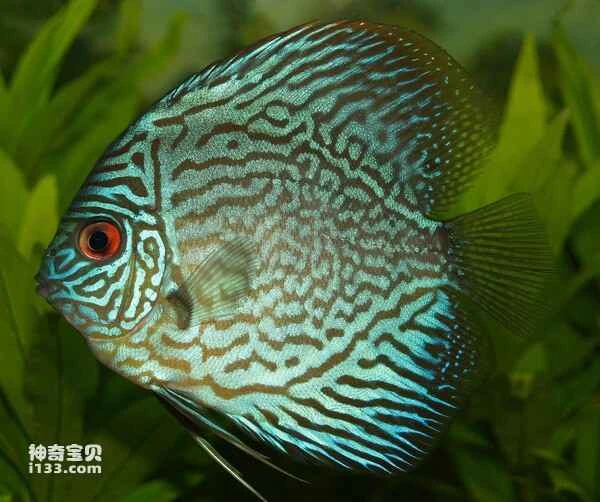
The discus fish, scientifically known as the yellow-brown discus cichlid, is often called the "angelfish," but it is not closely related to the true angelfish.
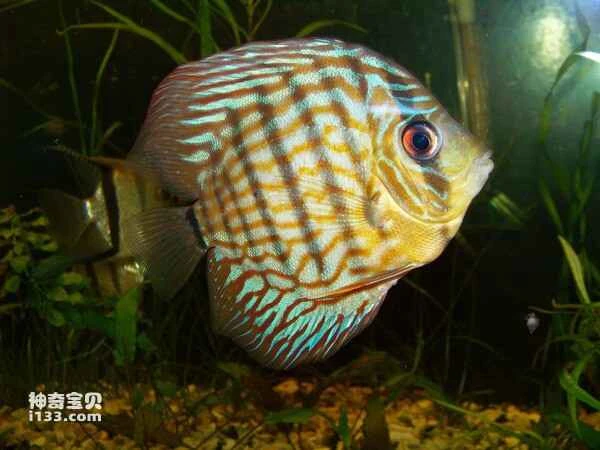
Discus fish have a nearly disc-shaped, flattened body with an extremely short caudal peduncle and symmetrical dorsal and anal fins. Their body colors are diverse, including red discus with a red base, brown discus with a brown base, and blue discus with a blue base, accented with red, yellow, blue, green, black, brown, white, and purple, creating a rich tapestry of colors. In dim light, their body color deepens; in bright light, the colors become more vibrant, highlighting their stripes.
6. Butterflyfish
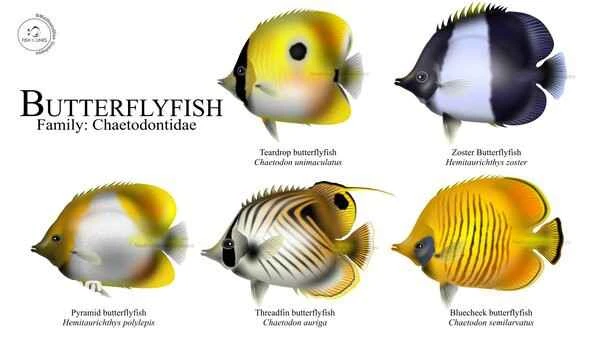
Butterflyfish fry develop numerous spines on their heads, which gradually fuse to form hard bony plates, creating a helmet-like structure for protection. Their bodies are generally rhomboid or oval, very laterally compressed, with a complete, arched lateral line. There are many species of butterflyfish, and their body color changes as they grow. However, the most distinctive feature is a special patch at the junction of their body and tail, called a "false eye," while the real eye is obscured by a black band. This optical illusion causes predators to mistake the tail for the head, a fascinating deceptive strategy.
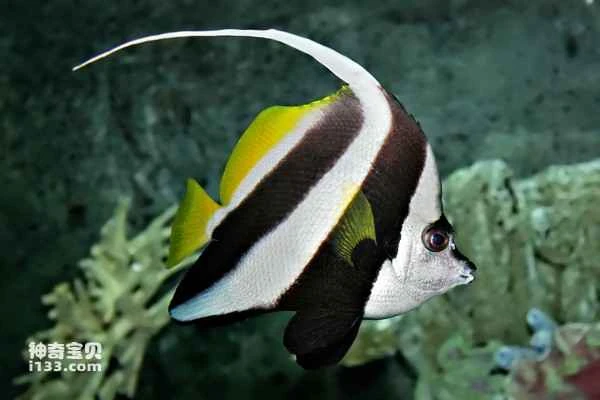
The horse mackerel is a well-known butterflyfish, with its crisscrossing stripes creating a fresh and natural look. A graceful, elongated white filamentous fin along its back adds a romantic touch, making it one of the most popular ornamental fish in aquariums.
7. Sishui Rose Fish
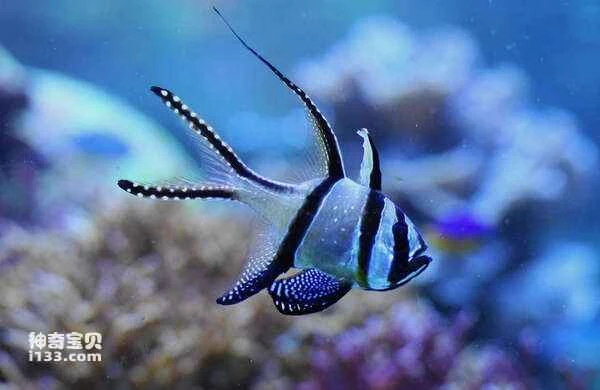
The Sishui Rosefish has a silvery-white body covered with black stripes and white spots, four black longitudinal stripes, a forked tail, and is covered with beautiful spots. It swims with great elegance and is extremely captivating. It is difficult to distinguish between males and females. When placed under appropriate lighting, they exhibit a natural crystalline sheen, appearing as beautiful as a dream.
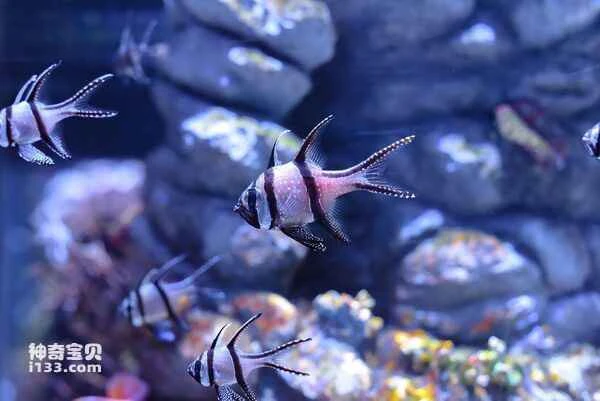
The Surabaya rosefish is one of the few marine ornamental fish that can swim in groups in coral aquariums, and it is also one of the most popular marine ornamental fish. However, it is regrettable that the Surabaya rosefish is now listed as an endangered species by the International Union for Conservation of Nature (IUCN).
8. Angelfish with large painted faces
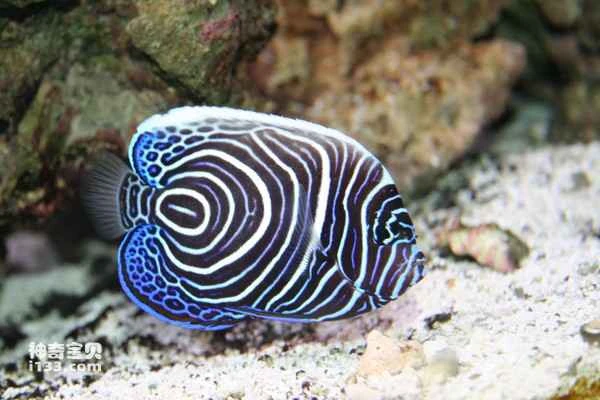
Angelfish and angelfish share some similarities in appearance, but they are two different types of fish. Unlike angelfish, angelfish do not have spines on their gill covers. Angelfish come in a wide variety of sizes and colors, making them very attractive fish.
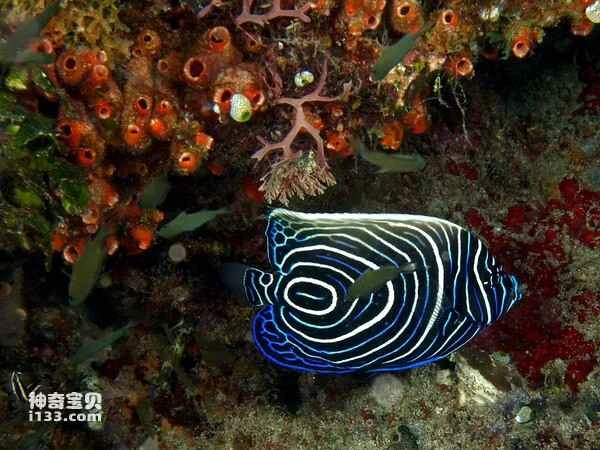
Their body color is a mixture of dark blue, white, and electric blue, forming neatly arranged ring-shaped stripes, like a round rainbow lollipop. This color can last for about 4 years, until the fish matures, at which point black hues form around the eyes of adult fish, along with a series of blue and yellow stripes.
9. Parrotfish
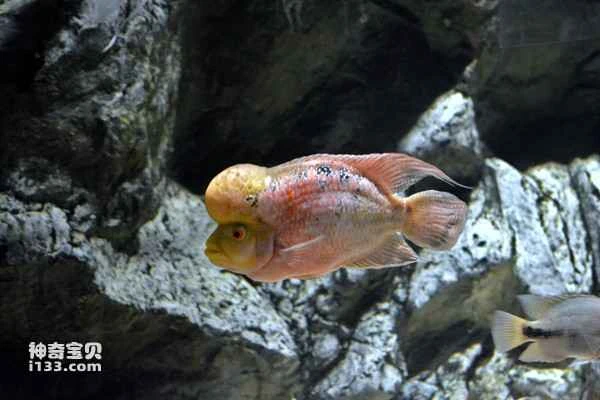
Parrotfish derive their name from their vibrant colors and parrot-like beaks. In the Pacific, male striped parrotfish often display green-orange or green-red body colors, while females exhibit captivating patterns of blue and yellow. In the Atlantic, male queen parrotfish typically display blue bodies with green, red, and orange hues, while females are pale red or purple with a white stripe. Regardless of the variety, parrotfish display a dazzling array of colors, as if coated with watercolor or oil paint, exhibiting a delicate and dreamlike brilliance. Through the appearance of the parrotfish, we can also explore the mysteries of color aesthetics.
10. Pseudo-spinytail seabream
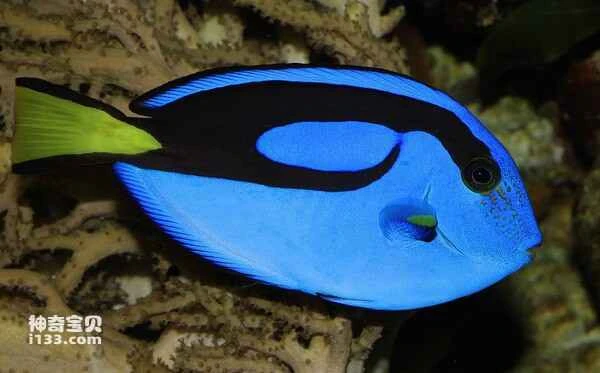
Many people are particularly fond of the spiky tail cichlid, a fish with a highly distinctive appearance that easily distinguishes it from other fish. It boasts a striking sapphire blue body with prominent, palette-like black bands, making it very eye-catching. The dorsal and anal fins are sapphire blue with broad black borders, while the caudal peduncle and caudal fin display a vibrant yellow. Each side of the caudal peduncle has a hard spine, and the caudal spine sheath is not prominent.
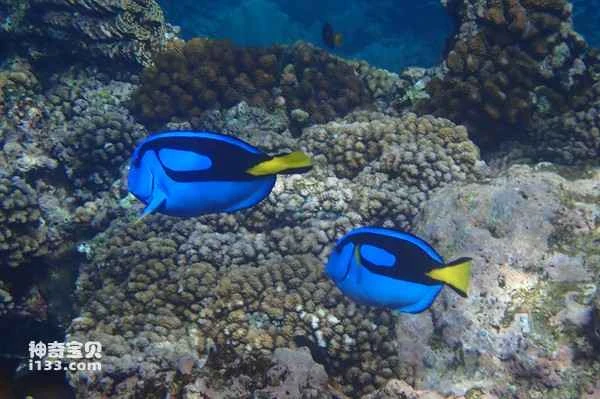
It's worth noting that as the fish grows larger, its colors become more subtle. Due to its vibrant and striking colors, the common shadtail is one of the most popular fish in aquariums. However, it is regrettable that the common shadtail has been listed as an endangered species by the International Union for Conservation of Nature (IUCN).
The selection of the world's ten most beautiful fish primarily considers the physical appearance and coloration of various fish species. The results are for reference only. If you have any questions about the list, please feel free to comment and discuss at the end of the article.