Despite being mollusks, octopuses exhibit an astonishing level of intelligence and the ability to change their color and structure like a chameleon. While each species of octopus has its own unique characteristics, some stand out as particularly impressive among the many.
The world's ten most beautiful octopuses include the blue-ringed octopus, the Dumbo octopus, the mimic octopus, the pig octopus, the blue-striped octopus, the pancake octopus, and the coconut octopus. Hopefully, this introduction will give you a deeper understanding of these most beautiful octopus species and allow you to appreciate their unique charm and beauty.
1. Blue-ringed octopus
The blue-ringed octopus, one of the most beautiful octopuses, is also one of the most poisonous. Its skin contains special pigment cells rich in blue pigment; when a large number of these cells form a ring, it creates a beautiful blue band. This alluring coat can also serve as a warning signal.
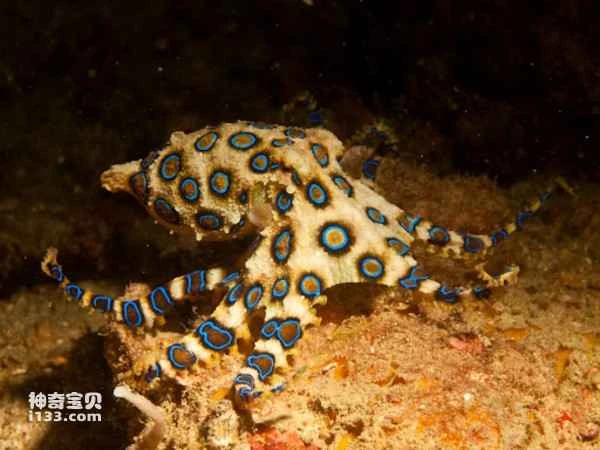
Although blue-ringed octopuses are generally docile and will not attack non-threatening creatures, their venom should not be underestimated. A bite from a blue-ringed octopus contains a terrifying "angel's kiss" venom that almost always leads to serious consequences. Therefore, when interacting with blue-ringed octopuses, avoid rough handling to prevent accidents.
2. Semi-deep-sea octopus
The semi-deep-sea octopus, also known as the Dumbo octopus, is widely recognized as one of the cutest octopuses in the world, with an exceptionally adorable appearance. These little guys are named for their fins, which resemble the Disney cartoon character "Dumbo" when they swim. They are only about 20 centimeters long, with smooth skin, a semi-gelatinous body, and a contracted shape at the front and back. They also have tiny ears and a long "nose".
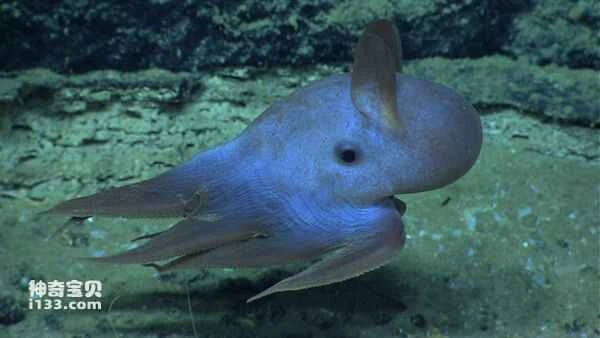
This octopus is an extremely vulnerable species and is likely to die once it leaves its marine habitat. Due to its lifestyle, the semi-deep-sea octopus is not suitable for artificial breeding, which led to its inclusion on the IUCN Red List of Threatened Species in 2014.
3. Mimicry Octopus
The mimic octopus, hailed as one of nature's top masters of camouflage, is one of the ten most beautiful octopuses. Like other octopuses, it possesses eight tentacles, but its unique ability lies in its capacity to change color and shape at will. Typically, the mimic octopus is a spotted brown, but it has the capacity to mimic a variety of environments and other marine life.
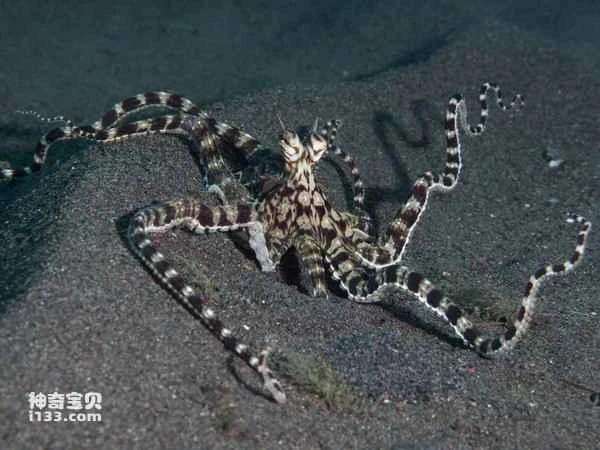
The mimic octopus possesses thousands of color sacs, known as "color bags," controlled by a complex network of muscles. These color bags contain pigments, allowing the mimic octopus to display a variety of hues. By relaxing or contracting these color bags, the mimic octopus can blend seamlessly with any background color and pattern in less than a second, achieving perfect camouflage and making it a "master of disguise" in the deep sea.
4. Striped piglet squid
The ribbon-like piglet squid, also known as the little pig octopus, is one of the cutest octopuses and is frequently mentioned in lists. This octopus belongs to the deep-sea octopus family, and adults are about 10 centimeters long, possessing curled tentacles. Its body is transparent or semi-transparent, and its shape closely resembles a little pig.
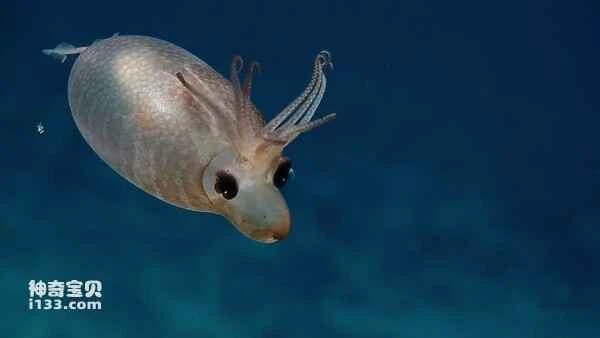
The ribbon-like piglet squid has bioluminescent organs that allow it to glow in the dark ocean. It is small and plump, with a siphon on its face that resembles a pig's snout, tentacles growing on its head, and a pair of large, bright black eyes, making it look like both a pig and a deer. It is one of the most fascinating little octopuses in the world.
5. Spotted Leopard Octopus
The spotted leopard octopus and the blue-ringed octopus belong to the same genus, *Leopard Octopus*, and are among the most beautiful and sought-after octopus species in the world. They typically reach about 20 centimeters in length and display a variety of colors, including gray, beige, dark brown, dark yellow, and brownish-yellow. When threatened, special pigment cells in their bodies are activated, causing up to 60 iridescent blue spots and rings to appear on their bodies and tentacles.
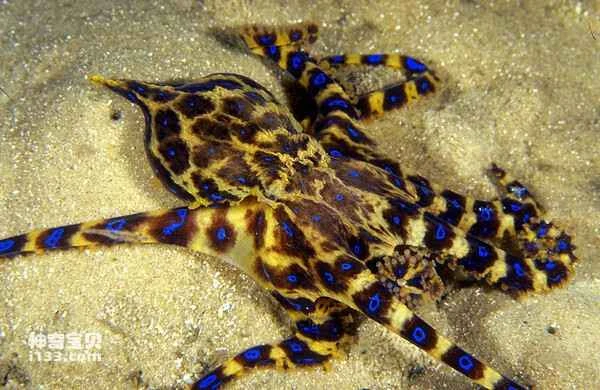
These luminous bluish spots and blue rings serve as both warning colors and a indication of their venom. There have been cases of people dying from poisoning after being bitten by them in Australia, and food poisoning incidents have occurred in Japan after consuming them. Therefore, extreme caution must be exercised when interacting with these octopuses to avoid tragedy.
6. California octopus
Octopuses come in many varieties, and the California pancake octopus, often called the pancake octopus, is a popular one. As a rare species in the pancake octopus family, they inhabit the deep seabed and feed primarily on small aquatic organisms. The pancake octopus is approximately 19 centimeters long, with a slightly pouch-like head and two small ears. Its body is a striking orange-red, making it exceptionally beautiful.
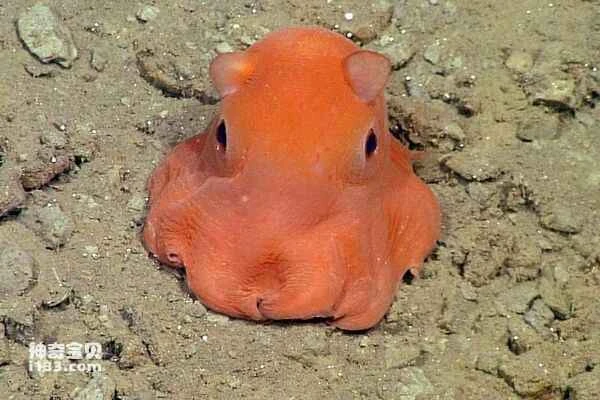
This type of octopus typically employs a "wait and see" strategy, quickly using its tentacles to capture prey once it approaches. However, when the pancake octopus is resting quietly, if there is any commotion nearby, it will quickly cover its face with its tentacles, resembling a small orange-red ball, exhibiting an interesting behavioral display.
7. Striped Octopus
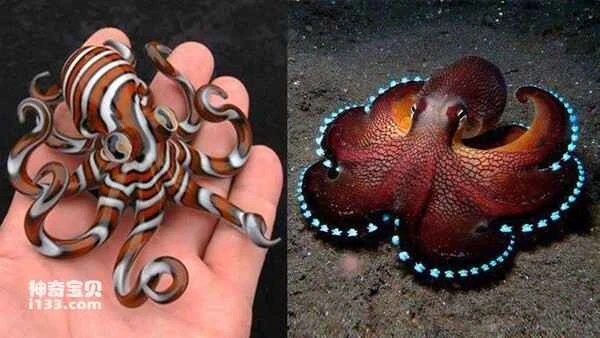
The coconut octopus, also known as the striped octopus, is one of the most fascinating octopuses in my mind. This special creature stands out for its unique characteristics and is one of the few octopuses capable of walking on two legs. Striped octopuses primarily inhabit deep waters and typically live only in tropical Pacific Ocean regions. Its name comes from its ability to utilize coconut shells as shelter, showcasing a highly creative behavior.
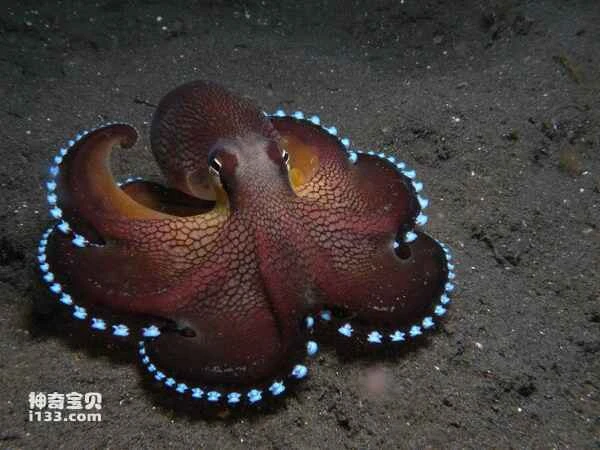
This amazing little creature is about 7 centimeters long, while its arms can reach up to 20 centimeters in length. Its body displays a very beautiful vein-like pattern, and its long black arms are covered with many white suckers. These white suckers, against its dark body, resemble a string of bright lights, adorning its arms.
8. Blanket Octopus
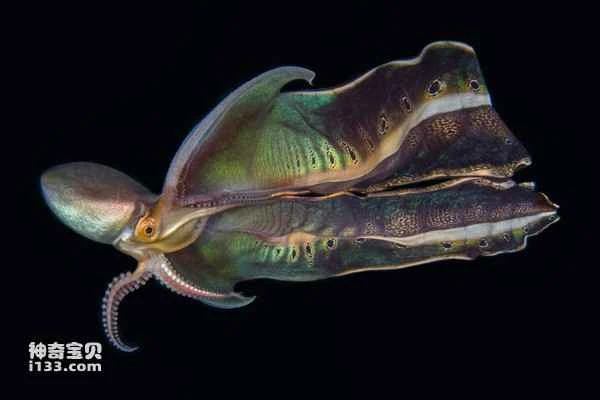
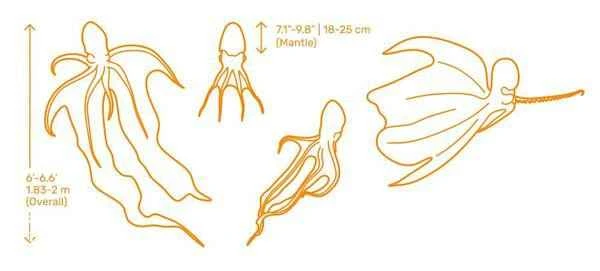
The blanket octopus is considered one of the world's most unique octopus species. Males are about 3 centimeters long, while females can stretch to 1.8 to 2 meters in a short time after mating, during which the male dies. Females have a longer lifespan but die shortly after giving birth, and their body section between their legs is relatively short. When threatened, blanket octopuses extend their tentacles, resembling a giant, unfurled blanket.
9. Crimson Octopus
The Red Octopus, also known as the Red Octopus or the Starry Sky Octopus, is an exceptionally beautiful octopus. They typically have an oval body that tapers to a point, are muscular, and have a mantle covered with fine folds and protrusions of various sizes on their back. Their body is reddish-brown, with a darker back, and irregular white spots cover their mantle, head, arms, and interarm membranes.
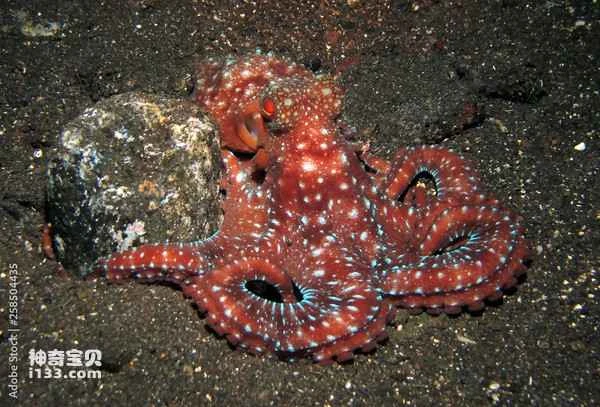
In spring, red octopuses are more commonly found in seafood markets along the southern coast. Due to their vibrant colors, some vendors sell them as ornamental fish, using the trade name "Red Octopus." Red octopuses are not very tolerant of low temperatures; their optimal water temperature range is between 20 and 25 degrees Celsius. Therefore, maintaining appropriate salinity in a normal saltwater aquarium will ensure a good living environment for them.
10. Two-spotted octopus
The two-spotted octopus has a wide distribution, living in the East my country Sea, South China Sea, Malay Archipelago, Hawaiian Islands, California, San Salvador, Costa Rica, Sri Lanka, India, and other sea areas. They mainly inhabit the subtidal zone, but also move in the intertidal zone, showing a tendency to make full use of their hiding places, preferring caves, under rocks, or in rock crevices as shelters.
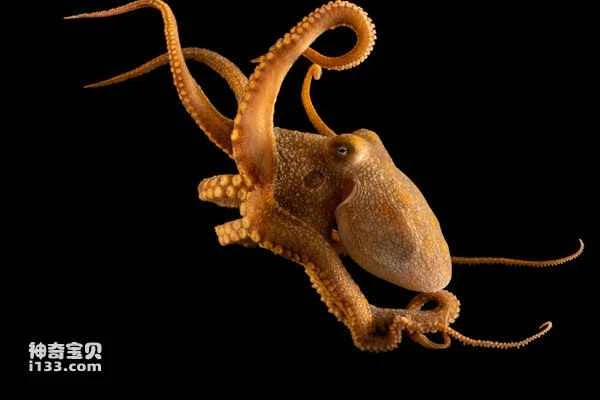
Generally, the two-spotted octopus has an oval-shaped body with a smooth surface, occasionally with some irregular protrusions and reticulate stripes. In front of each eye, between the second and third pairs of arms, there is a large black circular spot, and the outer side of this spot has some irregular black coloration, which adds to their unique appearance.