my country boasts abundant forestry resources, covering a vast area. However, its forests are plagued by numerous pests and diseases, exceeding 8,000 different species, of which over 100 have repeatedly caused serious damage. A wide variety of insects pose a threat to trees, including the following 10 forest pests that severely endanger forest growth and development: pine wilt nematode, Asian longhorn beetle, fall webworm, bark beetle, pine caterpillar, spring inchworm, and pine sawyer beetle. Let's learn more about them.
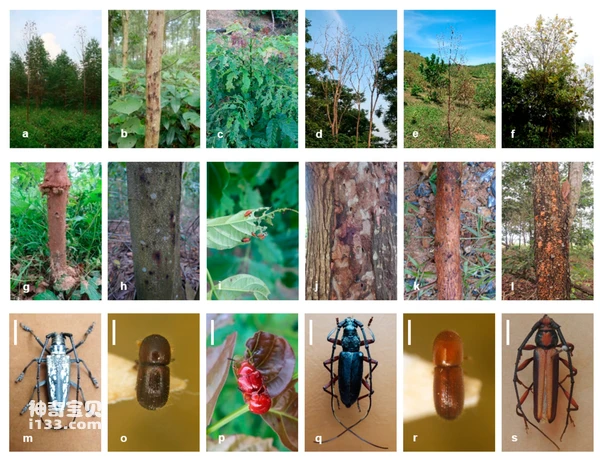
These forest pests are destructive, causing serious waste and loss of forest resources. Timely detection and effective control of these pests are crucial for maintaining and protecting forest health. Therefore, understanding these pests and implementing preventative measures play a key role in maintaining the sustainable development of national forest resources.
1. Pine wilt nematode (Level 1 harmful forest pest/rapid reproduction/causes host trees to wither and die)
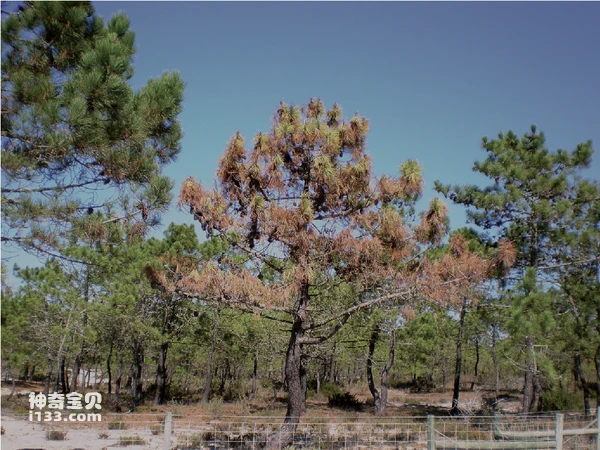
Typical symptoms of pine wilt disease in pine trees
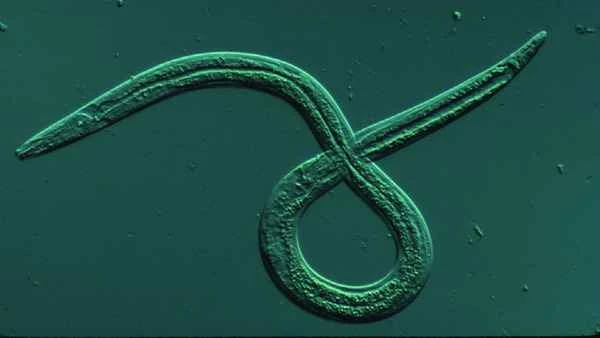
Among forest pests, the pine wilt nematode is arguably one of the most damaging. These pests are widely distributed in many countries, including the United States, Canada, Mexico, South Korea, Japan, Portugal, Spain, and China. Pine wilt nematodes can parasitize over 70 species of conifers, completing a generation cycle in just three days at 30 degrees Celsius. They cause the entire host tree to rapidly die, resulting in pine wilt disease. This disease spreads rapidly and is extremely difficult to control, already causing large-scale pine tree deaths in China, Japan, and South Korea, severely impacting local ecological security. Simultaneously, it has had a significant impact on the market for pine lumber and ornamental pine, becoming a major factor influencing global economic trade.
2. Longhorn beetle (Level II hazardous forest pest/causes complete plant death)
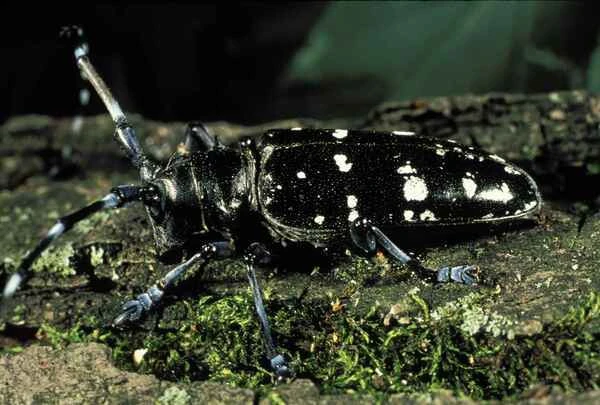
Longhorn beetles play a crucial role in the detection of common forest pests and diseases. Adults typically feed on tender shoots and bark to replenish nutrients, leading to branch dieback. Each year, the losses they cause to forestry far exceed those caused by fire. The Asian longhorn beetle (Spodoptera litura), as an important member of the longhorn beetle family, plays a vital role in forestry. While mild infestations lead to a decline in timber quality, severe infestations can cause branch dieback, making trees more susceptible to wind breakage, resulting in the death of young trees, impacting overall tree vigor, and causing serious damage to forests.
The Asian longhorn beetle primarily infests various tree species, including London plane trees, willows, poplars, elms, five-lobed maples, and compound maples. During the breeding season, the damage caused by these pests is particularly severe.
3. Fall webworm (Class II hazardous forest pest/global quarantine pest, "smokeless fire")
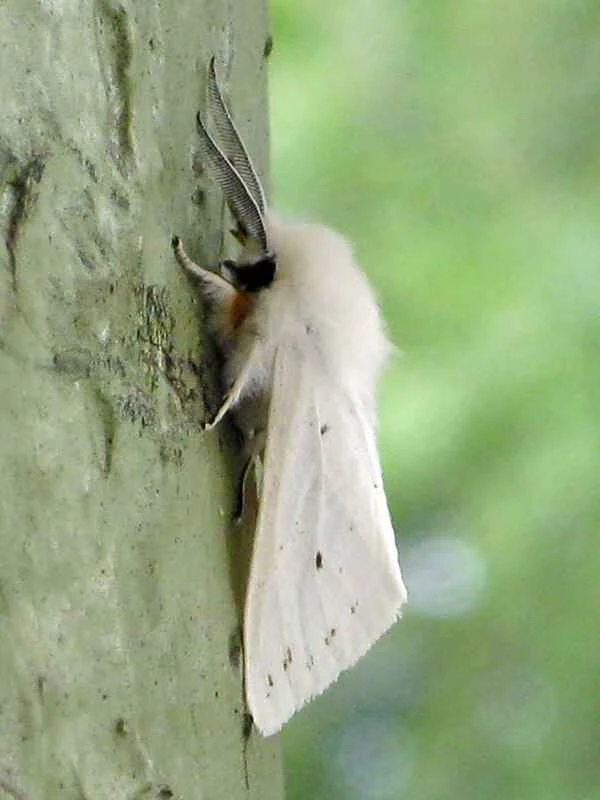
The fall webworm is a highly destructive pest among common forest tree diseases and insect pests. This pest has an extremely high reproductive rate, adaptability, and spread speed, especially after the female moths lay eggs in spring, the number of larvae can reach hundreds of millions by the third generation. In addition to spreading through various means of transportation and logistics, the adults can also fly, making their spread astonishingly rapid.
The fall webworm has an astonishingly wide and diverse diet, hosting up to 636 plant species. In severe infestations, it can completely defoliate host plants and even gnaw on the bark, weakening their resistance and resilience, and severely impacting forest growth. Sometimes it even invades farmland, causing reduced yields or even total crop failure. Therefore, the fall webworm is often called "smokeless fire," highlighting the extent of its damage.
4. Powerful bark beetle (Level II hazardous forest pest/causing the death of affected trees)
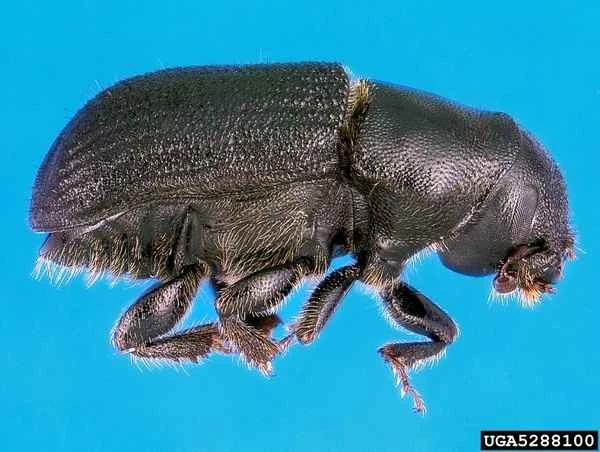
The powerful bark beetle , also known as the red turpentine beetle, is listed as one of the top ten forest pests. Adults can be seen active in forests year-round, except during the overwintering period. Both adults and larvae of this beetle infest the phloem tissue of trees, including the base of the trunk and roots. In severe infestations, the tunnels created by the larvae can connect, extending into the phloem tissue of the main and lateral roots, ultimately leading to the death of the affected trees.
The powerful bark beetle infests almost all pine species in North America, and occasionally larch and fir. It is speculated that the introduction of this pest may be related to timber imports from the United States to Shanxi Province in the late 1980s. Unlike in North America, in the affected areas, the powerful bark beetle attacks not only weaker trees but also healthy ones, causing significant mortality of local host plants.
5. Pine caterpillar (a historical forest pest in China/induces pine caterpillar disease)
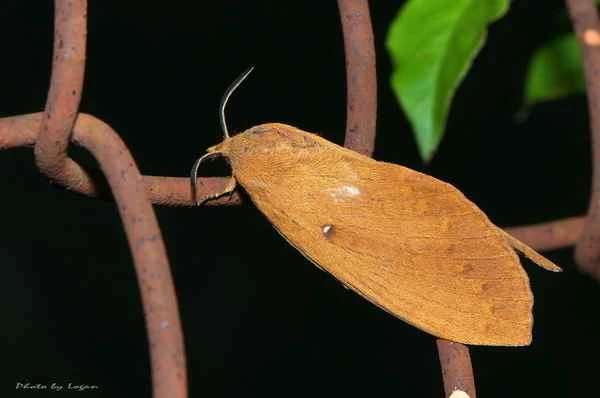
Pine caterpillars are among the most notorious and historically significant pests globally, particularly in China, where millions of hectares of pine forests are damaged annually, causing immense economic and ecological losses. Among them, the Masson pine caterpillar, also known as the hairy caterpillar or pine nymph, is one of the most destructive, primarily affecting Masson pine, but also impacting black pine, slash pine, and loblolly pine. As one of the most severe forest pests in Chinese history, the Masson pine caterpillar is characterized by its feeding on pine needles. When it breaks out on a large scale, an entire pine forest can be completely destroyed within days, leaving the forest appearing withered, yellow, and charred, as if burned.
Pine forests damaged by the pine caterpillar may experience stunted growth or even complete tree death. Furthermore, the pine caterpillar infestation often attracts other pests such as the pine sawyer beetle, the pine shoot beetle, and the pine white star beetle, leading to widespread pine tree mortality.
6. Spring inchworm (Level II harmful forest pest/Voracious feeding problem)

The common forest pest, the spring inchworm, also known as the inchworm, is widely distributed. Its larvae feed primarily on the young buds, leaves, and flower buds of host plants, consuming enormous amounts of food and causing devastating outbreaks. Besides damaging fruit trees such as apples, crabapples, and pears, it causes even more severe damage to trees like elms, jujubes, poplars, willows, and others. In years of high incidence, the spring inchworm not only harms fruit trees but also infests the leaves of nearby plants such as wheat, corn, alfalfa, grapes, and walnuts.
In Xinjiang, large-scale aerial pest control is required every year. For example, in 1976, a spring inchworm outbreak caused a major disaster in the Manas Plain Forest Farm in Xinjiang, resulting in the complete depletion of leaves in tens of thousands of acres of elm forests by early May, leaving them bare. The larvae spun webs and hung in the forest, making it impossible for pedestrians to pass.
7. Pine sawyer beetle (Level II harmful forest pest/forestry quarantine pest)
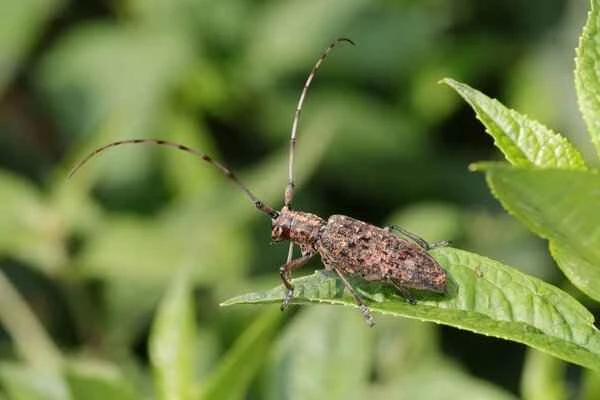
The pine sawyer beetle is a common forest pest and disease, considered an important forestry quarantine pest. Its larvae attack the phloem and xylem of pine trees, damaging vascular tissue and hindering the normal transport of water and nutrients, leading to timber death. Adult beetles, while feeding and obtaining nutrients, gnaw on young branches and may carry pine wood nematodes. These nematodes further infest the pine trees, infecting the wounds and causing stunted growth, ultimately resulting in large-scale death.
If infected trees are felled but not removed from the forest in time, and if they are not stripped of their bark during the summer, these trees will quickly be infested again by the pine sawyer beetle. Adult pine sawyer beetles typically migrate between 1.0 and 2.4 kilometers.
8. Pine scale insect (Level II hazardous forest pest/forestry quarantine pest)
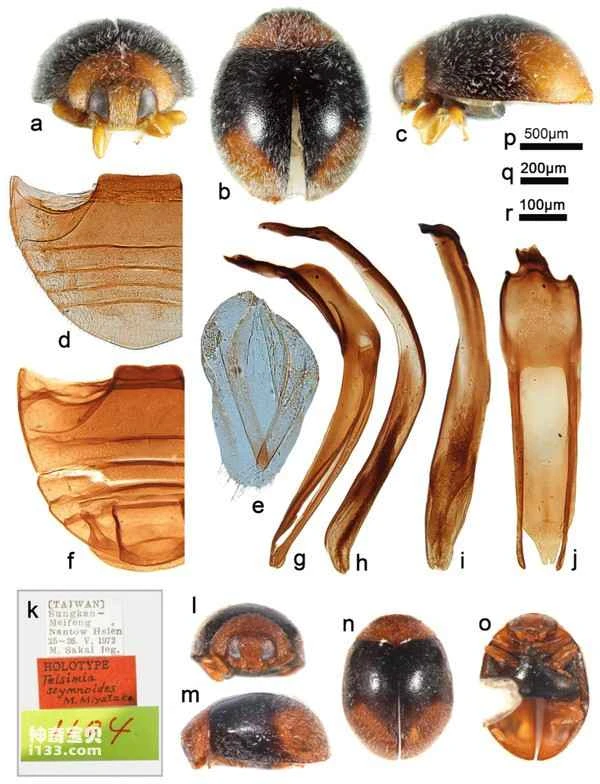
In China, scale insects pose a serious threat to garden plants, with over 600 species damaging these plants. These pests are covered in a thick waxy layer, making control extremely difficult, and are therefore considered the primary problem among the "five minor pests" in the landscaping industry. Among them, the pine scale insect (Pinus truncatus) is an important scale insect, primarily damaging the needles, young branches, and cones of pine trees.
The pine scale insect sucks sap from the leaf sheaths, needles, young branches, and cones of its host plant, inhibiting the growth of needles and young branches and severely affecting the function of the pine tree's resin-producing organs and the photosynthesis of the needles. Affected areas will show symptoms such as discoloration, blackening, shrinkage, and rot; needles will also fall off and turn yellow and withered. In severe cases, newly sprouted branches will become short and yellow, and the entire pine tree may even die.
9. Sycamore lace bug (Level II forest pest/highly resilient)
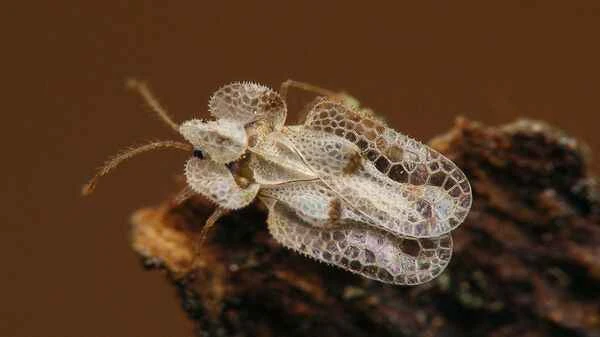
Pests that damage trees are indeed a headache. I would like to nominate the sycamore lace bug, which is quite harmful to trees. It can cause premature leaf drop, interrupted growth, and even weaken and kill the tree. Worse still, the sycamore lace bug also carries dangerous pathogens, indirectly causing even greater potential harm to the tree.
The adult lace bug has a lifespan of only about one month, but its reproductive capacity is astonishing. Each adult can lay 200 to 300 eggs, and there can be 4 to 5 generations per year. Moreover, this insect is quite cold-resistant, surviving at temperatures as low as -12.2 degrees Celsius. During winter, they often hide under the bark of host trees or in bark crevices, and can spread short distances by wind or flight, and even long distances by traveling with seedlings or logs with bark intact. Furthermore, the sycamore lace bug can invade indoor spaces in swarms, causing disruption to residents' daily lives.
10. Chestnut Longhorn Beetle (Class II Harmful Forest Pest)
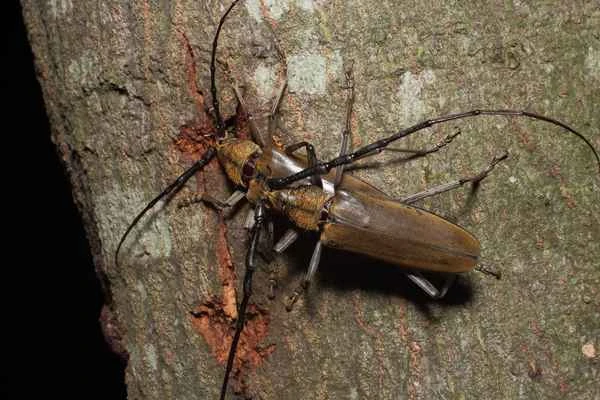
The chestnut-mountain longhorn beetle, also known as the mountain longhorn beetle, is one of the most common tree pests in my country. It is widely distributed, found in more than 20 provinces including Taiwan, with the most severe infestations in Jilin, Liaoning, and Inner Mongolia. These pests primarily cause damage by the larvae boring into the xylem of the host plant, resulting in very serious harm.
Even mild infestations of the chestnut longhorn beetle can render a large amount of timber unusable for craftsmanship, causing severe economic losses. In severely affected forests, most branches of the host tree's crown will die, the trunk will be riddled with holes, and the overall tree will be weakened, making it susceptible to wind damage and resulting in numerous fallen trees. Severely damaged trees can only be used as low-quality firewood or charcoal, resulting in extremely significant losses.
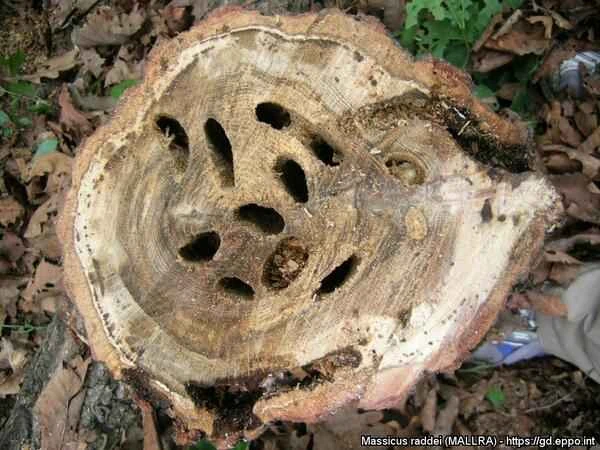
The chestnut longhorn beetle primarily infests 30-year-old oak trees, especially those in their peak growth period and those at their largest diameter. The trunks of affected oak trees are riddled with the beetle's tunnels, branches fall, and fallen logs are a common sight.
Other common forest pests:
Apple codling moth, mulberry longhorn beetle, twig borer, red pine shoot borer, double-hooked longhorn beetle, hibiscus mealybug, small round-breasted beetle, poplar wedge-shaped longhorn beetle, pine wasp, large bagworm moth, brown-edged green tussock moth, Chinese scholar tree looper, tea bagworm, cloud-spotted longhorn beetle, elm leaf beetle, white wax scale, Korean hairy ball scale, round shield scale, water-wood hard scale, Koch's white shield scale, mulberry white shield scale, red spider mite, spotted lanternfly, boxwood silkworm moth, wetland pine mealybug, yellow-spined bamboo locust, Yunnan pine caterpillar, gypsy moth, larch caterpillar, Japanese pine dry scale, wetland pine mealybug, poplar fan-shaped moth, elm purple leaf beetle, yellow-brown tent caterpillar, larch ball aphid, etc...
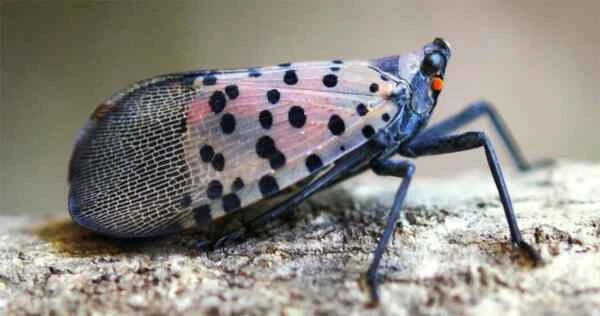
Spotted lanternfly