In Islam, the legitimacy (halal) and illegitimacy (haram) of food are determined by the Quran and Hadith. Locusts, as a particular type of insect, are considered food in some cultures but are less common in others. So, are locusts halal in Islam? This article will explore this question in depth and analyze the basis for the legitimacy of locusts in Islam.
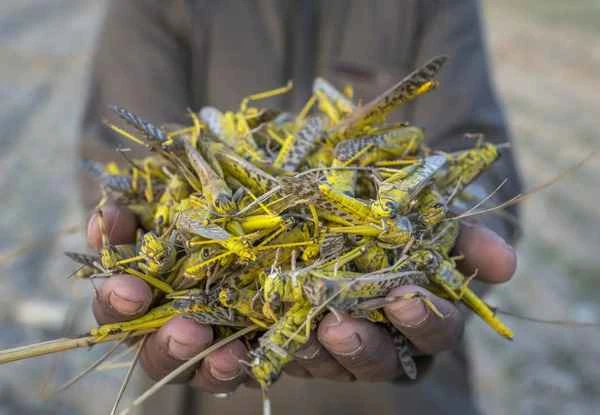
Are locusts considered halal food?
According to Islamic doctrine, halal food refers to food that meets the standards of Islamic law (Sharia). Whether food is halal depends primarily on several criteria, including its origin, preparation method, and whether it conforms to the guidance of the Quran and Hadith. As an edible insect, the halal status of locusts is subject to different interpretations within Islamic scholarship.
1. Locusts in the Quran and Hadith
In Islamic doctrine, locusts are considered halal food, primarily because they comply with Islamic law. The Quran does not explicitly list locusts as an unlawful food; on the contrary, Chapter 5, Surah Al-Ma'idah, mentions the permissibility of consuming certain types of aquatic and terrestrial animals. More importantly, there are numerous examples in the Hadith indicating that the Prophet Muhammad (peace and blessing) provided guidance on food, including locusts.
In the Hadith, there is an example of the Prophet Muhammad (peace and blessing) allowing Muslims to eat locusts. At the time, someone reported to him that some locusts had been found fallen in the desert, and the Prophet stated that these locusts were safe to eat. This shows that locusts were considered halal food, regardless of their origin, provided they were handled properly.
2. Halal standards for locusts
The determination of whether locusts are halal usually relies on the following criteria:
Food source: Locusts are a part of nature and are not among the prohibited animals for consumption. According to Islamic law, all plant-based foods and certain types of meat, insects, and other natural foods are considered halal as long as they do not contain prohibited ingredients or do not comply with regulations.
Slaughtering methods: Although locusts do not require specific slaughtering methods like traditional livestock, it is important to ensure that they are not contaminated or misused with illegal substances (such as pork).
Environmental pollution: If locusts grow in harmful or contaminated environments (such as those using illegal pesticides), their halal status may be affected. Therefore, the cleanliness and safe handling of locusts are very important.
The history and modern culture of eating locusts
Historically, locusts were a traditional food in some Middle Eastern countries and parts of Asia. In ancient times, Muslims in these regions did not object to eating locusts, considering it in accordance with Islamic law. In fact, in some traditional Muslim countries, locusts were considered a delicacy and were even used to make dried goods or fried.
1. The Islamic World's Tradition of Eating Locusts
For example, in Saudi Arabia and other Arab countries, locusts are not only a food source but also a part of many local dishes. Sharia law allows Muslims to eat locusts, provided that the insects are not contaminated with unclean substances.
2. Locust Consumption in Modern Muslim Countries
With globalization and modernization, locusts remain a food source in some Muslim countries, especially in regions with traditional dietary cultures. Furthermore, in recent years, increased focus on sustainable food sources has led to a renewed interest in locusts as a high-protein, low-carbon food source.
The role of locusts in Islamic diet
The status of locusts as halal food is undeniable, especially in some cultures where they are not only a traditional delicacy but also an important food source to address food shortages. For Muslims who are concerned about halal food, consuming locusts remains in accordance with Islamic law, provided they are legally sourced and properly handled.
The Halal Standards for Locusts in Islamic Law
| standard | describe |
|---|---|
| Legitimacy of source | Locusts are part of nature and fall within the category of edible animals as defined by Islamic law. |
| Slaughter methods | Locusts do not require special slaughtering methods, but it should be ensured that they are not contaminated by unclean substances. |
| Cleaning and safe handling | Ensure locusts are protected from environmental pollution, such as the use of illegal chemicals, and keep them clean and safe. |
| Traditional food | In Islamic culture, locusts are considered halal food and are a traditional delicacy in some regions. |
This table summarizes the key criteria for determining whether locusts are halal food, helping Muslims understand how to judge the legality of locusts.
Conclusion: Locusts are halal food.
According to Islamic doctrine, locusts are halal food and comply with the provisions of the Quran and Hadith. Muslims can eat locusts provided they meet relevant cleanliness and hygiene standards, especially since locusts have been consumed as food in some Muslim countries for centuries, historically and traditionally. Locusts are not only a food option but are also considered a sustainable food source that meets modern food safety and halal requirements.