Labyrindonts are among the earliest terrestrial vertebrates to appear on Earth, flourishing during the Carboniferous and Permian periods, with a few species persisting into the Triassic. They are named for the labyrinthine structure in the cross-section of their conical teeth. Their skulls are composed of hard, thick bony plates, hence the name "stiff-headed" species. Compared to lobe-finned fishes, their skulls are flattened with fewer bony plates, and their hyoid bone recedes into the middle ear to form the stapes, creating auditory pits. Furthermore, most of these species have thick, armored scales covering their bodies.
During the heyday of labyrinthodonts, these animals were found everywhere in swamps, rivers, and lakes across the Earth. In the late Paleozoic and Triassic periods, they were found on all the continents of the planet.
Labyrinthodontia are divided into three orders: Ichthyostega, Lithosporales, and Carboniferales.
The Urumqi salamander, discovered near Urumqi in Xinjiang, my country, is a member of the order Carboniferous salamanders and suborder Sauropoda, which evolved into reptiles in the late Paleozoic era.
Sauropods, belonging to the suborder Sauropoda, are a unique type of amphibian that exhibits characteristics of both amphibians and reptiles. This phenomenon provides strong evidence that reptiles originated from amphibians.
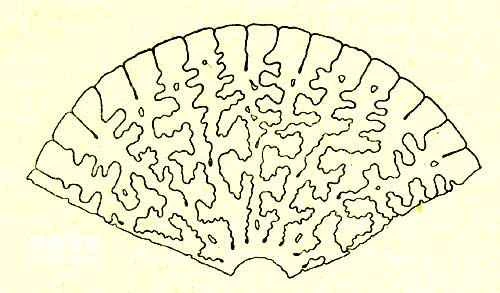
Labyrinth structure of labyrinthodontic teeth