In the 1930s, the paleoanthropological community witnessed the infamous "Piltang Affair." Some individuals, seeking fame and fortune, attached a human head to an ape's jaw, painted it to resemble fossil color, and buried it near Piltang, England. They then deceived a paleoanthropologist struggling to find evidence of a transitional form between humans and apes, causing him to be disgraced by publishing this fraudulent "ape-man." After the "Piltang Affair" was exposed, it was condemned by the scientific community and the general public, serving as a stark warning to scientists.
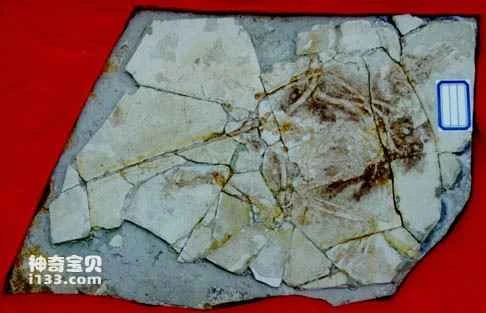
"Liaoning Archaeopteryx"
However, no one expected that more than 60 years later, in the last year of the 20th century, another major hoax would be exposed in the field of dinosaur and ancient bird research. This hoax was jokingly referred to by Dong Zhiming, a famous dinosaur expert and researcher at the Institute of Vertebrate Paleontology and Paleoanthropology of the Chinese Academy of Sciences, as the "Piertang Incident in dinosaur research".
In November 1999, National Geographic, a highly influential American magazine known for its accurate reporting of the latest and most important discoveries in the natural and historical fields, published an article with the eye-catching headline "Did Tyrannosaurus Rex Have Feathers?" The article prominently featured several brightly colored and exquisitely crafted fossil photographs and reconstructions of "feathered dinosaurs." The article began by reporting on a peculiar animal that resembled neither a dragon nor a bird, citing the researchers' official name for this unusual creature—*Archaeoraptor liaoidis*. According to the article, this strange animal had a head and wings like *Archaeopteryx*, but possessed a rod-like tail typical of small theropod dinosaurs—*Drododralisks*. The article claimed that they had found a missing link in the evolutionary process from dinosaurs to birds. Finally, the article concluded that the hypothesis that birds evolved from small theropod dinosaurs had been proven.
This report caused a worldwide sensation, with a large number of scientists, especially supporters of the theory that birds originated from dinosaurs, excited and applauding it. Stephen and Krex, the curators of the Brandin Dinosaur Museum in the United States, stated that the fossil originated in Beipiao, western Liaoning, China, and that they purchased it from a fossil dealer. Krex also solemnly declared that once the fossil is studied, they will return it to China, an act that has been praised by the entire scientific community and society at large.
However, just as people were applauding this achievement, an unfortunate piece of news poured cold water on the blazing fire, leaving researchers stunned and the entire scientific community and the world speechless. It turned out that this monster was artificially pieced together by fossil dealers using the skeletal fossils of two different animals; they had attached the body of an ancient bird to the tail of a dromaeosaurid.
The news caused a media uproar, and "Liaoning Archaeopteryx" instantly became a major scandal in the paleontological community. Paleontologist Dr. Olson wrote an article criticizing National Geographic magazine for "publishing such a monster and bizarre article in such an authoritative magazine." Dinosaur expert and researcher Philippe Curie lamented, "This is something I will never forget; it makes me feel utterly ashamed." The world's media quickly fueled the controversy, making the incident a hot topic.
Although National Geographic magazine promptly published a statement acknowledging its mistake, the media believes it still cannot absolve itself of guilt. Knowing full well that the fossil had been smuggled from China to the United States through illicit channels, it not only published a feature article detailing its research but also vigorously promoted it, holding lectures and organizing special exhibitions, creating a great deal of hype. For a magazine with such international influence to publish such a disgraceful specimen not only severely damaged its own reputation but also had the detrimental effect of encouraging fossil smuggling and undermining the protection of fossils and other natural heritage.
Of course, National Geographic is also a victim in a certain sense. The real culprits are the fossil dealers who deliberately falsified information to deceive the public and the smugglers who would stop at nothing to make huge profits.