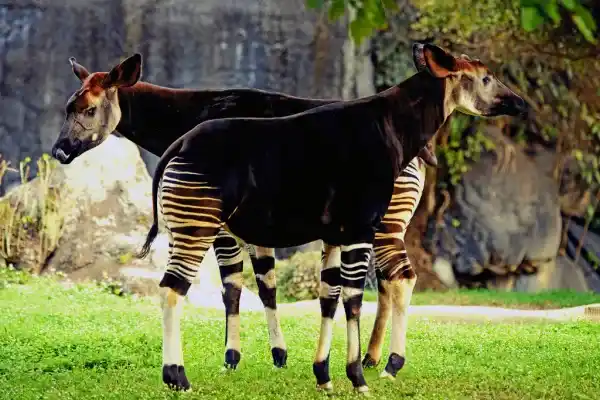
Do you know who the giraffe's closest living relative is? The answer is the okapi (Okapia johnstoni) . Although it is shorter than the giraffe and its fur markings are different, the two are closely related in terms of genes and physical characteristics. Okapis mainly live in the tropical rainforests of Africa and can occasionally be seen in some zoos. However, regrettably, this unique animal is facing a serious survival crisis.
According to the IUCN Red List of Threatened Species , the okapi has been listed as a "threatened species" since 2013. Currently, there are only 10,000 to 20,000 individuals left in the world. In ancient times, it was even known as the "unicorn of Africa."
This article will provide a detailed introduction to the characteristics, habitat, diet, reasons for endangerment, and possible conservation measures of the okapi, in order to help people gain a deeper understanding of this mysterious animal and raise awareness of species conservation.
Basic Information Card – A Glimpse of the Hogapi
Chinese name : Hokkaido
Scientific name : Okapia johnstoni
Class : Mammalia
Order : Artiodactyla
Family : Giraffidae
Habitat : Dense rainforests of Central Africa
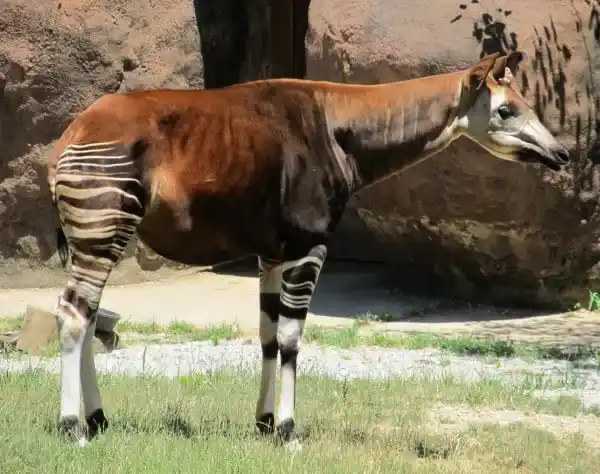
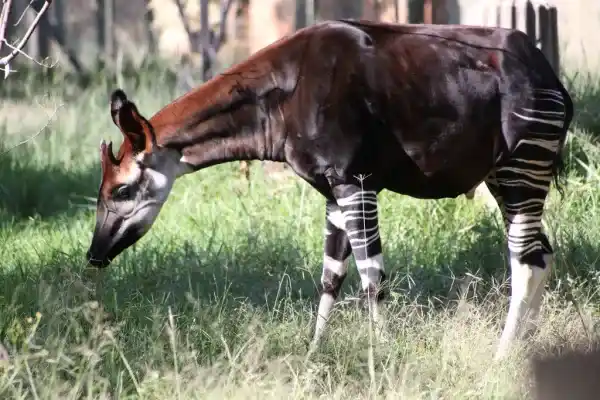
Physical characteristics : Smaller than a giraffe, with a dark brown body, black and white stripes on its limbs, and two short horns on its head. Its appearance is like a combination of a giraffe, zebra, and horse.
Diet : Herbivorous, mainly feeding on leaves, tender branches and understory plants.
Okapi's physical and behavioral characteristics
Size : Adult okapis are about 2.1 meters long, over 1 meter tall at the shoulder, and weigh up to 250 kilograms , much lighter than giraffes.
Horns and ears : Males have two small, hair-covered horns, while females usually do not. The ears are large and useful for catching sounds.
Coat color : The whole body is brownish-red, the face is lighter in color, and the limbs have conspicuous white and dark stripes, similar to a zebra.
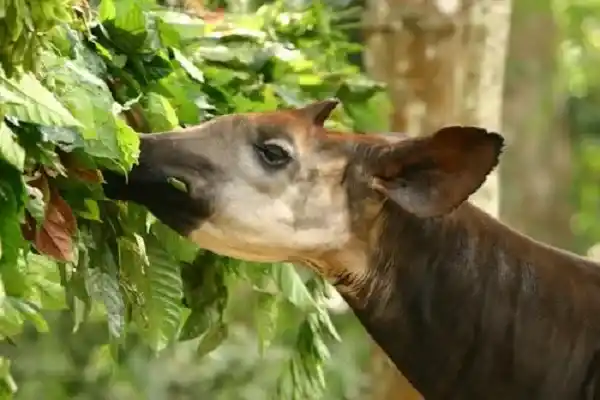
Tongue : Long and flexible, dark in color or even blue, it can reach up to the ears—a feature similar to that of a giraffe, used for eating leaves on high places.
Senses : Highly developed senses of smell and hearing, which help them perceive their environment and detect danger signals in the rainforest.
Reproduction : The gestation period lasts up to 15 months , and only one offspring is born per litter.
Behavioral Habits
Most are solitary animals , but occasionally they form small groups in the wild.
They are nocturnal , hiding in dense forests during the day.
It has few natural predators; its main threats come from humans and leopards .
They make very few sounds, almost silent most of the time. Young animals will make sounds to find their mother, while adults mainly make sounds during the mating season.
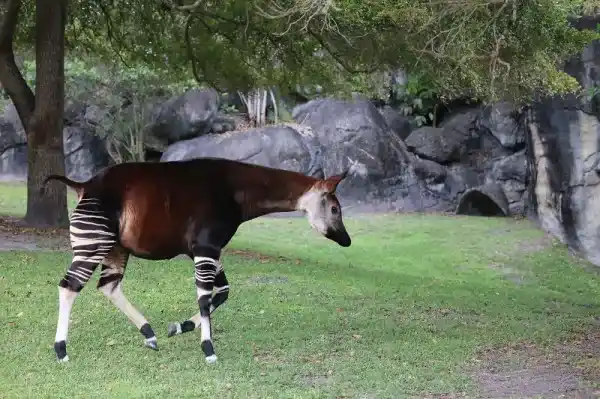
Distribution and Habitat of the Okapi
Wild distribution : Only in the tropical rainforests of the northern Democratic Republic of Congo , with a habitat area of approximately 240,000 square kilometers .
Environment type : Unlike giraffes, okapis do not live in open savannas, but rely on dense rainforests for survival, so they do not need to be as tall as giraffes.
Historical distribution : It was once distributed as far as Uganda , but is now extinct there.
Captive breeding : Animals around the world keep animals in captivity for science education and conservation programs.
Okapi diet
Okapis are typical herbivores with a very wide diet:
They mainly feed on leaves, buds, and branches ;
It can pull on branches to get fresh leaves from higher up;
The food consists of more than 100 kinds of plants , including shrubs, wild grasses, forest fruits, and even some fungi .
This dietary habit is similar to that of a giraffe, except that the giraffe has a limited range of altitude for feeding.
The reason why the okapi is endangered
The sharp decline in the number of okapis is mainly due to human activities:
deforestation
Large-scale clearing of tropical rainforests for agriculture, logging, and human habitation directly destroys habitats.
illegal mining
Mining (especially illegal mining) causes severe land damage and pollution.
poaching
The pelts and meat are highly sought after on the black market, making okapis a target for hunters.
Armed conflict
The long-standing conflict in Congo has made conservation efforts difficult, and animals have also been affected by the conflict.
According to the IUCN's assessment, the okapi population is declining and could face extinction within decades without effective intervention.
Protection and Solutions
To save the Ogapi, a multi-pronged approach is needed:
Strengthen the management of protected areas : increase patrols and monitoring, and severely punish poaching.
Improve the lives of local residents : Reduce their reliance on illegal mining or poaching for a living by developing a sustainable economy.
Restricting illegal mining : Strengthening regulation at the policy and enforcement levels.
Reduce deforestation : Promote sustainable forestry and protect tropical rainforest ecosystems.
Summarize
The okapi, once known as the "African unicorn," is the giraffe's closest living relative. Its unique appearance and mysterious habits are captivating, but it is facing extinction due to habitat loss, poaching, and war .
Protecting the okapi is not only about saving a unique animal, but also about safeguarding the ecological balance of the African rainforest.