As you explore Wisconsin's beautiful landscapes, you might wonder what wildlife lives here. Among these animals are some venomous snakes. This article will provide a detailed overview of Wisconsin's venomous snakes, focusing on their characteristics, habitats, and how to stay safe during outdoor activities.
1. Understanding venomous snakes
Wisconsin is home to only two venomous snake species: the eastern Massasoja rattlesnake and the northern copperhead snake. Both are vital to the ecosystem, but can pose a threat to humans if provoked.
Eastern Massasoja Rattlesnake
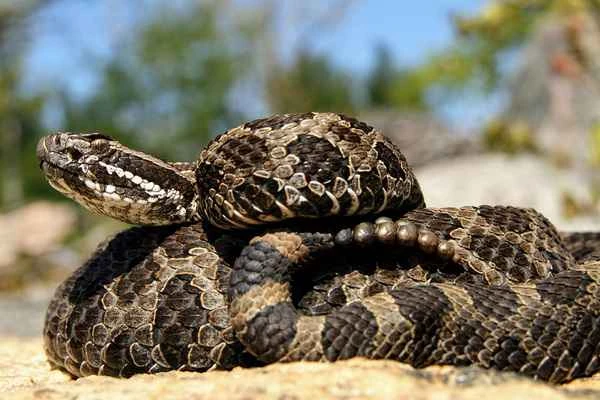
The Eastern Massasoja Rattlesnake (Sistrurus catenatus) is a fascinating and important species native to the wetlands of the American Midwest and Great Lakes region. This small rattlesnake plays a vital role in the ecosystem, and its unique characteristics make it an object of interest for wildlife enthusiasts and researchers.
1. Physical characteristics
Size : Compared to other rattlesnakes, the Eastern Massasoja is relatively small, typically between 2 and 3 feet in length. Some individuals may be slightly larger, but usually do not exceed 3.5 feet.
Color : This rattlesnake's distinctive coloration aids in camouflage. Its base color ranges from gray to light brown, with irregular dark patches on its back. This pattern helps it blend into its natural habitat, typically consisting of leaf litter and rocky areas.
Rattlesnake : Like all rattlesnakes, the eastern Massasoja has a rattlesnake at the end of its tail. This rattlesnake is made of keratin (the same material as human fingernails) and produces a distinctive warning sound when the snake vibrates its tail. This serves as a warning of potential threats, allowing the snake to avoid conflict.
2. Habitat and Distribution
Geographical range : In the eastern part of the Massasoja, it is mainly distributed in the Great Lakes region, with populations found in states such as Wisconsin, Michigan, Illinois, Ohio, and Indiana. Its range extends into southern Canada, particularly in Ontario.
Preferred habitat : This snake prefers wetlands, including swamps, wetlands, and floodplains. However, they can also be found in nearby highlands, especially during the warmer months, where they seek out sunbathing spots.
3. Behavior and diet
Behavior : The Eastern Massasoja is typically a shy and secretive snake. They tend to avoid contact with humans and usually retreat into burrows or under vegetation when threatened. However, they can become aggressive and defensive if cornered.
Diet : Their main diet consists of small mammals (such as rodents), amphibians, and occasionally birds. As ambush predators, they use excellent camouflage to blend into their surroundings and attack unsuspecting prey.
4. Reproduction
Mating : In eastern Massasoja, snakes are viviparous, meaning they give birth to live offspring rather than laying eggs. Mating typically occurs in the spring, when the snakes emerge from hibernation.
Pregnancy : After a gestation period of about 3 to 4 months, the female gives birth to 5 to 15 young snakes in late summer or early autumn. The newborn snakes are about 8 to 10 inches long and can survive independently after birth.
5. Protection Status
The Massasoga in the east is listed as an endangered species in many areas, primarily due to habitat loss, fragmentation, and persecution. Wetland destruction and urbanization pose significant threats to its survival. Conservation efforts are underway to protect its habitat and raise public awareness of the species' importance in the ecosystem.
6. Safety and Human Interaction
Although the Eastern Massasoja is venomous, it is not considered aggressive, and bites are rare. If you encounter it in the wild, it's best to maintain a safe distance and let the snake leave on its own. Here are some tips for safe interaction:
Do not disturb : If you see a Massasoja, never try to handle or provoke it. Most snakes prefer to avoid conflict.
Stay alert : When hiking or exploring wetlands, be vigilant and watch your footsteps, especially near tall grass or rocks.
Educate yourself : Learning more about Eastern Massasoga and its role in the ecosystem can enhance your appreciation of it and promote conservation efforts.
The Eastern Massasoga rattlesnake is a unique and valuable species that enriches the biodiversity of its habitat. Understanding its characteristics, behavior, and the challenges it faces helps advance conservation efforts, ensuring future generations can appreciate this amazing snake. Whether you are a wildlife enthusiast, a researcher, or simply someone who enjoys exploring nature, taking the time to learn about the Eastern Massasoga will deepen your appreciation of the natural world.
Northern Copperhead Serpent
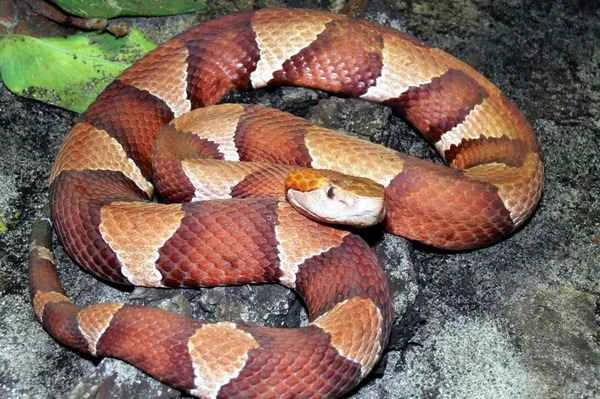
The Northern Copperhead Snake (Agkistrodon contortrix mokasen) is a fascinating venomous snake primarily found in the eastern United States. Renowned for its distinctive appearance and behavior, the Northern Copperhead Snake plays a vital role in its ecosystem. This article will detail its physical characteristics, habitat, behavior, diet, reproduction, conservation status, and safety precautions when interacting with humans.
1. Physical characteristics
Size : The Northern Copperhead Snake is a medium-sized snake, typically between 2 and 3 feet in length, although some individuals can reach 4 feet.
Color : This snake is easily identifiable by its distinctive appearance. It has a copper-colored head, a key identifying feature. The body is typically light brown or beige, with a dark brown or red hourglass-shaped band along its back. This coloration helps it blend into its natural environment, especially among fallen leaves and debris in the forest floor.
Eyes : The northern copperhead snake has a distinctive slit-shaped pupil, similar to other rattlesnakes. This feature, along with its triangular head, helps distinguish it from non-venomous snakes.
2. Habitat and Distribution
Geographical range : The Northern Copperhead is mainly distributed in the eastern United States, from southern New England to Georgia, and extending westward to Illinois and Missouri.
Preferred Habitat : This snake inhabits a variety of environments, including deciduous forests, rocky slopes, and wetlands. It often appears in areas with abundant cover, such as fallen leaves, fallen trees, and rock crevices, which provide it with shelter and hunting opportunities.
3. Behavior and diet
Behavior : The northern copperhead snake is typically a solitary snake. It is primarily active during the day, especially in the cooler months, but can also be found at dawn and dusk. During the hottest part of the day, they usually seek refuge in shady places.
Diet : This snake primarily feeds on small mammals, including rodents and young rabbits, as well as amphibians and insects. It is an ambush predator, relying on excellent camouflage to blend into its environment and attack unsuspecting prey.
4. Reproduction
Mating : Northern copperhead snakes are viviparous, meaning they give birth to live offspring rather than laying eggs. Mating typically occurs in the spring.
Pregnancy : After a gestation period of about 2 to 3 months, the female gives birth to 5 to 20 young snakes in late summer or early autumn. The newborn snakes are about 8 to 10 inches long and can live independently after birth.
5. Protection Status
The northern copperhead snake is currently listed as a "least concerned" species, but populations in some areas may be threatened by habitat destruction, road deaths, and human persecution. Efforts to protect its habitat and raise public awareness of the species' importance are crucial for its long-term survival.
6. Safety and Human Interaction
Although the northern copperhead snake is venomous, it is generally not aggressive, and bites are rare. If you encounter a copperhead snake, it is important to maintain a safe distance and let the snake leave on its own. Here are some safety tips:
Stay calm : If you see a copperhead snake, remain calm and avoid sudden movements. Most snakes prefer to run rather than confront.
Keep away : Maintain distance and do not attempt to handle or provoke the snake.
Watch your step : When hiking in areas where copperhead snakes may inhabit, be mindful of your footing, especially in tall grass or rocky terrain.
Seek medical help if bitten : In the extremely unlikely event of a bite, seek medical help immediately. Never attempt to suck out the venom or apply ice to the wound.
The northern copperhead snake is a unique and valuable species that enriches the biodiversity of its habitat. Understanding its characteristics, behavior, and the challenges it faces helps advance conservation efforts, ensuring that future generations can appreciate this amazing snake. By respecting its space and learning more about its role in the ecosystem, we can safely coexist with this fascinating reptile.
Eastern Rattlesnake vs. Northern Copperhead
The following is a detailed comparison of the eastern Massasoja rattlesnake and the northern copperhead snake in terms of toxicity, timing of venom onset, and other relevant characteristics.
feature Eastern Massasoja Rattlesnake Northern Copperhead Serpent scientific name Sistrurus catenatus Agkistrodon contortrix mokasen Toxicity Moderate toxicity Moderate toxicity Venom type Blood toxicity (damages blood vessels and tissues) Blood toxicity (damages blood vessels and tissues) Toxicity level It is generally considered to be less venomous than the copperhead snake. It is generally considered to be more venomous than the Massasoga rattlesnake. Symptom onset time 30 minutes to 2 hours after the bite 30 minutes to 2 hours after the bite Common symptoms Pain, swelling, discoloration at the bite site, and nausea Pain, swelling, discoloration at the bite site, and nausea Mortality rate Rare; timely medical treatment usually prevents death. Rare; timely medical treatment usually prevents death. Antitoxin availability Limited availability; no specific antitoxin. Limited availability; no specific antitoxin. Behavior They are usually quite shy and tend to avoid contact with humans. They are usually quite shy and tend to avoid contact with humans. Habitat wetlands, marshes and woodlands Forests, rocky slopes and wetlands Summary of Venom Differences
Toxicity : While both snakes' venoms are primarily hemotoxic, the northern copperhead snake's venom is generally considered more potent than that of the eastern Massasoja rattlesnake. However, bites from either species are usually not fatal if treated promptly, but will still cause significant pain and swelling.
Symptom onset time : Symptoms from bites in both snake species typically appear between 30 minutes and 2 hours after the bite. This timeframe may vary depending on individual circumstances, such as the size of the snake, the size of the victim, and the location of the bite.
When comparing the eastern Massasoja rattlesnake and the northern copperhead snake, the latter is generally considered more venomous. However, both snakes pose risks, and seeking immediate medical attention after a bite is crucial. Understanding their characteristics and potential dangers can help ensure safety while enjoying outdoor activities.
2. Identifying venomous and non-venomous snakes
Wisconsin is home to several non-venomous snakes, including the common flower snake and the eastern jackal snake. Here are some tips to help you distinguish them:
Head shape : Venomous snakes usually have triangular heads, while non-venomous snakes have longer heads.
Pupil shape : The pupils of venomous snakes are usually vertical slits, while the pupils of non-venomous snakes are round.
Color and Pattern : Pay attention to the color and pattern on the snake's body. Venomous snakes usually have distinctive markings.
3. Safety tips for encountering snakes
Although encounters with venomous snakes are rare, it's important to be prepared. Here are some safety tips:
Stay on trails : When hiking or walking in the forest, try to stay on marked trails to reduce your chances of encountering snakes.
Wear appropriate footwear : Sturdy boots can protect your feet and ankles from snake bites. Try to avoid wearing sandals or open-toed shoes in areas where snakes are frequently seen.
Watch your footing : Always be mindful of where you place your feet and hands, especially when climbing rocks or wood.
Do not disturb : If you see a snake, keep your distance. Do not try to handle or provoke it, but slowly back away.
4. What should I do if I get bitten?
In rare cases, if you are bitten by a venomous snake, it is crucial to act quickly:
Stay calm : Try to remain calm to slow the spread of the toxin.
Seek medical help : Go to the nearest hospital immediately or call emergency services.
Limit activity : Keep the injured limb as still as possible and keep it below the heart.
Do not apply ice or cut the wound : these methods are outdated and may worsen the condition.
Learning about Wisconsin's venomous snakes can enhance your outdoor experience while staying safe. By understanding precautions and appropriate responses, you can enjoy Wisconsin's natural beauty without fear. Remember, snakes play a vital role in our ecosystem, and respecting their space is essential for harmonious coexistence. Happy exploring!