The albatross (scientific name: *Diomedea exulans*), also known as the wandering albatross, is one of the world's largest extant seabirds in terms of wingspan, and is hailed as the "champion of long-distance flight at sea." They gracefully soar over the vast oceans of the Southern Hemisphere and are highly representative birds of marine biodiversity. This article will provide a detailed introduction to the wandering albatross's physical characteristics, distribution range, main diet, breeding habits, and conservation status, giving you a comprehensive understanding of this legendary bird.
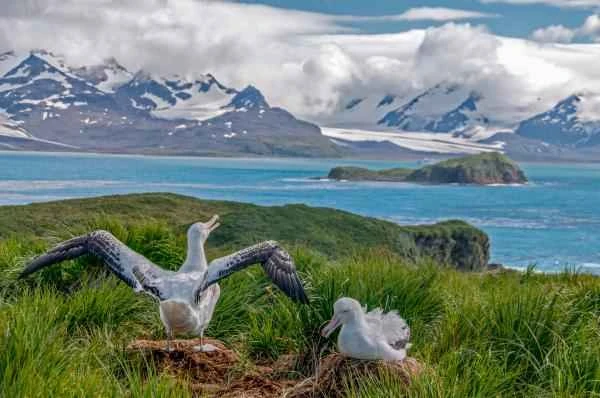
Main characteristics of the wandering albatross
Huge size : Adult wandering albatrosses can reach 107 to 135 cm in length, have a wingspan of 254 to 363 cm, and weigh about 9 kg. They are the birds with the longest wingspan and the largest size in the world.
Feather changes : The feathers of juvenile birds are relatively dull, gradually turning pure white as they grow older. The back and underwings of adult birds are mostly white, with black edges on the wingtips and tail tips.
Large and hard beak : The beak is yellow and covered with hard horny plates, which are suitable for catching slippery marine creatures.
Exceptional flight capabilities : The albatross's enormous wings allow it to glide over the sea for hours with almost no effort. Adult birds can fly thousands of kilometers without landing, and records show that some individuals can fly continuously for 46 days, covering a distance of up to 1,600 kilometers one way. Young birds can even go up to 6 years without setting foot on land after leaving the nest.
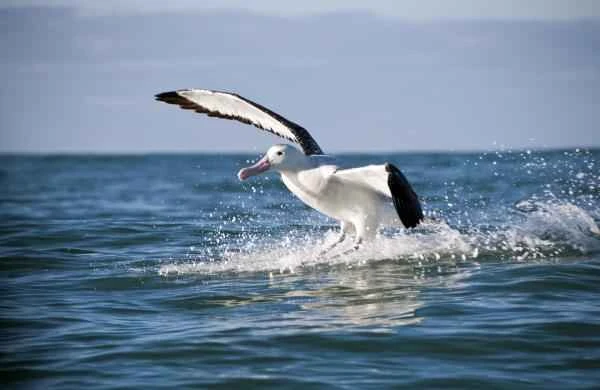
Relying on wind power : Albatrosses are adept at gliding using the strong winds of the westerly winds, and will even land on the sea surface to wait for the wind to pick up when there is no wind. They often take off from high cliffs by the sea.
Closely related to humans : because they often follow fishing boats to beg for food, they have become a symbolic companion to sailors.
Distribution area of albatross
Main distribution area : Wandering albatrosses are widely distributed in the Southern Ocean and the waters near Antarctica in the Southern Hemisphere.
Breeding location : They only breed on sub-Antarctic islands in the Southern Ocean (such as the Crozet Islands and the Prince Edward Islands).
Life at sea : Except during the breeding season, adult birds spend almost all their time flying at sea, only occasionally landing on the sea surface to forage.
Albatross's diet and foraging methods
Main diet : Primarily surface-dwelling squid and fish, and sometimes also preys on crustaceans and fish eggs.
Foraging method : Due to limited diving ability, they usually only hunt for floating organisms on the surface or at a depth of 1 meter.
Supplementing their food sources : They also eat fish scraps discarded by fishing boats and carcasses floating at sea, making them well-known "cleaners".
Survival wisdom : Sometimes they drive away other smaller seabirds and even steal their food.
Albatross breeding habits
Breeding frequency : Wandering albatrosses breed once every two years, with the breeding season in November each year.
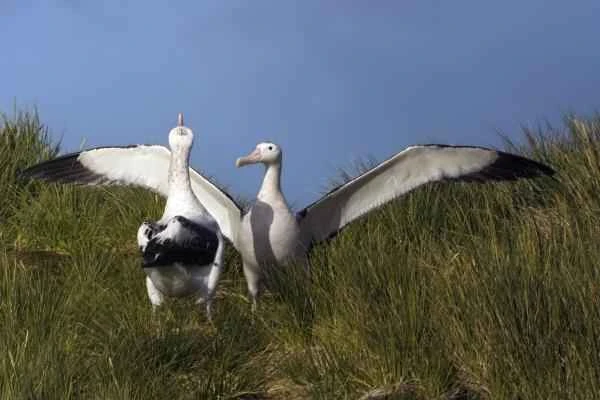
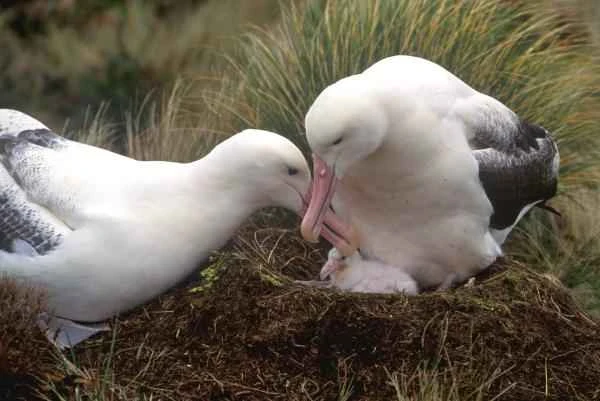
Courtship behavior : The courtship ritual is extremely complex, including actions such as nodding, spreading wings, and vocalizing. They are usually monogamous for life.
Nest building method : Simple nests are built using mud and grass stems.
Reproduction process : Each clutch contains only one large egg, with an incubation period of up to 78 days. The male and female take turns incubating the egg, with each rotation lasting about 10 days.
Characteristics of raising chicks : After hatching, chicks need to be cared for by their parents for up to 9 months before they can fly independently.
Late-maturing reproductive stage : It takes about 10 years to reach sexual maturity and reproduce for the first time.
The current state of albatross conservation
Threat factors : The greatest threat is longline fishing, as albatrosses often drown after accidentally swallowing fishhooks, resulting in a huge number of deaths and injuries each year.
Slow reproduction and low compensation : Albatrosses have a long breeding cycle and low survival rate, resulting in slow population recovery.
IUCN Conservation Status : Currently listed as "Vulnerable," and efforts are being intensified globally to protect and regulate its habitat and marine fisheries.
Protective measures include promoting environmentally friendly fishing techniques, banning certain dangerous fishing gear, and strengthening public education.
References
Soper, T., Scott, D. (2008) Antarctica: A Guide to Wildlife. UK: Bradt Travel Guides.
Royo, M. (undated). A Guide to Identifying Seabirds in the South Atlantic. Buenos Aires: Argentine Wildlife Foundation.