The giant panda ( Ailuropoda melanoleuca ) is a rare animal endemic to China, hailed as a "national treasure," and receives widespread attention globally. They attract countless eyes not only for their endearing appearance but also because their endangered status prompts profound reflection on wildlife conservation. While the giant panda we commonly see is typically a chubby, black-and-white creature, it is actually not a single species but rather comprises different types. This article will detail the different types of giant pandas, including their species differences, habitats, and ecological characteristics.
Basic introduction to giant pandas
Giant pandas belong to the order Carnivora, family Ursidae. Their diet consists mainly of bamboo, but they occasionally consume other plants and small animals. Giant pandas primarily feed on bamboo, consuming large quantities to maintain their energy. They are remarkably large, typically measuring 1.2 to 1.8 meters in length and weighing between 85 and 125 kilograms. They are known for their slow movement, low metabolic rate, and highly dependent lifestyle on bamboo.
Different types of giant pandas
1. Traditional Giant Panda
Species characteristics: The traditional giant panda, the one we commonly see, has distinctive black and white fur. This type of panda lives in the mountainous regions of central China, particularly in the bamboo forests of Sichuan, Shaanxi, and Gansu provinces. Their black fur typically appears around the eyes, ears, limbs, and shoulders, while the rest of their body is white.
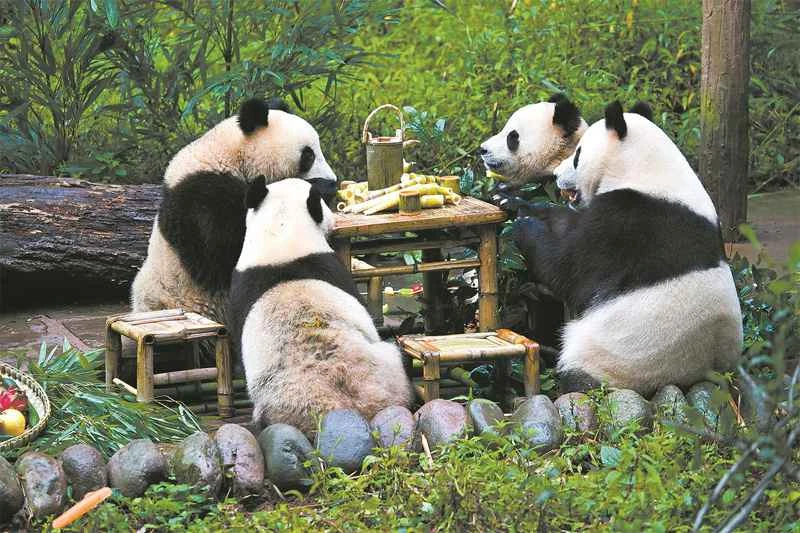
Habitat: Giant pandas traditionally inhabit high-altitude bamboo forests at elevations of 1,200 to 3,100 meters, where bamboo is abundant and the climate is mild, making it suitable for their survival.
Ecological characteristics:
Dietary habits: Giant pandas mainly eat bamboo, which makes up about 90% to 99% of their diet.
Reproduction: Giant pandas breed in the spring. They usually start breeding when they are over 2 years old, but the breeding period is short (only 1-2 days per year), resulting in a low breeding rate.
2. Miniature Giant Panda
Species characteristics: The miniature giant panda is a relatively small type of giant panda. They typically weigh less than traditional giant pandas, around 60 kilograms. These miniature giant pandas are usually more compact in build, with longer legs, and are adapted to survive at higher altitudes.

Habitat: These smaller giant pandas typically inhabit more rugged terrains, such as the high-altitude areas of Sichuan Province. These areas have sparser bamboo growth and drier air, but the smaller pandas are able to adapt to these environments.
Ecological characteristics:
Dietary variety: In addition to bamboo, small giant pandas may also eat some small animals and berries, showing that they have a relatively wide range of dietary choices.
Habitat and Habits: Due to their small size, small giant pandas are usually more active and have adapted to relatively steep terrain and climate conditions.
3. Black and white giant panda
Species characteristics: Black and white pandas are a variant of the traditional panda, with a more symmetrical distribution of black and white markings, especially on the face, limbs, and back where the black and white boundaries are more pronounced. Although this type of panda is less common, they are relatively common in the wild.
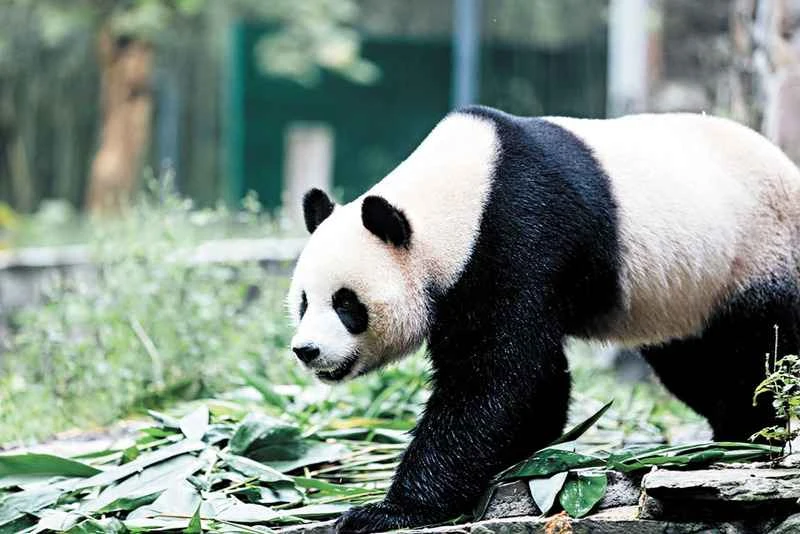
Habitat: Black and white giant pandas typically inhabit the deep mountainous areas of Sichuan Province, where bamboo is abundant and the environment is suitable for their life. Compared to traditional giant pandas, black and white giant pandas tend to roam over a wider area, increasing their habitat utilization.
Ecological characteristics:
Larger size: Black and white giant pandas are usually quite robust and have a strong ability to adapt, especially to cold mountain environments.
Group behavior: Although pandas are generally solitary animals, black and white pandas occasionally form small groups due to their strong social nature.
4. Giant Panda
Species characteristics: The polar panda is an extremely rare variant of the giant panda, larger in size and with thicker fur than the traditional giant panda, adapted to a much colder environment. Their black and white markings are often more prominent, adapted to the snowy environment and providing excellent insulation.
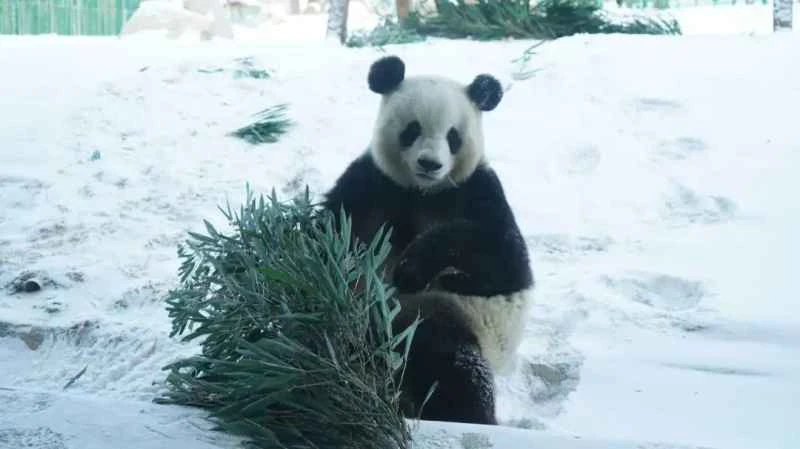
Habitat: These giant pandas typically live in colder, high-altitude regions, such as the high-altitude areas of northern Sichuan and parts of Shaanxi. Due to the harsh climate, they often move around in the snow, which helps them withstand the low temperatures.
Ecological characteristics:
Physiological adaptation: Due to their denser fur, polar giant pandas are better able to adapt to extreme low-temperature environments.
Hibernation Habits: Although giant pandas do not usually hibernate, polar giant pandas often reduce their activity and enter a state similar to hibernation during the extremely cold season.
The significance of protecting giant pandas
Whether it's the traditional giant panda or these different types, their survival faces severe challenges. Habitat loss, climate change, and the reduction of bamboo forests are all factors affecting their survival. Protecting giant pandas is not only about protecting a precious species, but also a call for the protection of the natural ecological environment.
The Chinese government and the international community have taken various measures to protect giant pandas, such as establishing nature reserves and promoting artificial breeding and reintroduction programs. At the same time, the protection of giant pandas has provided important experience and insights for the protection of other endangered species.
in conclusion
As one of the world's most representative endangered species, the giant panda's different types demonstrate its diversity in adapting to different habitats. Understanding these different types of giant pandas not only helps us better understand the species' ecological needs but also allows for more precise interventions in conservation efforts. By protecting these precious giant pandas, we can contribute to global biodiversity conservation.