You may have heard of the dodo , a bird that can now only be seen in museums. It is often depicted as a fat, clumsy bird, and has even appeared in some movies or cartoons. But beyond these stereotypes, do you really know anything about this extinct bird?
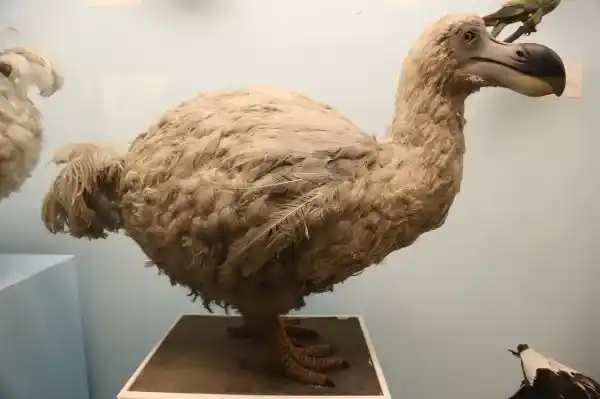
Here we will provide a detailed account of the characteristics, habitat and diet of the dodo ( Raphus cucullatus ) , the reasons for its eventual extinction, and the last time it was seen by humans.
Characteristics of the dodo
Origin : The dodo is native to the Mauritius Islands in the Indian Ocean, near Madagascar. They lived on the islands for a long time before the arrival of humans, without any natural predators.
Species : Two species of dodo are known: the common grey dodo and the white dodo .
The white dodo lives only on the island of Réunion.
Flight ability : The dodo was a flightless bird . Due to its long-term life on isolated islands without predators, it gradually lost the need to fly, and its wings and tail degenerated as a result.
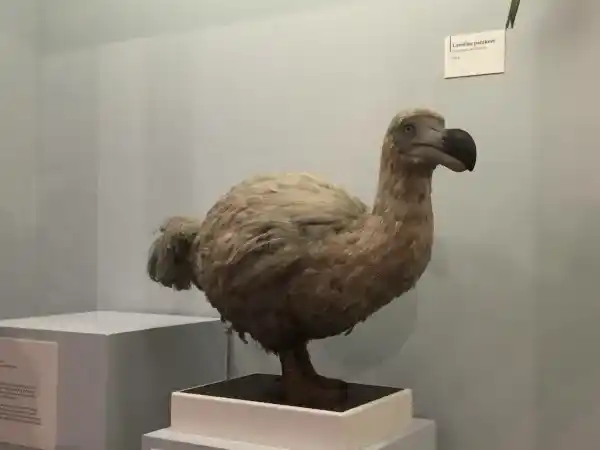
Size : Height approximately 1 meter , weight between 13 and 23 kilograms .
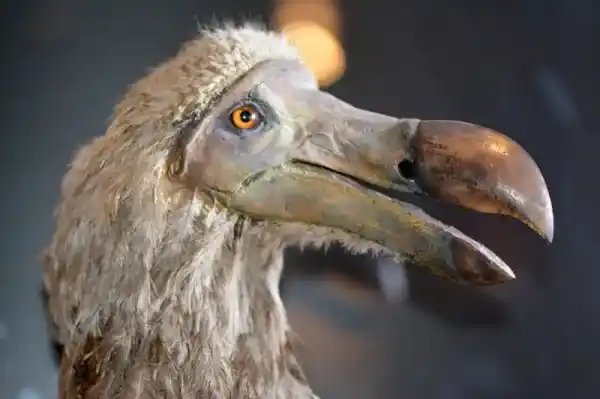
Appearance : Covered in feathers all over the body, except for the face, beak and legs.
Beak : The beak is about 20 centimeters long and slightly hooked, which is speculated to be used to peck open hard foods such as coconuts.
Reproduction : They nest on the ground and lay their eggs directly on the ground, which makes their eggs very easy for predators or humans to collect.
Kinship : The dodo and the pigeon are close relatives.
Personality and behavior : Historical documents often describe the dodo as clumsy and obese, but scientists believe this is due to their lack of exercise and overfeeding in captivity; wild dodos may have been lighter and more agile.
Human use : In the 16th and 17th centuries, European colonists often captured dodos and brought them to Europe. Although their meat was not very palatable, their eggs and feathers were highly sought after, and thus they were long regarded as "exotic birds" in the European market.
Habitat and Diet
Habitat : The dodo is found only in the Mauritius archipelago , which has a tropical climate. The island has distinct rainy and dry seasons , and the dodo must store fat during the rainy season to survive when food is scarce during the dry season.
Diet : According to historical records and scientific research, the dodo primarily fed on the seeds of the tambalacoque tree . This tree is also known as the "dodo tree" because the dodo was believed to have played a key role in seed dispersal.
Other foods include fruits, other plant seeds, and small insects.
Adaptability : The dodo evolved in an environment without natural predators for a long time, so it did not develop a strong defensive instinct and had almost no resistance to humans and alien animals.
The cause of the dodo's extinction
The extinction of the dodo bird was entirely related to human activities .
Earliest encounter : The first recorded sighting of the dodo was in 1574 , discovered by a European navigator. By 1581 , Spanish navigators had even captured a dodo and brought it back to Europe.
Origin of the name : The name of the dodo bird is said to come from the word "clumsy" because it looks silly and is not afraid of people.
Overhunting : Dodo birds are not only killed for their meat, but also subjected to large-scale collection of their eggs and feathers .
Introducing alien species : European colonists, especially the Dutch, brought dogs, pigs, rats, and chickens to Mauritius. These animals quickly became new predators of the dodo.
Rats and pigs preyed on bird eggs on the ground.
Dogs prey on both adult and young birds.
Chickens and other introduced bird species may have also brought new diseases , further threatening the survival of the dodo.
Result : The dodo became completely extinct within just 65 years of Europeans landing in Mauritius.
The last recorded dodo was around 1662 .
According to some scholars, the white dodo may have gone extinct even later, around 1761 .
The extinction of the dodo bird was preventable.
The extinction of the dodo was directly caused by humans, meaning it was a completely avoidable event . If humans had had a basic awareness of biodiversity conservation at the time, this unique bird might still be alive today.
However, humanity has repeatedly made the same mistakes over the past few centuries, leading to the extinction of countless species. The story of the dodo reminds us that we must cherish and protect the plants and animals that exist today.
Science and Future Prospects
Although the dodo has been extinct for centuries, modern scientists are attempting to "resurrect" some extinct animals through genetic technology (de-extinction research) . The research subjects include:
dodo bird
saber-toothed tiger
mammoth
Although this technology is still in the exploratory stage, it has once again brought the dodo bird into the public eye.
In conclusion , the extinction of the dodo is a classic example of human-caused destruction. Overhunting, invasive species, habitat destruction, and a lack of self-defense mechanisms led to the disappearance of this unique bird in just a few decades. Its story serves as a classic warning for global biodiversity conservation.