Mammoths, giant woolly mammoths that lived during the Ice Age, are among the most popular and symbolic extinct animals. Their enormous size and iconic tusks made them representatives of prehistoric behemoths. Now, scientists at Harvard University are even attempting to recreate this species by combining its DNA with that of Asian elephants. However, a crucial question remains: why did mammoths become extinct in the first place?
For decades, the prevailing view was that overhunting by humans was the primary cause of their extinction. However, with advancements in DNA and environmental research, scientists have discovered that the factors that truly led to the mammoth's extinction were far more complex than simply hunting.
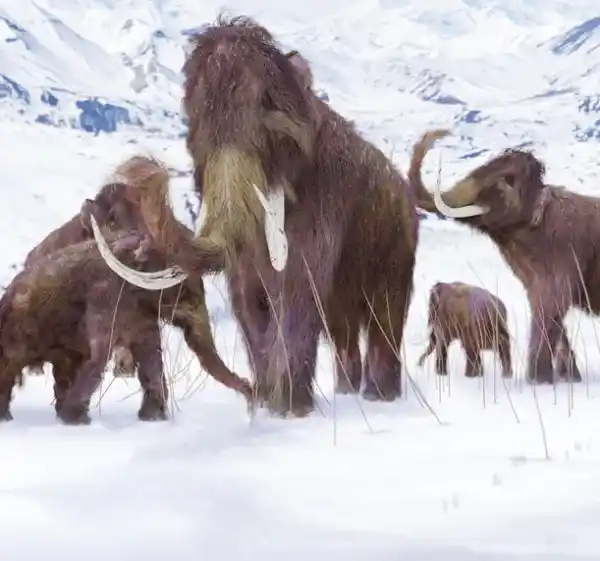
The reason for the extinction of mammoths
Scientists now believe that the extinction of mammoths was mainly caused by the following three factors:
1. Climate change
During the Ice Age, the climate was cold and dry, with low atmospheric carbon dioxide concentrations. These conditions made it difficult for large areas of forest to grow, and instead, vast grasslands emerged, becoming an ideal food source for large herbivores such as mammoths.
However, as the glaciers retreated, the climate gradually became warmer and more humid, atmospheric carbon dioxide levels rose, and forests expanded, replacing grasslands.
Result: Herbaceous plants decreased significantly, the food supply on which mammoths depended for survival was drastically reduced, and the population declined accordingly.
2. Human hunting
Human ancestors did indeed hunt mammoths, using their meat for food, their fur for warmth, and their bones and ivory for tools.
Although hunting accelerated the decline of local populations, research shows that it was not the sole or primary cause of complete extinction , but rather a secondary stressor.
3. Genetic degeneration (gene mutation)
When climate change forced mammoth populations to disperse, a few populations survived in isolated areas.
The last surviving population existed on Wrangel Island in the Arctic Ocean , where they disappeared completely around 3,700 years ago.
DNA research indicates that:
The mammoths of the continent 45,000 years ago had rich genetic diversity.
However, the isolated population on Wrangel Island 4,000 years ago accumulated a large number of harmful mutations due to inbreeding.
These mutations affected reproduction and survival, ultimately becoming the fatal cause that brought down the last remaining population.
Mammoth habitat
Mammoths were primarily distributed across the cold grasslands of Eurasia and North America, in what is known as the **"Mammoth Steppes"**, encompassing:
Eastern Europe
Siberia
Alaska
Yukon Territory, Canada
They lived in a typical Ice Age ecosystem:
Climate characteristics : cold, dry, with large areas covered by ice and snow.
Vegetation characteristics : Forests were sparse, with vast grasslands. Although there was snow on the ground, the plants at that time accumulated more sugars and fiber due to the harsh environment, making them extremely nutritious and very suitable for the herbivorous diet of mammoths.
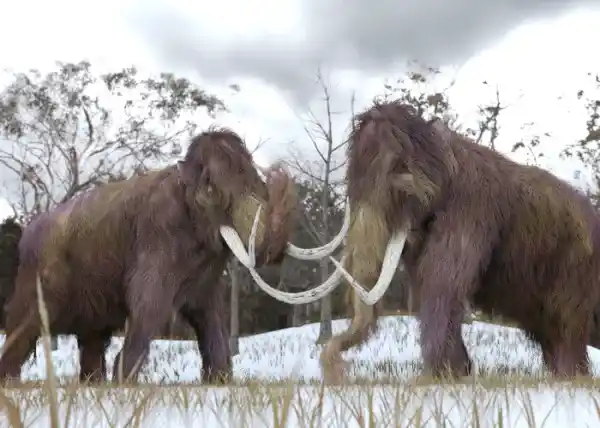
Timeline of Mammoth Evolution and Extinction
6 million years ago : Early ancestors of mammoths evolved in Africa.
3 million years ago : they migrated to North Africa, Asia, and Europe.
1.7 million years ago : Steppe mammoths appeared in China and spread throughout the Northern Hemisphere.
700,000 years ago : the woolly mammoth appeared in Siberia, fully adapted to the extremely cold climate.
200,000 years ago : the steppe mammoths of Europe went extinct.
14,000 years ago : The Ice Age ended, and the evolution of mammoths came to a standstill.
10,000 years ago : The last mammoth population on the continent went extinct.
3700-4000 years ago : The last mammoths on Wrangel Island disappeared, becoming completely extinct.
Summarize
The extinction of mammoths was not caused by a single factor, but was the result of the combined effects of climate change, food shortages, human hunting, and genetic mutations . Climate warming altered vegetation structure, leading to the collapse of the food chain; human hunting exacerbated the pressure; and the last isolated populations lost their ability to survive due to genetic degeneration.
Today, scientists are attempting to "revive" mammoths through genetic engineering, not only to satisfy their scientific exploration and curiosity, but more importantly, because this may provide important insights into our understanding of species conservation and the ecological impact of climate change.
| Extinction factors | Main mechanisms | Impact on population | Evidence supports | Conclusive evaluation |
|---|---|---|---|---|
| Climate change | The end of the Ice Age → global warming and wetting; rising atmospheric CO₂ → grassland reduction and forest expansion; significant reduction in habitat and food sources. | Insufficient food supply → Rapid decline in population size | Geological and plant fossil evidence shows that grasslands were gradually replaced by forests. | The most fundamental reason is the collapse of the population's environment. |
| Human hunting | Prehistoric humans hunted mammoths for their meat, hides, bones, and ivory. | Accelerated local extinction and increased survival pressure | Mammoth bones and stone tool traces discovered at archaeological site | Secondary factors , coupled with an accelerated recession |
| Genetic mutation/inbreeding | Forced isolation of populations (such as Wrangel Island) → severe inbreeding → accumulation of harmful gene mutations | Loss of genetic diversity, decreased fertility, and eventual population collapse | DNA analysis revealed a large number of harmful mutations in late-stage individuals on the island. | The final blow accelerated the extinction of the remaining small populations. |