The ocean is home to many mysterious and unique creatures, and sea angels are among the most fascinating. Scientifically known as *Clionidae*, they belong to the phylum Mollusca, order Gymnoptera, and are shell-less, gelatinous planktonic organisms. They are aptly named "sea angels" because of their translucent bodies and elegant "flying" swimming style. This article will provide a comprehensive overview of sea angels' physical characteristics, habitats, feeding habits, reproductive methods, and why they are facing a survival crisis.
I. What are Sea Angels? A Brief Introduction to Their Morphological Characteristics
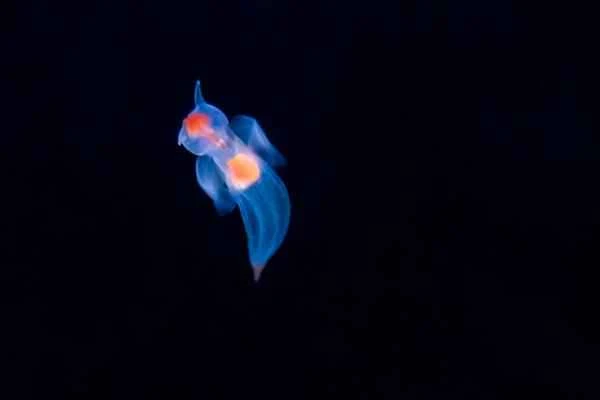
Sea angels belong to the suborder Gymnosomata within the phylum Mollusca and are typical planktonic animals. Unlike most shelled mollusks, sea angels lack shells entirely, and their bodies have a transparent, soft, gelatinous texture. Their main characteristics include:
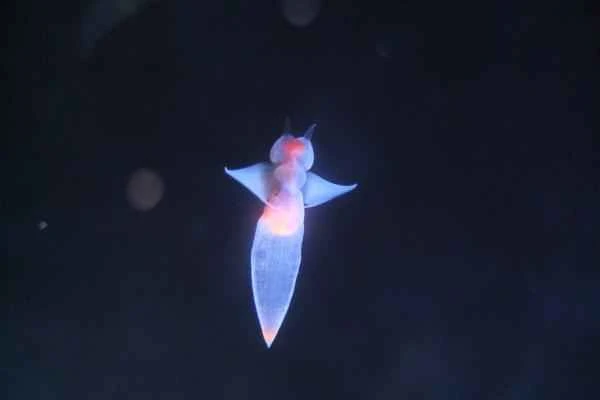
Transparent body : Most individuals are completely transparent, with only the orange visceral sacs visible in the middle.
It has "wings" on both sides : these are actually parapodia that evolved from the foot, one on each side, used for paddling, and the movements are like graceful dancing, which is very beautiful.
Extremely small size : the largest adult individuals are only 5 centimeters long, and most are even smaller.
Six families : There are currently six known families of sea angels, the most common being Clionidae, hence the common name "sea angel" or "Clioni".
Bilateral symmetry : The body structure is symmetrical from left to right, which facilitates levitation and movement.
Shellless and naked : Unlike Thecostomata, which is also a "sea angel" and has a thin shell, the sea angel is completely naked and therefore very sensitive to environmental changes.
II. Distribution and Habitat of Sea Angels
Sea angels are widely distributed in the water columns of all major oceans around the world, and can be found in both subglacial polar waters and surface waters of temperate and tropical regions. Following the principle of "polar gigantism," polar sea angels are larger, while tropical and temperate populations are smaller.
Main distribution areas : under polar ice, Arctic and Antarctic, deep sea column, temperate coast, and tropical shallow sea.
Habitat : Mostly suspended in the upper layers of water, rarely near the seabed.
Highly adaptable : They can survive in extremely low temperatures, and some species even live under polar ice caps.
III. What do sea angels eat? Their diet revealed.
Sea angels are typical carnivorous predators, primarily feeding on other small zooplankton. Their favorite prey is the "sea butterfly," a small mollusk with a thin shell, which also belongs to the pteropod group. In addition, they also prey on other mollusks, marine worms, and small sea slugs.
Hunting methods : Some sea angels lie in ambush to wait for their prey, while others actively chase their targets, resulting in high hunting efficiency.
Structural adaptations : The mouth has a well-developed radula that scrapes prey like a file, and also has specialized oral tentacles for capturing.
Occasionally, cannibalism occurs : When prey is scarce, some species will engage in cannibalism.
Ecological status : It is an important food source for many large animals such as fish, whales, and seabirds, and is also a key link in the food chain.
Self-defense : Some species can secrete toxins to reduce the probability of being preyed upon by predators.
IV. Reproduction and Life Cycle of Sea Angels
Each sea angel is a "synchronized hermaphrodite," possessing both male and female reproductive organs. They reproduce through internal fertilization.
Mating method : The two individuals mate abdominally, extend their gonads and use suckers to hold each other in place, and exchange sperm. The whole process can last for several hours.
Egg laying and development : After fertilization, the larvae lay shelled eggs. After hatching, the larvae will briefly possess the shell, which will then fall off, and they will enter the adult stage and complete metamorphosis.
Life cycle : It undergoes obvious morphological changes from juvenile to adult, and has the ability to reproduce for life after reaching maturity.
V. Why are sea angels endangered? Analysis of their current conservation status.
Although sea angels are not currently listed as "endangered species" on the IUCN Red List, their habitat is being seriously threatened by global ecological problems such as ocean acidification.
Ocean acidification : The absorption of large amounts of carbon dioxide into seawater leads to a decrease in seawater pH. The dissolution of the shells of shelled zooplankton such as sea butterflies directly affects the food source of sea angels that feed on them, threatening the ecological balance of the entire community.
Food chain disruption : If basic food sources are drastically reduced, sea angel populations will face a severe survival crisis.
Conservation appeals : Organizations like The Ocean Conservancy are advocating for a safer ecosystem for planktonic organisms, including sea angels, by promoting carbon reduction and ocean conservation efforts.
Conclusion
Sea angels, with their dreamlike forms and unique ecological value, have become a symbol of marine biodiversity. However, environmental changes have quietly threatened their survival. Protecting marine ecosystems, reducing carbon emissions, and paying attention to zooplankton are important issues that every nature lover and member of the public should focus on.
References
National Geographic. (2022). A rare video shows the elegant mating dance of sea angels. Accessible at: https://www.nationalgeographicla.com/animales/apareamiento-de-angeles-de-mar
Ocean Conservancy. (2021). The Truth About Sea Angels. Accessible at: https://oceanconservancy.org/blog/2021/05/25/truth-sea-angels/
National Geographic. (2022). Endangered animals. Accessible at: https://www.nationalgeographic.com.es/naturaleza/grandes-reportajes/animales-peligro-extincion_12536