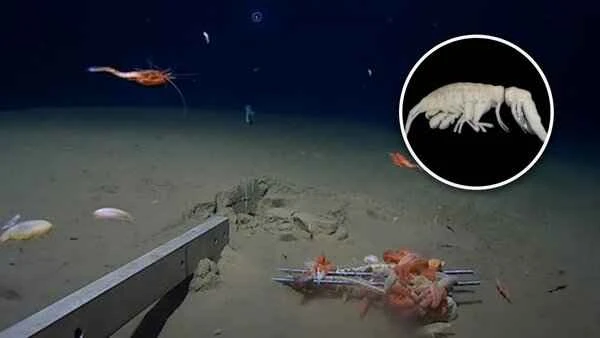
When we talk about "animals" and "vertebrates," many people subconsciously confuse the two terms. In fact, "animal" is a broader category, while "vertebrates" is just one branch within it. Vertebrates are named for their spine or notochord, but not all vertebrates have limbs. In fact, throughout evolutionary history, a significant number of vertebrates gradually lost their limbs, evolving into limbless forms adapted to aquatic, underground, or reptilian lifestyles.
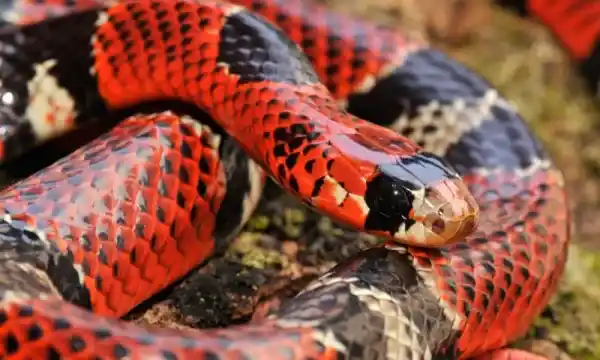
This article will introduce you to several typical limbless vertebrates , including limbless fish living in water, limbless species among amphibians, and representative species of various "snake-like" morphologies among reptiles.
Main characteristics of vertebrates
Vertebrates belong to a subphylum of Chordata and are one of the most diverse groups in the animal kingdom (Metazoa). Their most distinctive feature is the presence of a vertebral column or notochord , and the development of a bony or cartilaginous endoskeleton within their bodies.
Origin : The earliest vertebrates can be traced back to the Ediacaran period (early Precambrian) about 635 million years ago.
Number of species : There are currently about 60,000 known vertebrate species , which are widely distributed in various ecological environments.
Main features :
High body size and metabolic rate;
They evolved a powerful musculoskeletal system;
Diverse hunting methods and survival strategies have emerged;
They are highly diverse in their reproductive methods and can adapt to various environments, from the deep sea to the desert.
Aquatic invertebrates
In aquatic environments, typical limbless vertebrates include jawless fish (Agnatha) . Representative species include hagfish (Mixines) and lampreys (Lampreas) . In addition, some slender bony fish (such as eels and moray eels) also exhibit limbless morphology.
Hagfish (Mixines)
Distribution : Widely distributed in cold, deep-sea waters around the world.
Diet : It feeds on carrion and often burrows into the bodies of dying fish to devour their tissues, hence the name "ocean scavenger".
Defense mechanism : The body surface has special mucous glands that can quickly secrete proteins and polysaccharides, which form a gel-like mucus upon contact with seawater, used to defend against predators.
Current situation : Facing survival pressure due to overfishing of their skins. Hagfish (such as the European hagfish Myxine glutinosa ) are still found along the Atlantic coast in Spain.
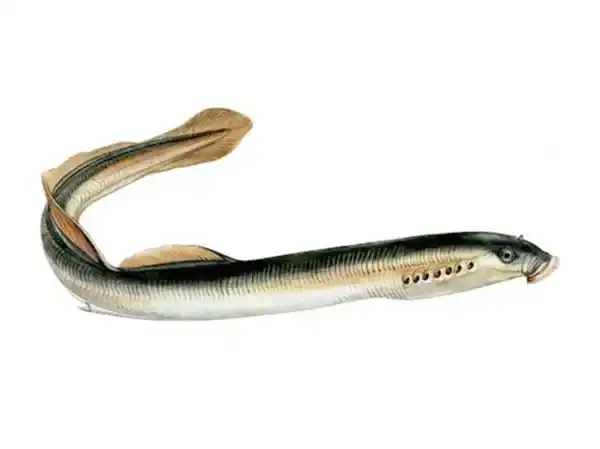
Lamprey (Lampreas)
Habits : The name comes from their ability to attach themselves to rocks or other creatures using their round mouths.
Ecology : Most are migratory fish, living in the cold waters of the Northern Hemisphere. Some species are parasitic, feeding on the blood of their hosts.
Current situation : In some parts of the Iberian Peninsula, the population has plummeted due to the destruction of fishery resources. For example, Lampetra planeri has been listed as a critically endangered species.
Other fish
Although it still has fins in a strict sense, its morphology is close to limbless:
Anguilla (eel)
Moray eel (Muraenidae)
Conger eel
These fish have slender bodies and often live in caves or at the bottom of sandy mud, swimming in a manner more akin to serpentine wriggling.
Limbless amphibians
Among amphibians, the typical limbless representative is the caecilians (scientific name Gymnophiona or Apoda) .
Physical characteristics : Slender body with ring-shaped segments, resembling an earthworm. Eyes are degenerate or even absent, adapted to underground life.
Ecological habits : Primarily carnivorous, preying on small invertebrates such as earthworms, ants, and termites.
Special Case : Boulengerula taitana is an egg-laying caecilian whose larvae feed on the exfoliated skin of their mothers, a behavior considered a special case of "maternal skin feeding".
Limbless reptiles
Among reptiles, there are many species that have evolved to be limbless or nearly limbless. Most of them have slender bodies, adapted for burrowing, crawling, or ambush.
1. Pygopodios (foot-foot lizard)
It belongs to the same evolutionary clade as the gecko.
The forelimbs have completely disappeared, and the hindlimbs have degenerated into small protrusions with no function.
They look very much like snakes, such as Pygopus lepidopodus .
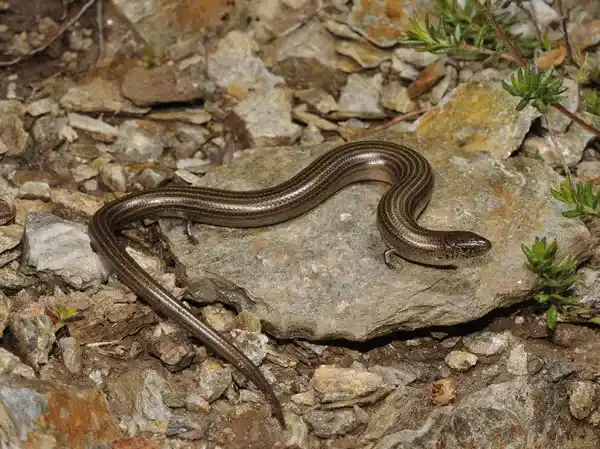
2. Sand lizards (Scincidae, some species)
They mostly live in burrows and underground.
The limbs are extremely degenerated, with only vestigial small limbs remaining.
Representative species: Lerista aericeps .
3. Snake lizard or legless lizard (Anguidae)
This includes species of different sizes, such as the small Elgaria parva and the large Ophisaurus apodus .
Some species still retain traces of limbs.
4. Amphisbaenia (Earthworm Lizard)
It is known as the "two-headed snake" or "worm lizard".
It can crawl in both directions, front and back, and its skin contracts and slides like an accordion.
Its head is hard, suitable for digging; it lacks external ears and its eyes are degenerate.
5. Snakes (Serpentes)
Snakes are the most typical limbless reptiles.
Method of locomotion : Propelled by rubbing their scales together and undulating their bodies; giant snakes (such as pythons and boas) can also crawl in a straight line.
Feeding method : The lower jaw is connected by ligaments and skin, and can be opened wide to swallow prey that is much larger than its own head.
Sensory organs : Detect prey using a forked tongue and heat receptors in the cheeks.
Weapons : Many species possess venomous fangs, which can inject venom to paralyze or kill prey.
Summarize
Limbless vertebrates are widely distributed in aquatic, terrestrial, and underground environments:
Fish : hagfish, lamprey, eel, moray eel.
Amphibian : Caecilians.
Reptiles : saddleback lizard, sand lizard, snake lizard, earthworm lizard, snakes.
They share common characteristics such as slender bodies adapted for burrowing or swimming, and limbs that are either completely absent or only traces remain. Through unique locomotion, sensory systems, and hunting strategies, they have successfully adapted to extreme ecological niches.
These animals not only reveal the diverse pathways through which vertebrates "lost limbs" during evolution, but also provide important insights for our understanding of biological adaptation and diversity.