Octopuses, as fascinating invertebrates of the ocean, are renowned for their intelligence and astonishing camouflage abilities. Globally, there are many species of octopuses, such as the common octopus, blue-ringed octopus, dumba octopus, giant octopus, and mimic octopus. They are widely distributed, with diverse forms and habits, showcasing the wonders of marine biodiversity.
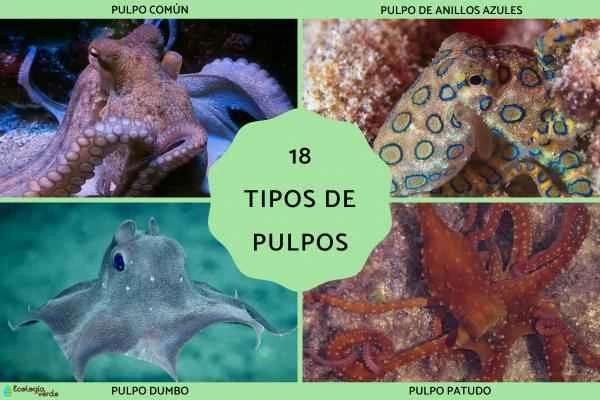
This article will take you on an in-depth journey through 15 different types of octopuses and their characteristics, helping you to get to know this amazing marine creature.
Basic classification of octopuses
Octopuses belong to the phylum Mollusca, class Cephalopoda, order Octopoda. Octopoda is further divided into two suborders:
Incirrina : finless and possesses an ink sac.
Cirrina : has fins but no ink sac.
An octopus has eight tentacles surrounding its mouth, covered with suckers. These tentacles are flexible and powerful, and two-thirds of its neurons are located in the tentacles, enabling it to perform complex movements.
Introduction to 15 Common Octopus Types
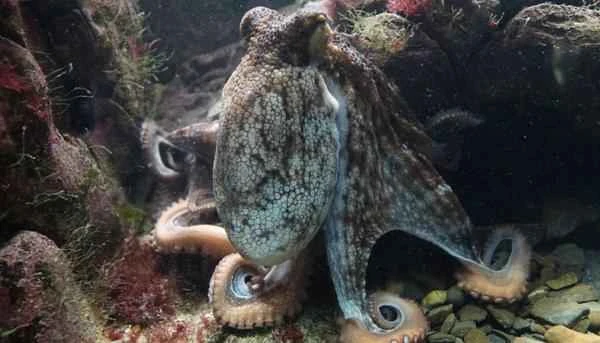
Common octopus (Octopus vulgaris)
Widely distributed globally, highly intelligent, and adept at color change and camouflage, it primarily preys on crustaceans and shelled mollusks. Its intelligence makes it a standout among invertebrates.
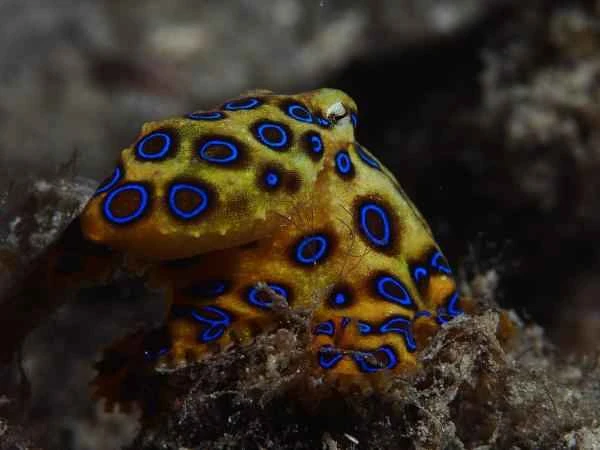
Blue-ringed octopus (Hapalochlaena lunulata)
Only 10-15 centimeters long, extremely venomous, and with blue ring-shaped markings that deepen when threatened, it is one of the most dangerous octopuses in the world.
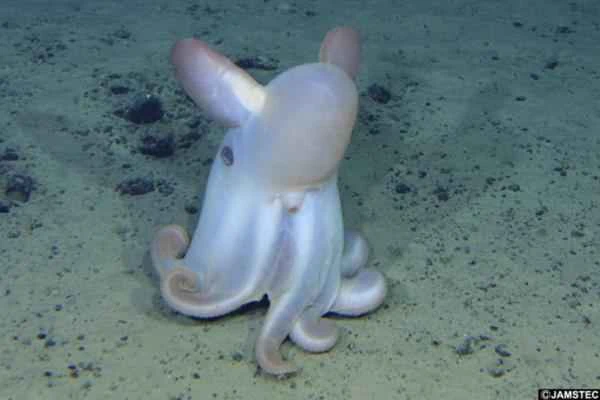
Dumbar octopus (Grimpoteuthis spp.)
Commonly known as "Dumba," it gets its name from the fins on either side of its head that resemble those of Disney's "Big Ear Elephant." It lives in waters 3,000-4,000 meters deep.
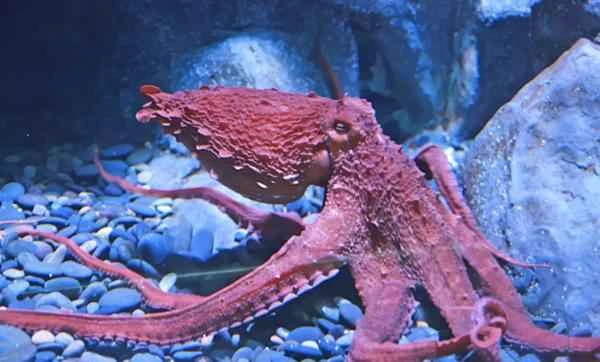
Giant octopus (Enteroctopus dofleini)
The largest octopus species, with a recorded length of 9 meters, is distributed along the North Pacific coast and is adapted to low-temperature and low-oxygen environments.
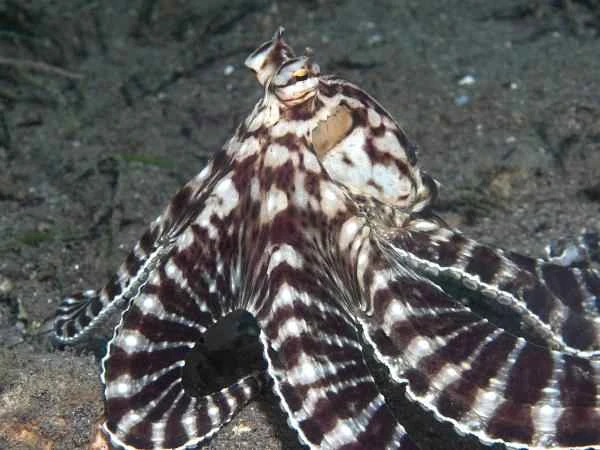
Mimic octopus (Thaumoctopus mimicus)
Not only can it change color, but it can also mimic the shapes of other marine creatures, such as jellyfish, corals, and sponges, making it extremely adept at camouflage.
Caribbean reef octopus (Octopus briareus)
They are found in the Caribbean Sea and western Atlantic coral reefs, using the membranous structures on their arms to hunt.
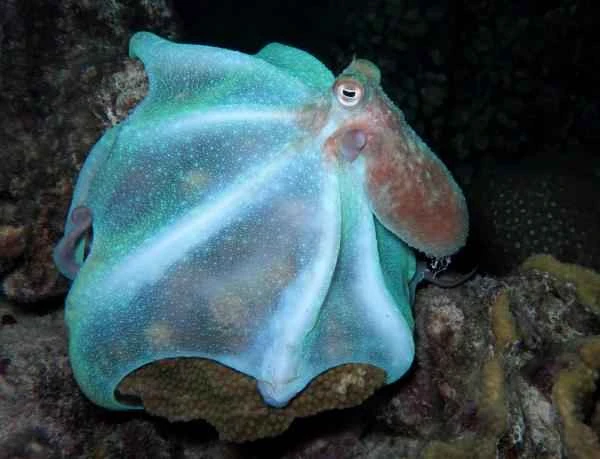
Day octopus (Octopus cyanea)
They are mainly distributed in coral reefs of the Indian and Pacific Oceans, active day and night, and can change color and alter skin texture.
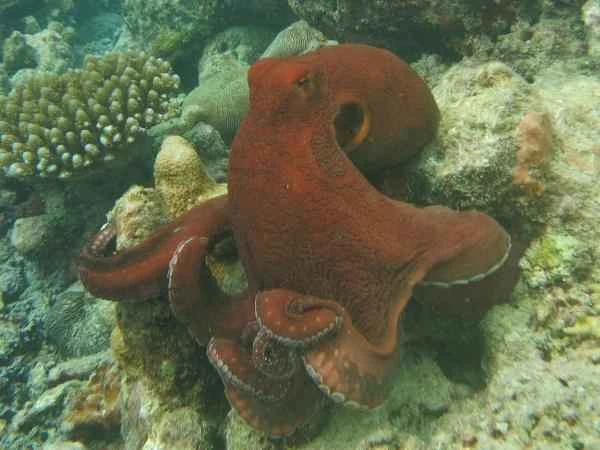
Long-armed octopus (Octopus macropus)
Its distinguishing features include exceptionally long arms and legs, with the first pair reaching up to 1 meter in length, and a red body with white spots.
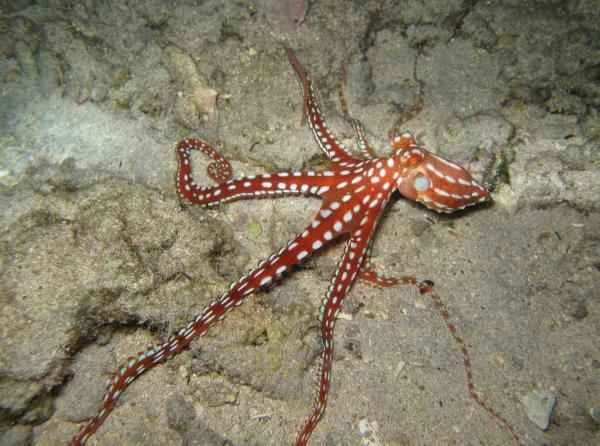
Star-absorbing dwarf octopus (Octopus wolfi)
The smallest octopus, about 3 centimeters long, lives in the Pacific Ocean. Males have star-shaped suckers on their tentacles.
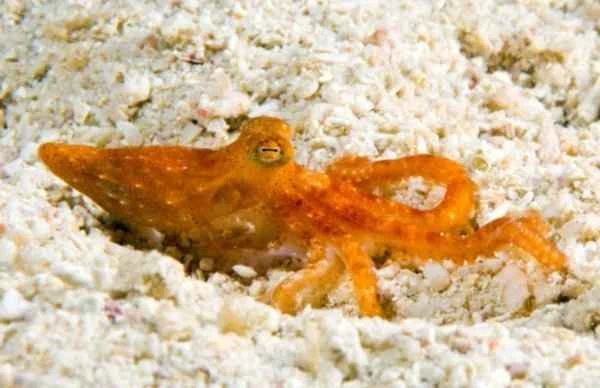
Purple bat octopus (Tremoctopus violaceus)
The sexes are distinctly different, with females reaching up to 2 meters in length and males only about 2.5 centimeters. The juveniles use the tentacles of the Portuguese warship jellyfish for defense.
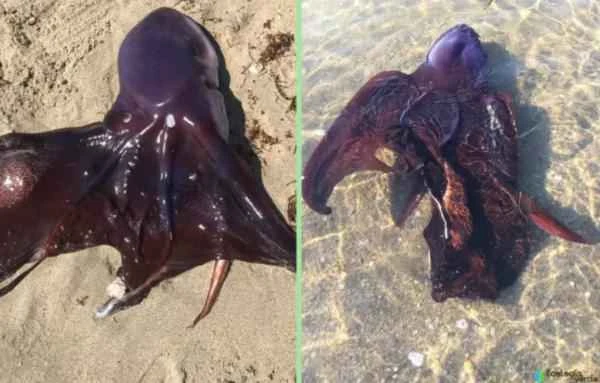
Examples of other octopus species:
Musk octopus, California two-spot octopus, Arctic shovel octopus, comb octopus, hot spring octopus, coconut octopus, bioluminescent octopus, etc.
To learn more about octopus trivia and physiology, please read our article, "Unveiling the Structure of the Octopus Brain and Heart."