These bizarrely shaped birds aren't just "weird"; every exaggerated feature serves their survival. Below, we'll break it down by species, telling you where they are found, why they look the way they do, and their most notable behaviors.
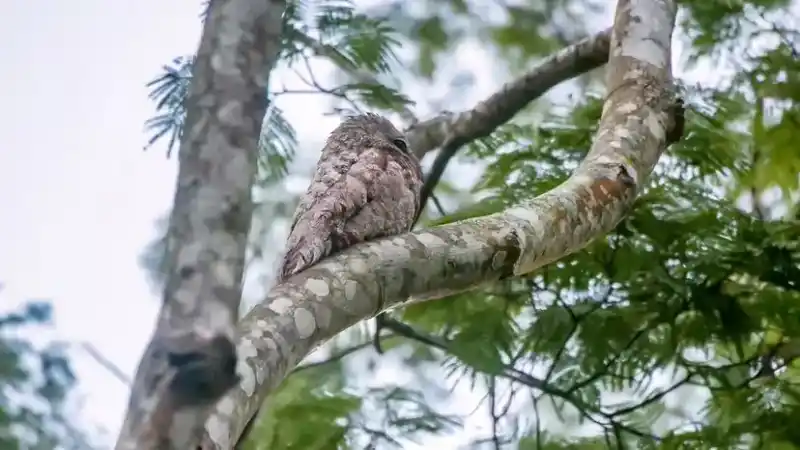
Great Potoo
Distribution: Lowland forests of Central and South America
Why does it look "unreal" with its exaggeratedly wide mouth, half-open thick eyelids, and camouflage that looks exactly like tree bark?
Highlights: At dusk, the bird begins to "stand still," and during the day, it transforms into a "broken tree stump," even mimicking the gentle swaying of the wind. At night, it suddenly opens its enormous mouth to crush moths and beetles, and occasionally even swallows small bats.
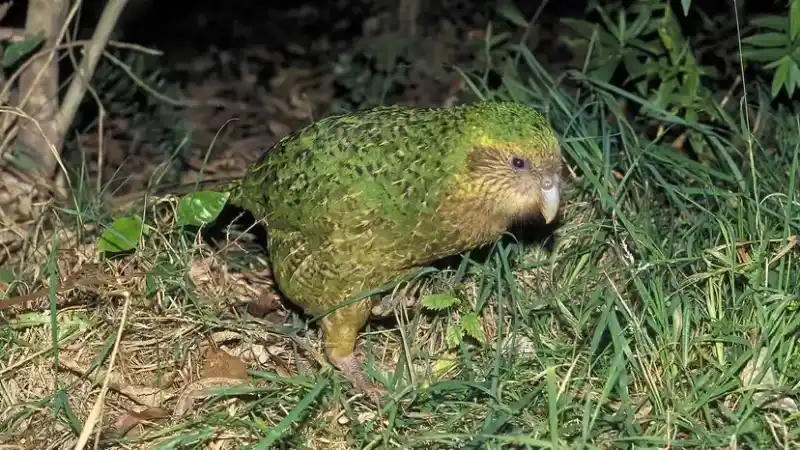
Kākāpō (鴮鹦鹉)
Distribution: New Zealand
Why do flightless parrots that "don't look real" emit "low-frequency infrasound" yet weigh as much as house cats?
Highlights: The male bird digs out a "sound bowl" and roars all night to attract a mate; the sound waves can be carried for several kilometers. The typical lek is used for breeding, where the female bird only comes to "score" the mate and raises the chicks alone after pairing.
Frigatebird
Distribution: Global tropical oceans
Why do they have needle-like, extra-long wingspans and forked tails that don't look real? The male bird can inflate its bright red throat pouch into a balloon.
Highlights: They glide for extended periods using updrafts, counting the number of days they fly; they prey on flying fish on the sea surface and also "hijack" other seabirds, forcing them to spit out their fish.

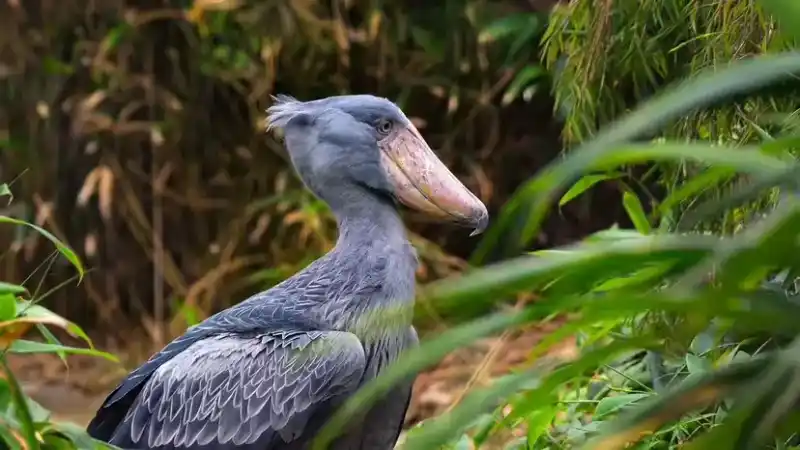
Shoebill
Distribution: Swamps in central and eastern Africa
Why does it look "unreal"? A giant beak resembling a "wooden clog" with hooked teeth that give it a dinosaur-like appearance.
Highlights: Known for its "petrified" stance, it launches a surprise attack after confirming the distance. Its main food is lungfish and eel, and it will occasionally even prey on small crocodiles. Its slow nodding is a "prelude" to precise distance measurement.
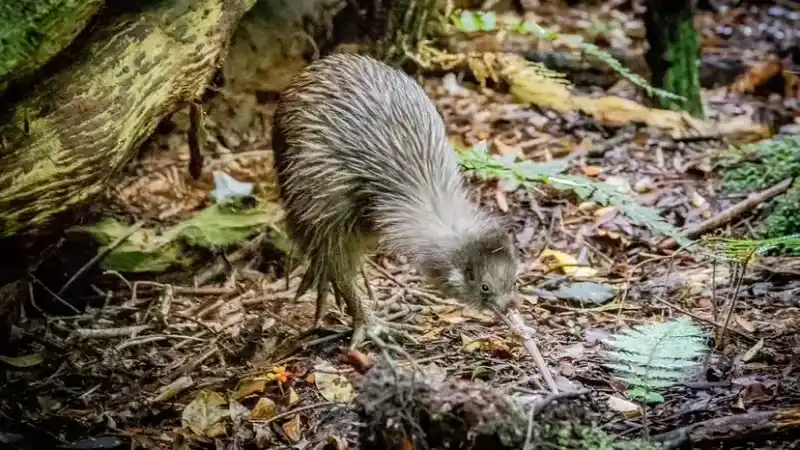
Kiwi
Distribution: New Zealand
Why does it seem "unrealistic" with its extremely small wings, incredibly strong legs, and nostrils at the tip of its beak —rare features among birds?
Highlights: Nocturnal sniffing and hunting, "sniffing, probing, and pulling" in the leaf litter; females lay enormous eggs; once paired, they can stay together for many years to guard their territory.
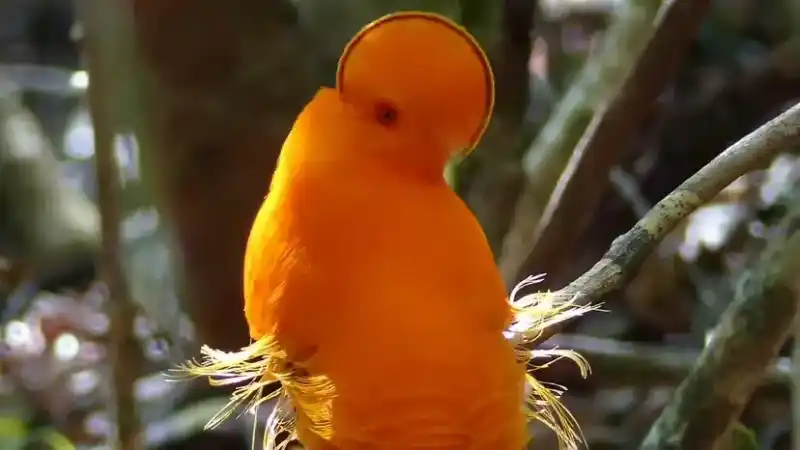
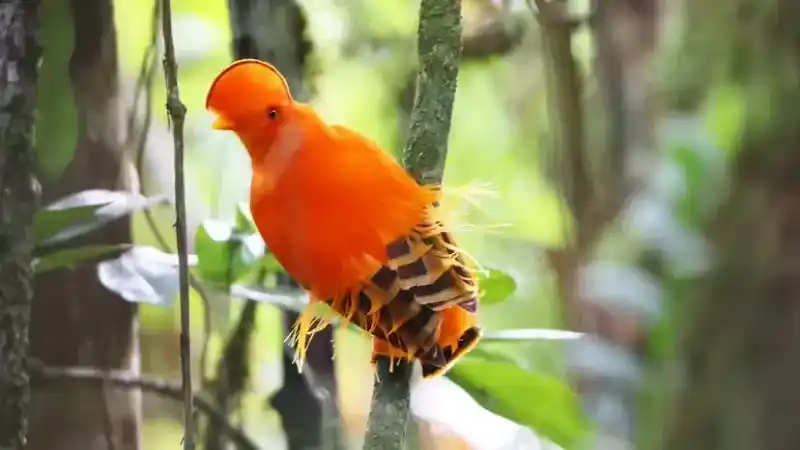
Guianan Cock-of-the-Rock
Distribution: Northern South America (Guyana Shield)
Why does it look "unreal" with its almost neon-colored orange feather robe and semi-circular "full moon crown"?
Highlights: The male bird clears the "stage" with a series of fancy moves, including a high-speed turn, a light tap with its wingtips, and a bow; the female bird selects the "best performance" and then builds a nest and raises the chicks alone.
Oilbird
Distribution: Northern South America and Trinidad
Why do they seem "unrealistic" —eating fruit at night, living in groups in caves during the day, and relying on echolocation for navigation, like "bats in the bird world"?
Highlights: It emits audible "tick-tock" pulses to travel through the darkness inside the cave; it flies far at night to feed on oily fruits and store fat for long-distance flights.

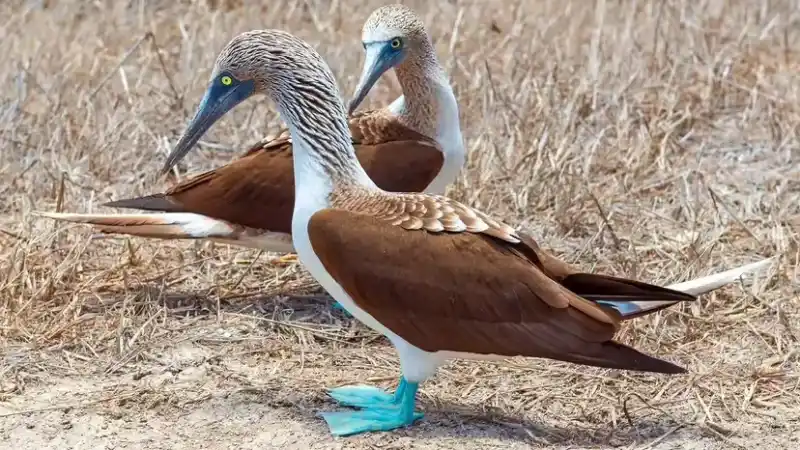
Blue-footed Booby
Distributed in the eastern Pacific Ocean, especially known in the Galapagos Islands.
Why do those electric blue feet look "unreal," like they're wearing special effects shoes?
Highlights: Courtship is a "show of feet"—the male bird raises its feet high, displays them alternately, and presents them with stones as "gifts," accompanied by whistles; at sea, it dives into the water in a "javelin-like" motion to catch schools of fish.
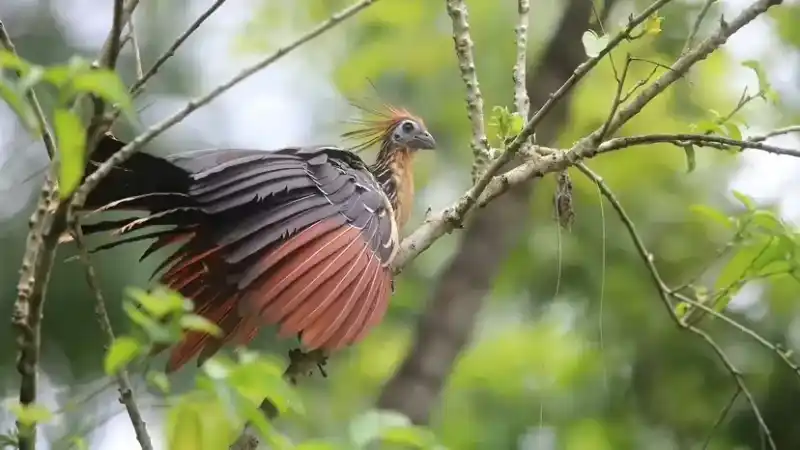
Hoatzin (Stink Bird)
Distribution: Amazon and Orinoco watershed wetlands
Why does it "not look real" with a "punk crown"? The leaves in the forestomy are fermented and have a natural "animal smell".
Highlights: The chicks retain their wing claws , allowing them to climb between branches; when in danger, they jump directly into the water and then climb back to the nest. Fermentation in their foregut makes them more like "ruminants."
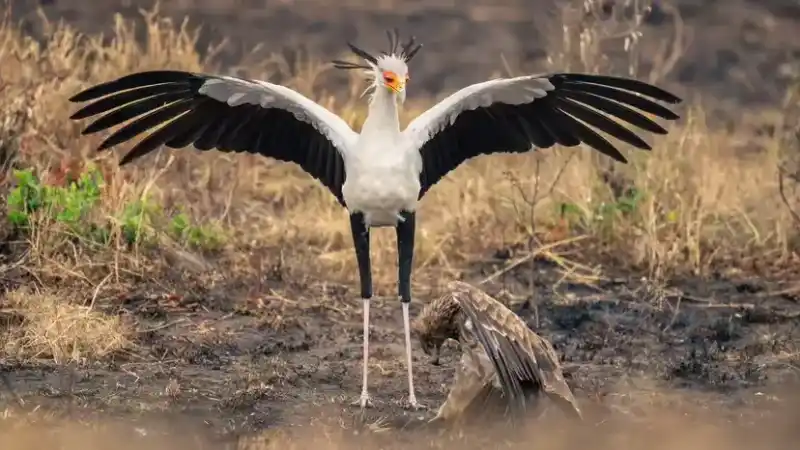
Secretary Bird
Distribution: Sub-Saharan African grasslands
Why does it not look like a real crane with its tall, slender figure, raptor-like face, and "feather pen" headdress?
Highlights: Known for hunting on foot , these birds strike snakes and lizards with lightning speed; their super-long legs carry vital organs beyond the snake's mouth, and they patrol their vast territory in pairs.
Birdwatching tips
Look at the functions, not just the appearance. The red throat sac is used for amplification, the large beak is for grasping slippery prey, the blue feet are a sign of health, and the beak tip and nostrils are for "near-ground sniffing".
Timing is crucial. Most of the stunts occur at dawn/dusk or during the breeding season; a few are entirely nocturnal.
Identify your habitat. The environment, such as the edge of a mangrove forest, the entrance to a cave, an open swamp, or the upwelling zone near the coast, often explains "why it looks the way it does."
In short: these "animated faces" are all hardcore problem-solving approaches provided by evolution; behind their exaggerated appearances are precisely their best solutions to real ecological problems.