Pachycephalosaurus was a dinosaur that used its hard, thick skull as "horns," and like goats, they liked to fight using their horns. Pachycephalosaurus represents the pachycephalosaur family; it was 4.6 meters long, weighed 430 kilograms, had short forelimbs and long hind limbs, allowing it to walk upright. Its long tail was used for balance. Have you ever seen two goats fighting? They stand up, spaced a distance apart, then charge forward, their heads colliding—strictly speaking, their large horns colliding.
Many different dinosaurs had different skulls, but generally, the thickness of their skulls was proportional to their body size. Relatively speaking, carnivorous dinosaurs had thicker skulls, while herbivorous dinosaurs had thinner skulls. For example, the long-necked Mamenchisaurus, despite exceeding 20 meters in length, had a skull thickness of only slightly more than 1 centimeter. Pachycephalosaurs were an exception; although not large, their skulls were exceptionally thick, unmatched by any other animal in history, reaching up to 25 centimeters in thickness. Due to this thick skull, the openings in the upper part of the skull were sealed, turning it into a sturdy hammer. Furthermore, the faces and mouths of Pachycephalosaurs were covered with horny or bony spurs or tumors, giving them a terrifying appearance.
Why were the skulls of Pachycephalosaurus so thick? This may be related to their habit of fierce head-butting among their own kind. Especially among male Pachycephalosaurus, these head-butting fights were often for females and not life-threatening. This kind of fighting is common in other animals and is a natural process of selecting superior offspring. However, some paleontologists believe that if Pachycephalosaurus were to collide with each other at full force, it would likely result in concussion and death. Therefore, they speculate that during normal head-butting, Pachycephalosaurus would attack the opponent's shoulder blades. But when attacked by carnivorous dinosaurs, Pachycephalosaurus would probably use its "hammer-like" head to fiercely retaliate against the attacker.
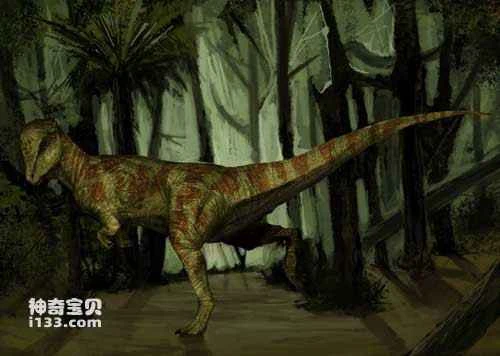
Chinese name: Pachycephalosaurus
Latin name: Pachycephalosaurus
Age of existence: Late Cretaceous
Fossil sites: North America, the United Kingdom, Asia
Physical characteristics: 4.6 meters long
Diet: Plants
Species: Pachycephalosaurs
Meaning: A lizard with a thick head