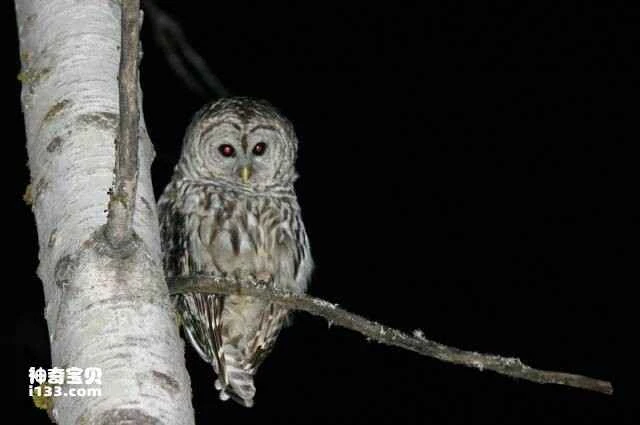
When it comes to the strangest birds, there's a wealth of options. For example, the brightly colored King Vulture, the oddly shaped Great Stork—and don't forget the prehistoric-looking Shoebill with its unsettling eyes. Below are 12 of our favorite and strangest birds.
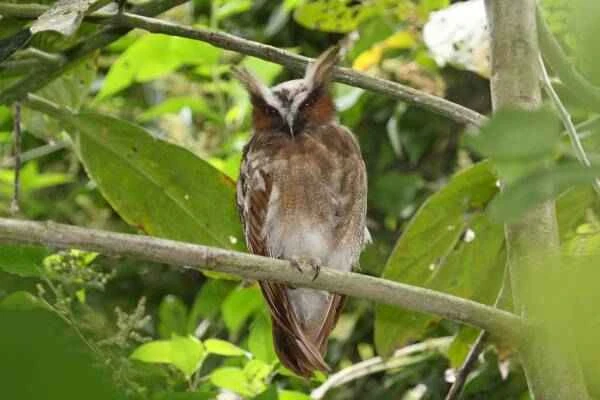
1. Crested Owl (Lophostrix cristata)
The crested owl is a medium-sized owl, measuring 38 to 43 centimeters in length and weighing 425 to 620 grams. It is easily recognizable by its long white ear feathers and dark coat. Found in Central and northern South America, it inhabits lowland rainforests, preferring old trees near water sources. Like most owls, this species is strictly nocturnal. During the day, they typically roost with their mates in dense scrub, along forested streams or riverbanks, preferring to perch 3 to 10 meters above the ground. When disturbed while roosting, the crested owl will slender and raise its ear feathers high.
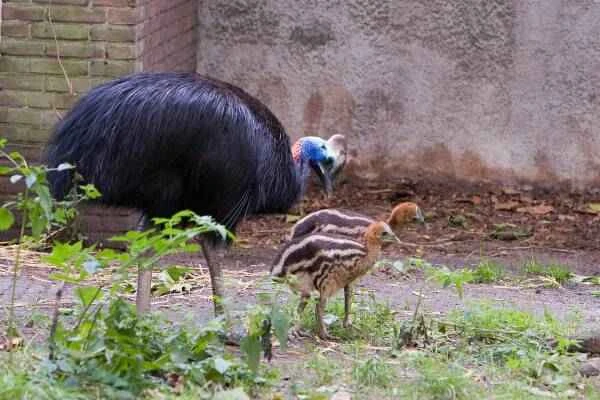
2. Southern cassowary (Casuarius casuarius)
The Southern Cassowary, also known as the Australian Cassowary or the Double-Hanging Cassowary, is a large, flightless, black bird found in Indonesia, Papua New Guinea, and northeastern Australia. It is one of three extant cassowary species, along with the Pygmy Cassowary and the Northern Cassowary. It is a flat-chested bird, and therefore related to the emu, ostrich, rhea, and kiwi.
The Southern Cassowary has stiff, bristly black plumage, a blue face, and a long neck. Its cape is red, and two red wattles, each about 17.8 cm long, hang down around its throat. It has a horn-like brown helmet on its head, 13 to 16.9 cm high. The bill ranges in length from 9.8 to 19 cm. Plumage is sexually monomorphic, but females are dominant, larger, with a longer helmet, a larger beak, and more vibrant bare plumage. Juveniles have brown, longitudinally striped feathers.
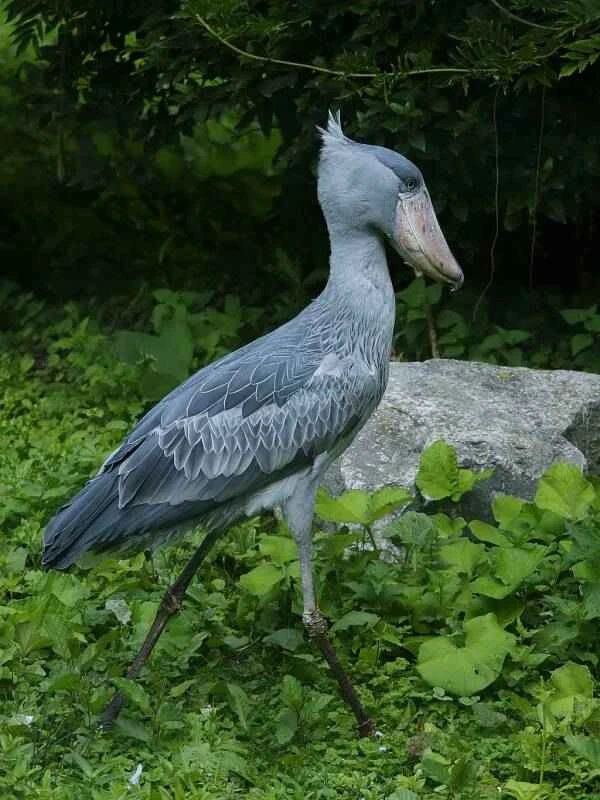
3. Shoebill Stork (Balaeniceps rex)
The shoebill stork, also known as the shoebill stork, is a large, long-legged wading bird. It gets its name from its enormous, shoe-shaped beak. Its overall shape is somewhat stork-like, and it was previously classified as a stork within the order Ciconiiformes based on this morphology. However, genetic evidence suggests it belongs to the order Pelican, along with pelicans and herons. Adults are primarily grey, while juveniles are mostly brown. It inhabits the swamps of tropical East Africa, from South Sudan to Zambia. The shoebill stork is a tall bird, typically ranging in height from 110 to 140 cm and weighing 4 to 7 kg. The species is characterized by its massive, bulbous beak, straw-colored with unstable grey markings. The exposed beak measures 18.8 to 24 cm, making it the third longest beak among extant birds after the pelican and the great stork.

4. Jacanas
Pheasant-tailed Jacanas (sometimes called Jesus birds or Lily-hoofed Jacanas) are a group of tropical wading birds in the family Pheasant-tailed Jacanas. They are distributed in tropical regions around the world. They are known for their long, slender toes and claws, which allow them to distribute their weight while foraging on floating or semi-submerged aquatic plants. They are also among the rarer birds with larger females, and in several species, the male maintains a harem during the breeding season, with the male only responsible for incubating the eggs and caring for the chicks. Pheasant-tailed Jacanas are characterized by their long, slender toes and claws, which allow them to walk on floating vegetation in shallow lakes, which are their preferred habitat. They have sharp beaks and rounded wings, some with carpal spines, and many species also have wattles and forehead wattles.
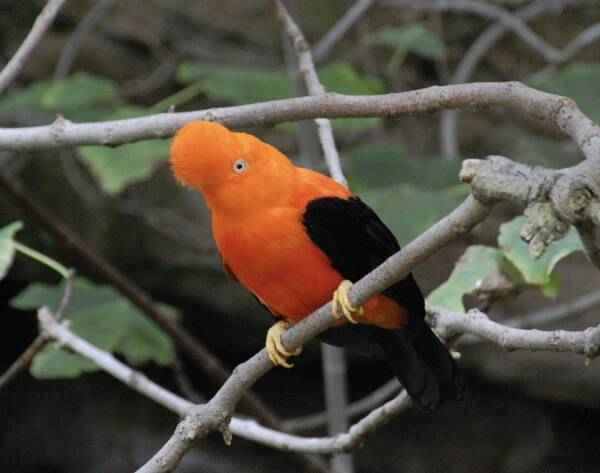
5. Cock-of-the-rock
The Rock Rooster belongs to the genus *Rupicola* and is a large galliaceous bird native to South America. This genus consists of only two known extant species: the Andean Crested Umbrella and the smaller, the Guiana Crested Umbrella. The Andean Crested Umbrella is the national bird of Peru. Males are magnificent birds, not only for their bright orange or red plumage but also for their very prominent fan-shaped crests. Like some other cotingids, they have complex courtship behaviors, displaying an impressive lek performance. Outside of the mating season, these birds are wary animals and are rarely seen in the rainforest canopy. They primarily feed on fruits and berries and are likely important seed dispersers in the rainforest.
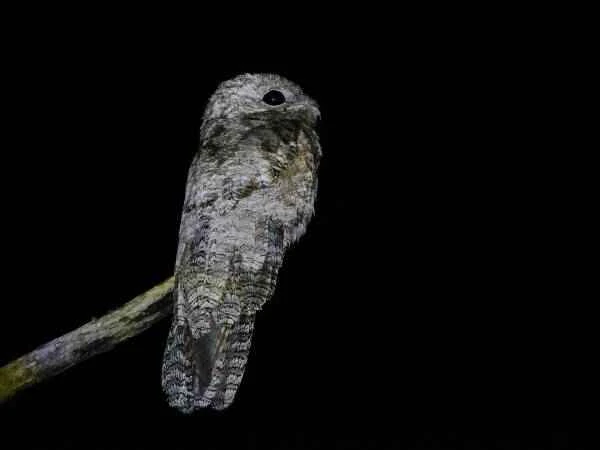
6. Great Woodcock (Nyctibius grandis)
The Great Wallcatcher is a shy and solitary animal, often seen during the day perched upright on tree stumps, easily overlooked due to its resemblance to a tree stump. This is camouflage, not just in color but also in its environment. Nocturnal, it preys on large insects and small vertebrates, catching them by ambush from above. Perhaps its most famous feature is its distinctive groaning sound, emitted throughout the night, creating an unsettling atmosphere in the Neotropics with its nocturnal vocalizations. The Great Wallcatcher has a large head relative to its body. Its eyes are also large, with brown to yellow irises, and a short, broad beak. Its wings are oval, and its tail is long and slender. Feather colors include white, grey, black, and burgundy. The tail's color matches the rest of its body, except for a white stripe that runs horizontally across it.
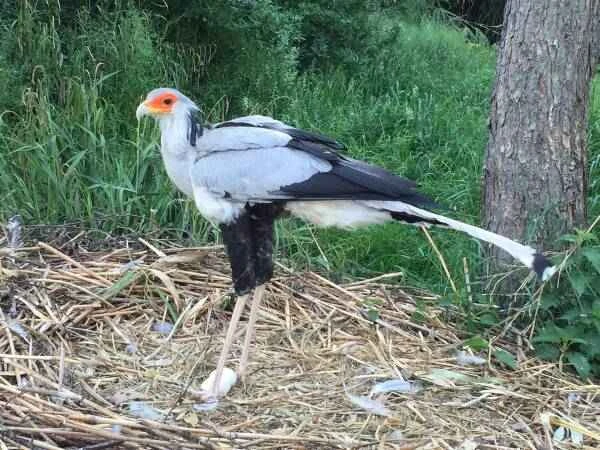
7. Sagittarius serpentarius
The secretary bird is a large, primarily terrestrial bird of prey. Endemic to Africa, it is typically found in the open grasslands and savannas of sub-Saharan Africa. Recognizable as a very large bird, the secretary bird has an eagle-like head, a body like a crane, and legs that can reach heights of up to 1.3 meters. Sexes are similar in appearance. Adults have a featherless, reddish-orange face, predominantly grey plumage, a flat, dark crest, and black flight feathers and thighs. The secretary bird specializes in trampling its prey until it is killed or immobilized. This hunting method is often used against lizards or snakes. It has unusually long legs (almost twice the length of other ground birds of similar weight), which is believed to be an adaptation to the bird's unique stomping and aggressive hunting methods.
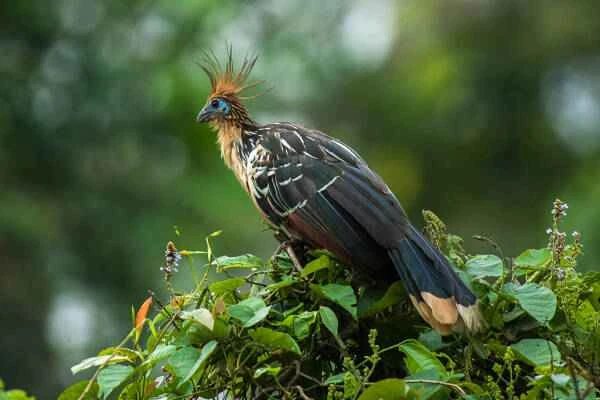
8. Hoatzin
The hoatzin is a tropical bird that inhabits the swamps, riparian forests, and mangroves of the Amazon and Orinoco river basins in South America. About the size of a pheasant, it measures 65 cm in length, with a long neck and a small head. It has a featherless blue face and chestnut eyes, and a spiky reddish-brown crest on its head. Its long, smoky brown tail is copper-green at the tip and ends with a broad white or pale yellow band. The hoatzin is a noisy bird, emitting a variety of hoarse calls, including groans, quacks, hisses, and coos. These calls are often associated with body movements, such as wing flapping. The hoatzin is a foliophobic bird—it eats the leaves (and to a lesser extent, fruits and flowers) of the plants that grow in its swampy and riverine habitats. It clumsily climbs along branches and is quite docile, generally allowing close approach.
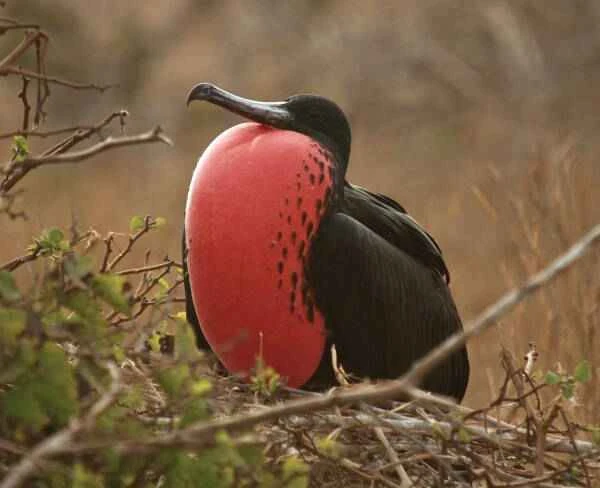
9. Frigatebird
Frigatebirds are found in all tropical and subtropical oceans. They are large, slender seabirds, mostly black in plumage, and the five species are similar in appearance. The largest species is the magnificent frigatebird, reaching up to 114 cm in length, while three of the other four are almost the same size. The smaller frigatebirds are much smaller, about 71 cm long. They are predominantly black in plumage, with long, dark tails and long, hooked beaks. Females have white underbelly, while males have a distinctive red throat pouch, which they inflate during the breeding season to attract females. Their wings are long and pointed, spanning up to 2.3 meters, making them the bird with the largest wing area to body weight ratio.
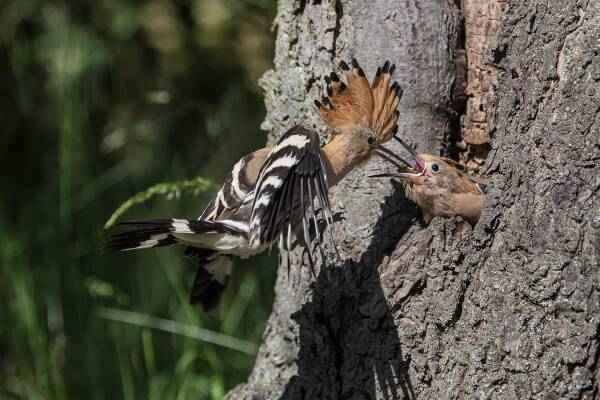
10. Common hoopoe
The hoopoe is a colorful bird found in Africa, Asia, and Europe, best known for its distinctive "crown" of feathers. Historically, hoopoes bask in the sun in what is considered a defensive posture, keeping their wings and tail low to the ground and their heads raised to enjoy the sunlight. They frequently fold their wings and preen their feathers mid-bath. They also enjoy dust and sand baths. Adults may begin molting after the breeding season and continue molting after their winter migration. The hoopoe is a unique bird that has had a cultural impact on much of its range. They were considered sacred in ancient Egypt and were depicted "on the walls of tombs and temples." In 2008, the hoopoe was chosen as the national bird of Israel.
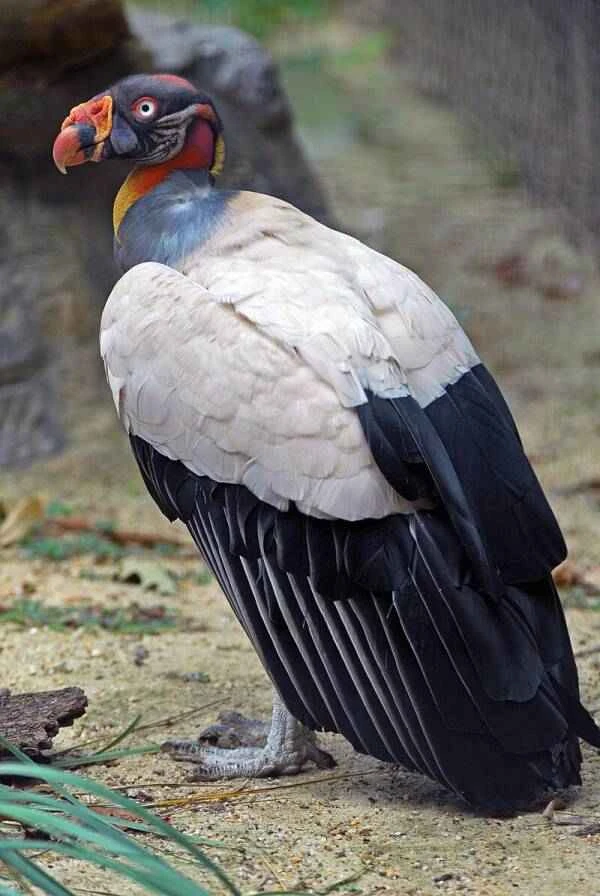
11. King Vulture (Sarcoramphus papa)
The King Condor is a large bird native to Central and South America. It is large in size, primarily white, with grey to black neck, flight, and tail feathers. Its head and neck are bald, and its skin varies in color, including yellow, orange, blue, purple, and red. The King Condor has a very prominent orange fleshy caruncle on its beak. This vulture is a scavenger, eating almost anything from cow carcasses to the carcasses of monkeys and other arboreal mammals, to stranded fish and dead lizards. The King Condor can find carrion in the forest without the help of other vultures, indicating that it uses its sense of smell to locate food. It is understood that the King Condor can live up to 30 years in captivity.
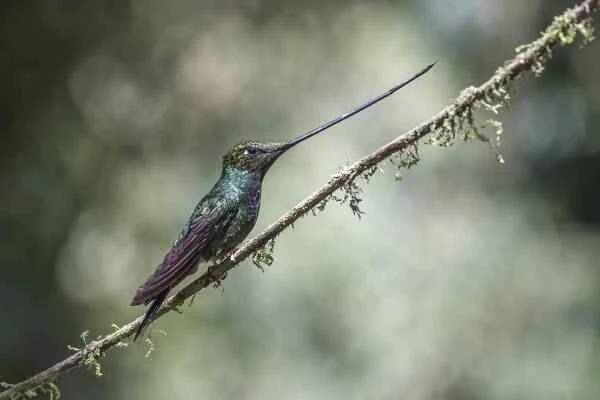
12. Sword-billed Hummingbird (Ensifera ensifera)
The sword-billed hummingbird is characterized by its unusually long beak, the only bird whose beak is longer than the rest of its body (excluding the tail). It uses its beak to drink nectar from flowers with long corollas and has co-evolved with passionflower species. While most hummingbirds use their beaks to groom their feathers, the sword-billed hummingbird uses its feet to scratch and groom itself because of its excessively long beak. The sword-billed hummingbird is a predator, feeding on nectar, especially that of passionflower and other passionflower species. It also preys on insects. It breeds from February to March and builds a cup-shaped nest using moss.