Throughout Earth's long history, the megalodon (Carcharodon megalodon) was undoubtedly one of the most fearsome marine predators. Not only was it enormous, but it was also a top predator. Scientific research suggests that this prehistoric shark lived in the world's oceans between approximately 19.8 million and 2.6 million years ago . However, at the end of the Pliocene epoch, its population plummeted, ultimately leading to its extinction.

This article will give you a comprehensive overview of the Megalodon, including its basic information, the scientific explanation for its extinction, and the legends surrounding whether it still exists.
Basic information about the Megalodon: its era, size, and diet.
Survival period
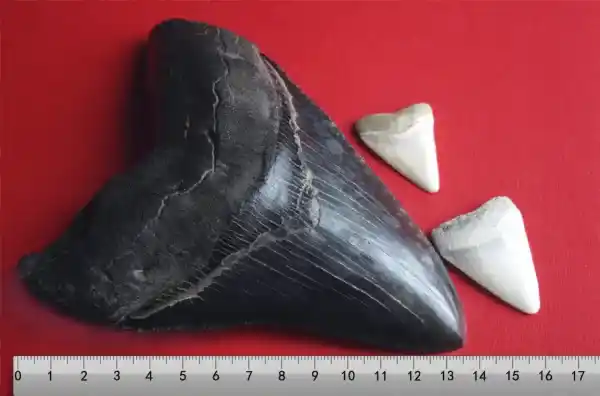
Megalodon was an extinct shark that was distributed across almost all of the world's oceans. It lived during the Miocene to Pliocene epochs of the Cenozoic era . Its name comes from the Greek words megas (giant) and odon (teeth), referring to its astonishing teeth and bite force. A single tooth could reach over 15 centimeters in length , several times the size of a modern great white shark's tooth.
How big is it?
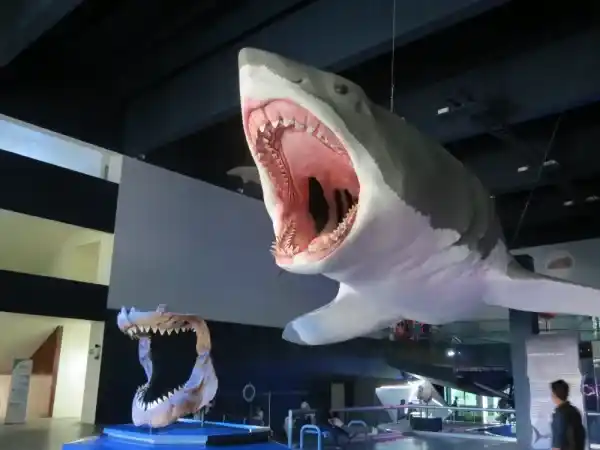
Based on the study of fossil teeth and some bones, scientists speculate that adult Megalodon could easily reach 18 meters in length, two to three times the size of modern great white sharks (usually 6–8 meters), and are considered one of the largest marine predators in history.
feeding habits
Megalodon ruled the oceans for over 17 million years . It primarily fed on large whales of its time, but also preyed on small and medium-sized marine mammals and fish. It preferred warm tropical waters , especially shallow coastal areas, which were also its breeding grounds.
However, in the late Pliocene, its population suddenly declined sharply until it became extinct.
Scientists' explanation for the extinction of the Megalodon
To date, the scientific community has not found a single, definitive cause for the extinction, but it is generally believed to be the result of multiple factors . The following are some of the main theories:
1. The formation of the Isthmus of Panama and climate change
Around 3 million years ago, the North and South American continents connected to form the Isthmus of Panama , which changed ocean current patterns and triggered a global cooling, leading to the Ice Age.
Decreasing ocean temperatures have led to a reduction in the habitat of the Megalodon.
Warm breeding waters are decreasing, leading to a decline in the survival rate of larvae.
2. Reduced food sources
Glacial climate also affected the Megalodon's prey: the decline in the numbers of many whale species directly led to food shortages for the Megalodon.
Some fossil evidence suggests that some megalodon may have engaged in cannibalism due to starvation, further weakening the population.
3. New competitors have emerged.
During the same period, new and powerful predators emerged, such as early killer whales and some toothed whales .
They are not only potential prey, but also compete with megalodon for food resources .
Although the megalodon was enormous, it may not have been as efficient at hunting as these emerging competitors.
In conclusion, climate change, food shortages, and competitive pressures combined to ultimately lead to the complete extinction of the Megalodon.
Does the Megalodon still exist today?
The legend of whether the Megalodon still exists has a long history. Some believe that they may still exist in the deep sea, but are mistaken for great white sharks due to their resemblance.
However, the scientific community has concluded that the Megalodon is 100% extinct .
Based on current evidence, the probability of survival is less than 0.1% .
If they still exist, they would surely leave behind more fossils or eyewitness evidence.
Modern great white sharks are considered the "successors" of the megalodon, having survived climate change and continuing to reproduce.
Summarize
Megalodon was once the undisputed apex predator of the ocean, reigning supreme for millions of years with its enormous size and terrifying bite force. However, climate change, food shortages, and competitive pressures gradually drove it to extinction. Today, its massive fossilized teeth serve as invaluable evidence for scientists, allowing humanity a glimpse into the spectacular scenes of the prehistoric ocean.
Although it no longer exists, the Megalodon remains one of the most awe-inspiring marine predators in Earth's history.