Cooperation between different species is rare yet fascinating in nature. The cooperation between coyotes and badgers is a prime example. These two predators often hunt together, demonstrating a remarkable mutualistic relationship. This article will explore the reasons for their cooperation, the hunting strategies they employ, and the ecological significance of this interspecies collaboration.
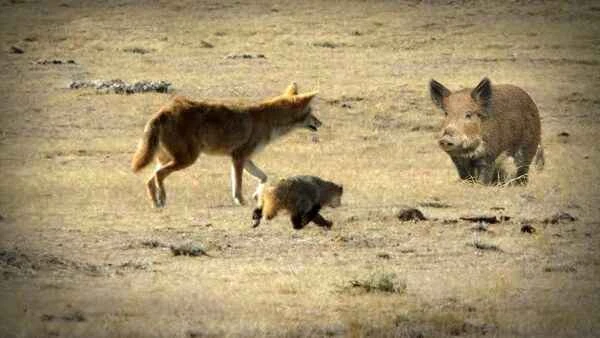
The unique relationship between coyotes and badgers
Coyotes and badgers have developed a surprising cooperative relationship, combining their respective strengths to increase their hunting success rate. Although they are independent predators, their cooperation is a model of mutualistic relationships in the animal kingdom.
Why do coyotes and badgers cooperate?
Complementary skills:
Coyotes excel at speed and endurance, enabling them to hunt prey in open areas, while badgers are skilled burrowers, able to capture prey from underground burrows. Their cooperation effectively covers both above-ground and underground territories.Common prey:
They primarily prey on rodents, such as ground squirrels and prairie dogs. Through cooperation, they can capture prey more efficiently.Higher success rate:
Studies have shown that this cooperation can significantly increase hunting success rates, because prey that escapes from one predator often ends up in the hands of another.
Reciprocal relationships in practice
This relationship is a facultative mutualism, where both parties benefit but are not entirely dependent on each other. In cooperative hunting, coyotes and badgers communicate through body language and gestures, coordinating their actions to capture prey.
Hunting strategies of coyotes and badgers
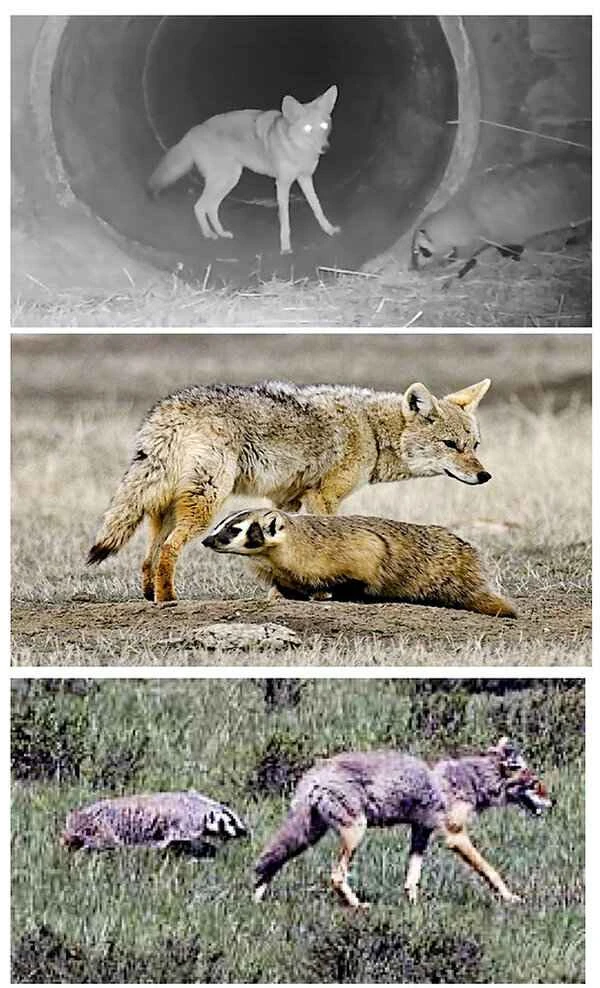
The hunting methods of coyotes and badgers demonstrate their excellent teamwork skills.
The role of the coyote:
Chasing prey: Coyotes rely on speed to chase prey in open areas.
Driving prey: They often circle their burrows, forcing prey to flee underground, where they fall into the badger's ambush.
The badger's role:
Digging Burrows: With their powerful claws and sturdy bodies, badgers can dig out prey hidden in burrows.
Blocking escape routes: Badgers can prevent prey from escaping from their burrows, while coyotes lie in wait on the ground.
Joint tactics:
Division of labor: When prey escapes from one predator, it often goes directly into the attack range of another predator.
The Science Behind Predator Cooperation
interspecies cooperation
Coyotes and badgers are rare examples of cooperation among predators. Unlike most predator-prey competition for resources, these two species maximize efficiency through cooperation.
Behavioral research
Research suggests that such partnerships may form when resources are abundant but require teamwork to acquire. For example:
Grassland ecosystems: In areas with a high density of ground squirrels, coyotes and badgers cooperate particularly frequently.
Flexible cooperation: They will cooperate when it is convenient, but they can also hunt independently.
Ecological importance of coyotes and badgers
Their cooperation is of great significance to the grassland ecosystem.
Controlling rodent populations:
They help regulate rodent populations by hunting together, preventing these animals from damaging vegetation or spreading diseases.
Protecting biodiversity:
Their activities indirectly promote the survival of other species and contribute to the balance of the ecosystem.
Ecosystem health indicators:
The presence of these predators indicates a healthy grassland ecosystem with ample prey and undisturbed habitat.
Distribution range of coyotes and badgers working together
Geographical distribution:
Coyotes and badgers are mainly distributed in North America and are commonly found in the following habitats:
Grasslands and meadows: Open areas rich in rodent resources.
Bushes and deserts: They are also commonly found in arid areas, where prey mostly live by digging burrows.
Habitat preference:
Coyotes are highly adaptable and can survive in a variety of environments, including urban areas; badgers, on the other hand, prefer undisturbed grasslands. Their cooperation is most commonly seen in natural grassland ecosystems.
Other amazing cooperative relationships in the animal kingdom
The cooperation between coyotes and badgers is not unique; cooperation between other species is equally amazing:
Cleaner fish and sharks: Cleaner fish help sharks remove parasites.
Ox-starred birds and large mammals: Ox-starred birds feed on insects found on rhinoceroses.
Thousand Birds and Crocodiles: Thousand birds clean the crocodile's teeth, and both benefit from it.
These partnerships demonstrate the diversity and wonder of cooperation in nature.
The impact of human activities on predator behavior
Human activities, such as habitat destruction and urban sprawl, are threatening coyote and badger populations and their cooperative behaviors.
The impacts of habitat loss:
Urban development has led to grassland fragmentation, reducing their shared hunting grounds.
The population of rodents without natural predators could spiral out of control, disrupting the ecological balance.
Protective measures:
Protecting grassland ecosystems helps maintain the populations of these predators and their unique hunting partnerships.
Enhancing public understanding of their ecological roles can boost support for wildlife conservation.
How to use technology to study wildlife cooperation
Technological advancements have enabled researchers to gain a deeper understanding of the cooperative relationship between coyotes and badgers:
Camera traps: Capture rare moments of them hunting together.
GPS tracking: to monitor their movement patterns and hunting behavior.
Ecological survey: Analyze the impact of their cooperation on rodent populations and ecosystems.
The miracle of cooperation in nature
The cooperative relationship between coyotes and badgers is a testament to nature's creativity. By combining their unique skills, these predators achieve higher hunting success rates, demonstrating the power of teamwork in the wildlife world. This relationship has not only attracted the interest of scientists and wildlife enthusiasts but also highlighted the importance of protecting the ecosystems that support this behavior.
As human research into them deepens, their cooperative relationships remind us of the complex connections between all species and the awe-inspiring adaptability of life.