When you think of parrots, you might picture colorful little birds perched on your shoulders, mimicking human speech. But did you know that there are also some surprisingly large parrots? With their enormous size, magnificent plumage, and powerful beaks, they are truly spectacular sights in nature.
This article will provide you with a detailed introduction to the world's ten largest parrots , including their size, distribution, unique characteristics, and endangered status. From the world's longest indigo macaw to the heaviest night parrot (Kakapo) , this article will take you on a deep dive into these "parrot superstars."
If you are a bird lover, nature observer, or simply curious about these mysterious winged creatures, this article will not disappoint you!
Why are some parrots so large?
Parrots vary greatly in size, ranging from small budgies that are only a few centimeters long to macaws that can grow to over 1 meter in length. What causes some parrots to grow so large?
Environmental adaptation : Large parrots usually live in tropical rainforests and savannas with abundant food resources. Their large size helps them to gnaw on hard fruits, seeds and nuts.
Survival strategy : Large parrots have a stronger ability to protect themselves and are less likely to be attacked by predators.
Longevity : Large parrots generally have long lifespans, with many living to 50 to 70 years , an advantage bestowed upon them by nature.
Next, let's get to know these 10 giant parrot species!
1. Indigo Macaw – the world's longest parrot
Scientific name : Anodorhynchus hyacinthinus
Body length : 100 cm (3.3 ft)
Weight : 1.2–1.7 kg
Characteristics : Deep indigo feathers, yellow face, and markings around the beak.
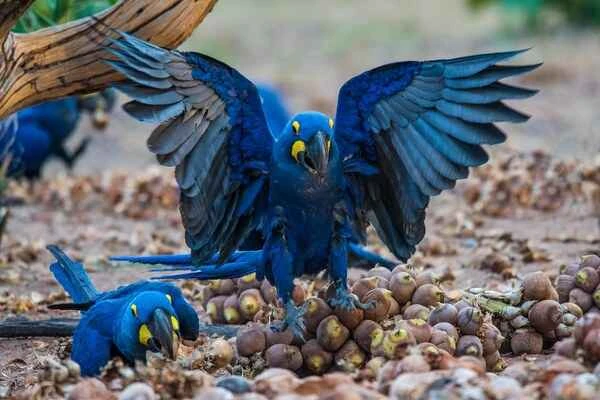
The Indigo Macaw is undoubtedly the "giant" of the parrot world. It is not only the longest parrot, but also known as the "feather giant" because of its gentle nature .
Distribution and living habits
They primarily inhabit the savannas and rainforests of Brazil, Bolivia, and Paraguay , feeding on hard palm fruits. The Indigo Macaw has an extremely powerful beak, capable of easily cracking the shells of hard nuts and even biting through metal wire!
Preserve the status quo
Due to habitat destruction, illegal capture, and trade, the Indigo Macaw is listed as a vulnerable species . Numerous conservation projects are working to restore their populations.
2. Green-winged Macaw – The Red Superstar of the Rainforest
Scientific name : Green-Winged Macaw
Body length : 95 cm
Weight : 1–1.7 kg
Features : Bright red feathers, paired with green and blue wings
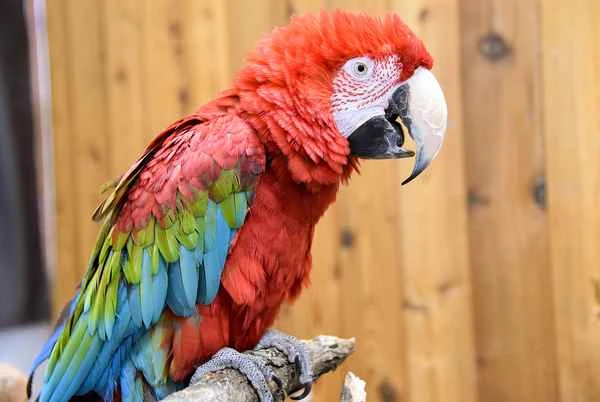
Green-winged macaws are a striking sight in the rainforest, their red bodies contrasting sharply with their green wings.
Distribution and Habits
These parrots are mainly distributed in the Amazon rainforest of South America . They are gentle, intelligent, and often live in pairs, with close relationships that last a lifetime.
Interesting facts
The facial feather patterns of a green-winged macaw are unique, just like human fingerprints; each one is different!
3. Scarlet Macaw – A symbol of tropical rainforests
Scientific name : Ara macao
Body length : 90 cm (2.9 ft)
Weight : 900–1,200 grams (2–2.6 pounds)
Key features : bright red, yellow, and blue feathers

The scaly macaw is one of the most iconic parrots, widely known for its vibrant red, yellow, and blue plumage, and is a symbol of tropical rainforests.
Habitat and Habits
This parrot is found in the tropical forests of Central and South America . It is outgoing and active, often found in pairs or groups, and has a very loud call.
Preserve the status quo
Despite their popularity, the scaly macaw faces threats from habitat loss and illegal capture. Conservation efforts are working to restore its population.
4. Blue-and-Gold Macaw – Classic blue and yellow color scheme
Scientific name : Ara ararauna
Body length : 86 cm (2.8 ft)
Weight : 900–1,300 grams (2–2.8 pounds)
Key features : The blue wings contrast sharply with the yellow belly.
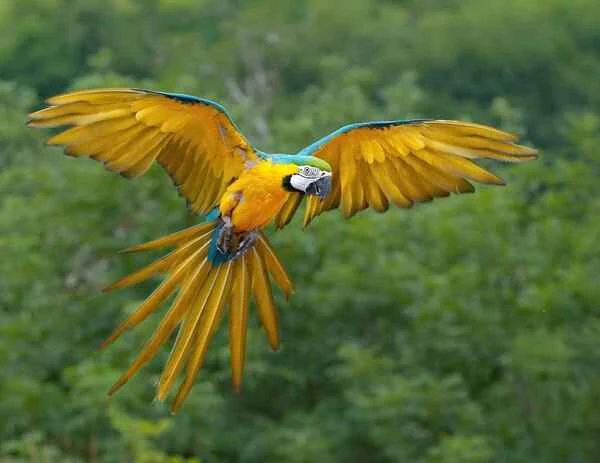
Blue-and-gold macaws are beloved for their bright blue-and-gold plumage and lively personality. They give off a cheerful and energetic vibe.
Habitat and Habits
This parrot primarily inhabits the Amazon basin in South America , preferring forests and swamps. Intelligent and curious, it can mimic human language, making it very popular as a pet (but capturing it in the wild is unethical).
5. Great Green Macaw – An endangered tropical giant bird
Scientific name : Ara ambiguus
Body length : 85 cm (2.8 ft)
Weight : 1–1.3 kg (2.2–2.9 lbs)
Main features : Full body of green feathers
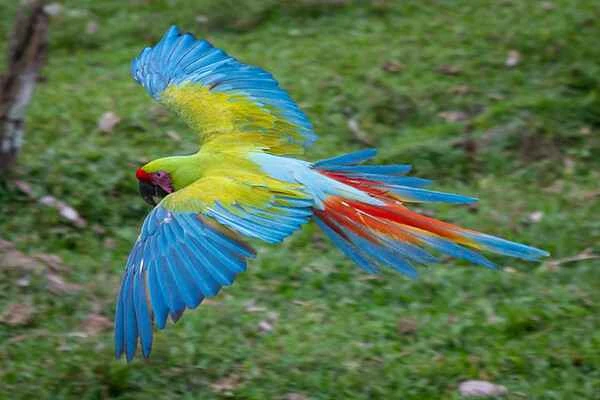
The Great Green Macaw is a large bird, but unfortunately, it is listed as a critically endangered species . Its green feathers help it camouflage itself in tropical forests.
Habitat and Habits
This parrot is mainly distributed in the tropical forests of Central and northern South America . They are skilled fliers and foragers, feeding on seeds, fruits, and nuts.
Preserve the status quo
Due to deforestation and illegal hunting, the number of Great Green Macaws has declined sharply. Conservation efforts are urgently needed.
6. Moluccas – Pink Giant Cockatoo
Scientific name : Cacatua moluccensis
Body length : 52 cm (1.7 ft)
Weight : 850–1,100 grams (1.8–2.4 pounds)
Key features : pale pink feathers and a large, magnificent crest.
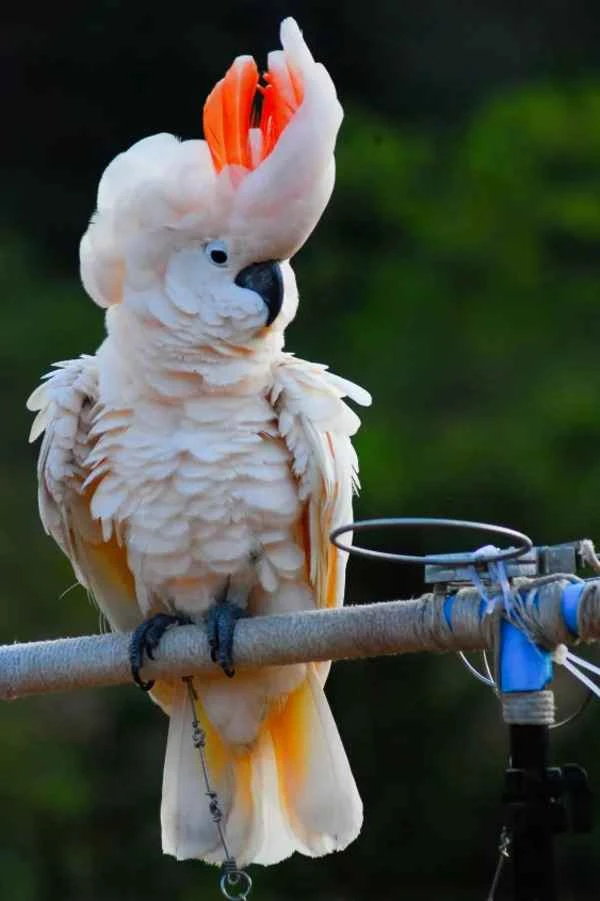
The Moluccas , also known as the Great Sulphur-crested Cockatoo , is a dream parrot for many, prized for its captivating pale pink plumage and elegant crest. These parrots are gentle and affectionate, but also quite sensitive, requiring ample companionship and attention.
Habitat and Habits
The Moluccas are mainly found in the Moluccas Islands of Indonesia , where they prefer to live in tropical forests. They feed on seeds, nuts, fruits, and insects. They are highly social, enjoy interacting with other Moluccas, and are also very intelligent mimics.
Preserve the status quo
Due to ongoing habitat destruction and the illegal pet trade, the wild population of the Moluccan cockatoo has declined dramatically, and it is now listed as a vulnerable species by the International Union for Conservation of Nature (IUCN). Local conservation agencies are working to protect it by restoring forests and combating smuggling.
7. Mitchell Cockatoo – A visual feast of vibrant colors
Scientific name : Lophochroa leadbeateri
Body length : 45 cm (1.5 ft)
Weight : 400–600 grams (0.8–1.3 pounds)
Main characteristics : Pinkish-white body, with a magnificent crest of red and yellow feathers.
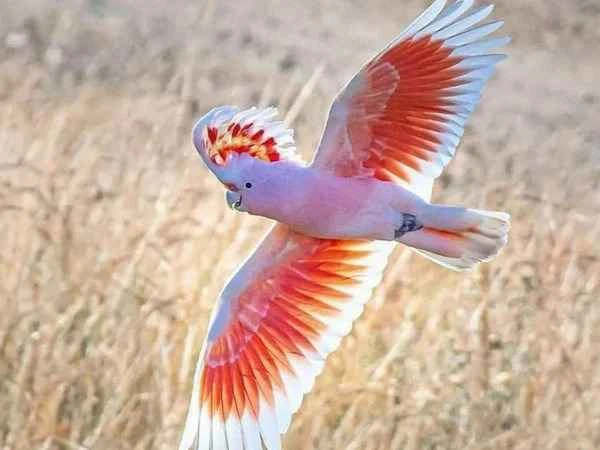
The Mitchell Cockatoo , also known as the Princess Cockatoo , has earned the title of "Royal Parrot" for its magnificent crest and gentle temperament. When raised, its crest resembles a red and yellow crown, making it a highly prized ornamental bird.
Habitat and Habits
These cockatoos are mainly distributed in the arid and semi-arid regions of central and southern Australia . They prefer to inhabit eucalyptus forests and bushland, and feed primarily on seeds, nuts, berries, and flowers. Mitchell cockatoos have a relatively leisurely lifestyle and prefer to forage at dawn and dusk.
Preserve the status quo
Although the Mitchell cockatoo population is stable, their survival remains threatened by habitat destruction and climate change. Currently listed as a near-threatened species , conservation efforts primarily focus on habitat management and restoration.
8. Sulphur-crested Cockatoo – A clever but noisy bird
Scientific name : Cacatua galerita
Body length : 50 cm (1.6 ft)
Weight : 800–1,000 grams (1.7–2.2 pounds)
Key features : Pure white feathers with a bright yellow crest
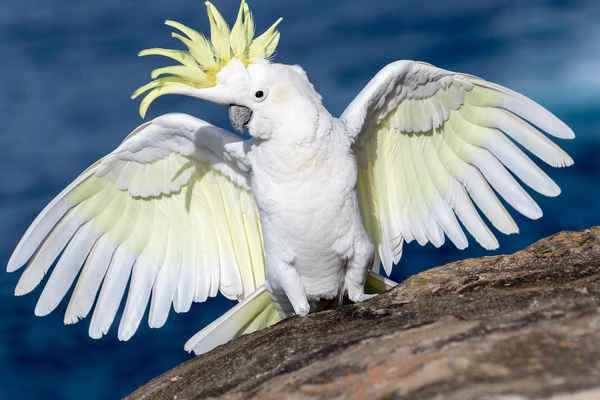
The cockatoo is one of the most famous cockatoos in the world, popular for its bright yellow crest and playful nature. They are known for their loud, often shrill, calls, earning them the nickname "noisy devils."
Habitat and Habits
Sulphur-crested cockatoos are widely distributed in northern and eastern Australia and Papua New Guinea . They prefer to live in forests, grasslands, and suburban areas. Highly intelligent, they can learn complex tricks and enjoy interacting with people, making them beloved pet birds.
Preserve the status quo
The population of cockatoos in the wild is relatively stable, but due to overhunting and habitat loss, the population has declined in some areas. Australia has listed it as a protected species and illegal hunting is strictly prohibited.
9. Scarlet Macaw – A large jungle dweller
Scientific name : Ara chloropterus
Body length : 95 cm (3.1 ft)
Weight : 1–1.7 kg (2.2–3.7 lbs)
Key features : Bright red feathers all over its body, with green and blue markings on its wings.
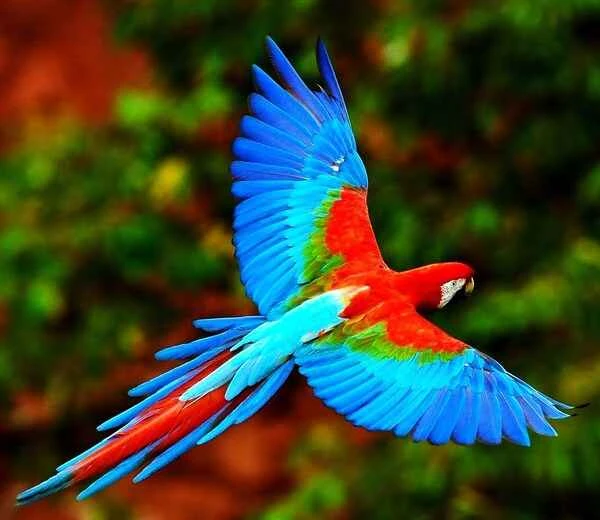
The scarlet macaw is one of the largest macaws, renowned for its vibrant red plumage and the green and blue accents on its wings. It is often mistaken for a green-winged macaw, but the difference lies in the color of its wings.
Habitat and Habits
These parrots are mainly distributed in the tropical rainforests of South America , especially in the Amazon River basin. Scarlet macaws are gentle and intelligent, usually found in pairs or small groups, and fly with great elegance. They primarily feed on nuts, seeds, fruits, and bark.
Preserve the status quo
The population of scarlet macaws in the wild remains relatively stable, but they are threatened by habitat loss and hunting. Currently, they are listed as a vulnerable species , and conservation efforts are underway, primarily including habitat restoration and combating illegal trade.
10. Kakapo – The world's heaviest and flightless parrot
Scientific name : Strigops habroptilus
Body length : 64 cm (2.1 ft)
Weight : 2–4 kg (4.4–8.8 lbs)
Key characteristics : Green feathers, bulky body, nocturnal and unable to fly.
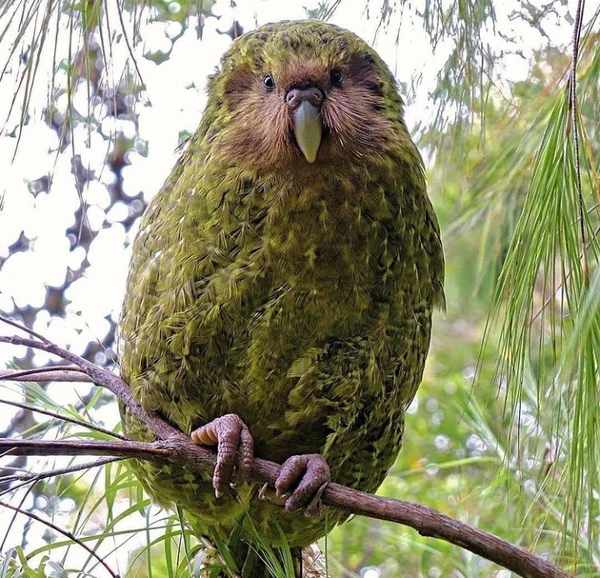
The Kakapo , also known as the night parrot , is the heaviest parrot in the world and the only flightless parrot. They resemble owls in appearance, with green feathers that help them camouflage themselves in bushes.
Habitat and Habits
Kakapo are endemic to New Zealand , inhabiting forests and bushland. They are nocturnal, resting during the day and foraging at night, primarily feeding on fruits, seeds, leaves, and pollen. Unable to fly, Kakapo rely mainly on crawling and hopping for locomotion.
Preserve the status quo
The Kakapo is currently listed as critically endangered , with fewer than 300 individuals remaining in the wild. Their greatest threats are habitat loss and invasive predators such as cats and rats. The New Zealand government has implemented a robust conservation program, including captive breeding, habitat restoration, and predator control.
Summarize
From the elegant Indigo Macaw to the astonishingly heavy Night Parrot , these giant parrots are wonders of nature. Despite their beauty and charm, many species face threats from habitat destruction and illegal hunting.
Protecting these magnificent parrots is not only about appreciating their beauty, but also about maintaining ecological balance so that future generations can also witness these "giants of the sky."
Hopefully, this article will help you better understand the world's largest parrot and contribute to its conservation!