Teuthida, also known as the order Squidida or simply Squid , is a group of animals belonging to the superorder Decapoda within the class Cephalopoda of the phylum Mollusca. It includes approximately 300 species and is distinguished by its slender body and ten tentacles surrounding its mouth. Its flesh is tender, soft, and delicate, with an excellent texture, and is often processed into dried squid. They are found in waters worldwide, both shallow and deep, and are a very diverse and thriving species, serving as a staple food for various dolphins , whales , seals , and seabirds . So, what are some of the common species of squid globally?
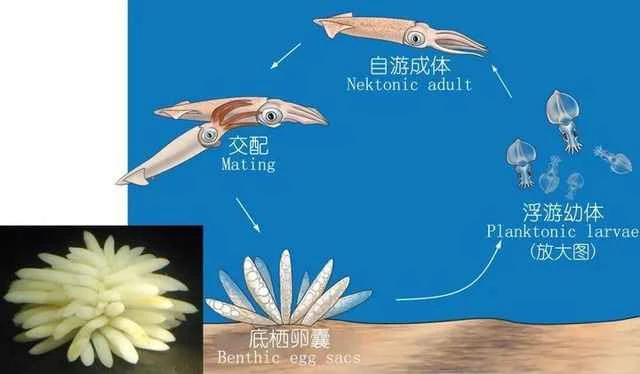
Today, we've compiled a list of ten major squid species: Chinese squid, Japanese squid, giant red squid, Argentine squid, California squid, North Pacific squid, mulberry squid, sword-tip squid, firefly squid, and musket squid. Let's learn about these squid and their characteristics!
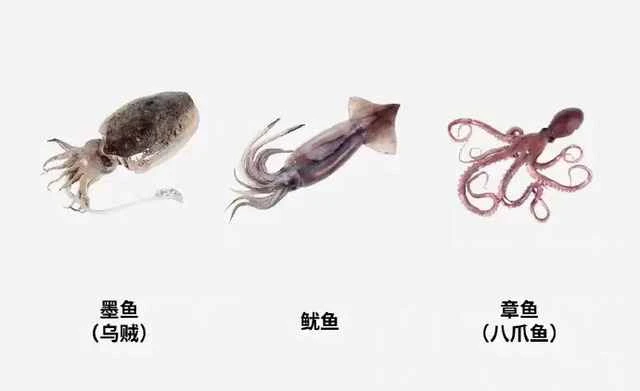
Fun fact : In contrast to the formal name of "squid" being "Tubularia," the formal name of "cuttlefish" is "Cuttlefish." Together, they form "cuttlefish," and the formal name of cuttlefish is "Decapoda."
In Taiwan, squid is further subdivided into " squid " (Oculus spp.), " large squid ", " medium squid ", and " small squid ". However, this classification method is not common in other Chinese-speaking regions. In other regions, "squid" or even the broader term "cuttlefish" is used as a vague alternative.
1. Chinese squid
Features : Slender body/glows
Habitat : South China Sea/Gulf of Thailand/Malay Islands
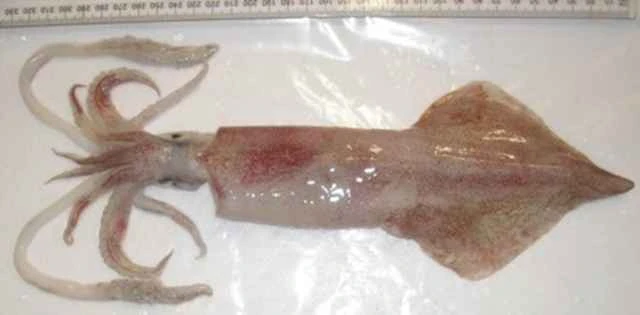
The Chinese squid, also known as the local squid, is an important economic squid species, accounting for approximately 60% of global squid production. It has a slender, conical shape with a pointed tail, lacks a longitudinal midline on its ventral side, and has two rhomboid fins along its tube side, giving the squid a rocket-like appearance. Furthermore, the Chinese squid can glow. They are mainly distributed in the South China Sea, the Gulf of Thailand, the Malay Archipelago, and the waters off Queensland, Australia, with their peak activity period being May and June each year.
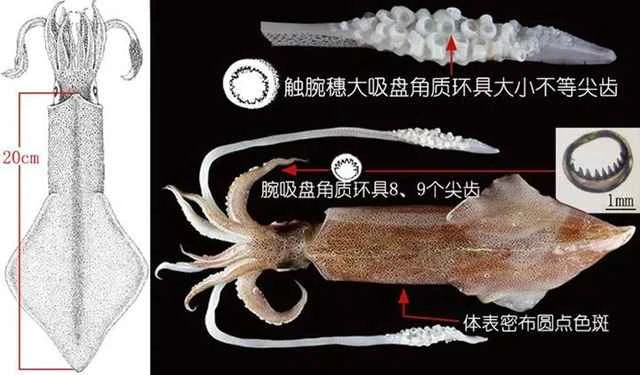
Despite having "China" in its name, the highest production of this squid comes from Thailand, followed by the Philippines, China, and Vietnam. The Chinese squid has sweet and tender flesh and is often stir-fried, cooked, or eaten as sashimi.
2. Japanese squid
Characteristics : Small in size / short and wide in body
Habitat : Western Pacific
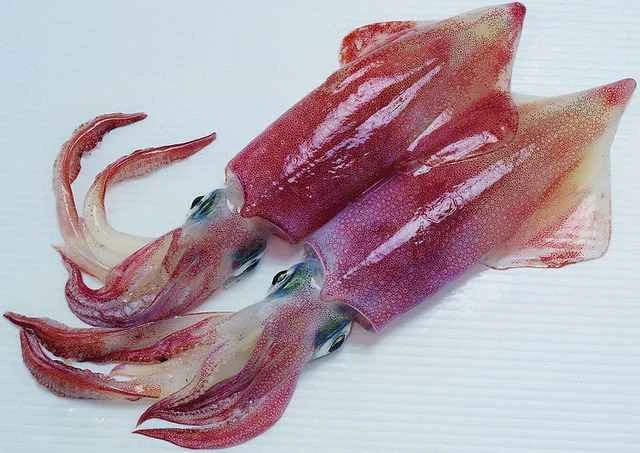
The Japanese squid is one of the ten most common squid species, mainly distributed in the western Pacific Ocean between latitude 21°N and 50°N, including eastern China, Japan, Russia, Alaska, and British Columbia, Canada. Japan and South Korea are the main fishing countries for this squid. Compared to common squid, the Japanese squid is smaller, with a shorter and wider body, tentacles longer than its body, and a thin, transparent, horny internal shell. It has prominent purple spots on the back of its eyes, and is high in protein and amino acids while being low in crude fat, making it a highly nutritious squid species.
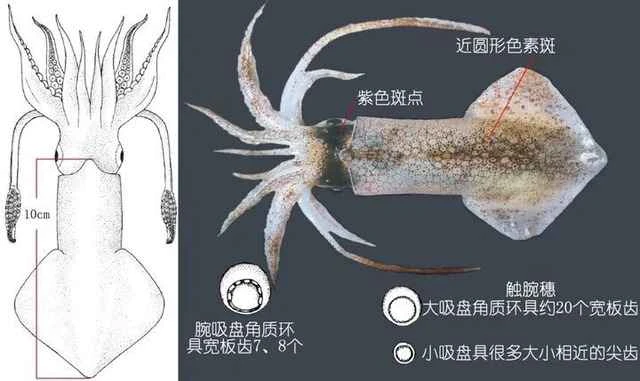
Japanese squid can be eaten fresh or processed into various dried or frozen products. Common cooking methods include blanching or braising, resulting in a sweet, refreshing, and chewy texture that is very popular with diners.
3. Giant Red Squid
Characteristics : Large/long conical in shape
Habitat : East of the central Pacific Ocean
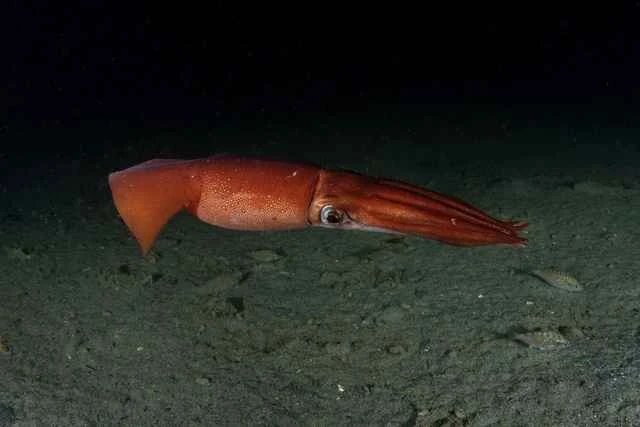
The giant red squid, named for its deep red color, is the largest of the squid species. Its body is conical, tapering towards the rear, and covered with nearly circular spots of varying sizes. Giant red squid can reach 1.2 meters in length and weigh up to 50 kilograms. This species is mainly distributed in the central and eastern Pacific Ocean, particularly abundant along the coasts of Peru and Chile in South America, as well as in offshore areas.

Due to the large catch volume and relatively low price of the giant red squid, it has become the preferred raw material for many squid shred processing plants in China. These squid are usually processed abroad, including making squid heads, raw squid plates, cooked squid plates, raw squid ears, cooked squid ears, and squid tentacles, before being imported into China for the production of various squid shred products.
4. Argentine squid
Characteristics : Brown skin / short and wide fins
Habitat : Southwest Atlantic
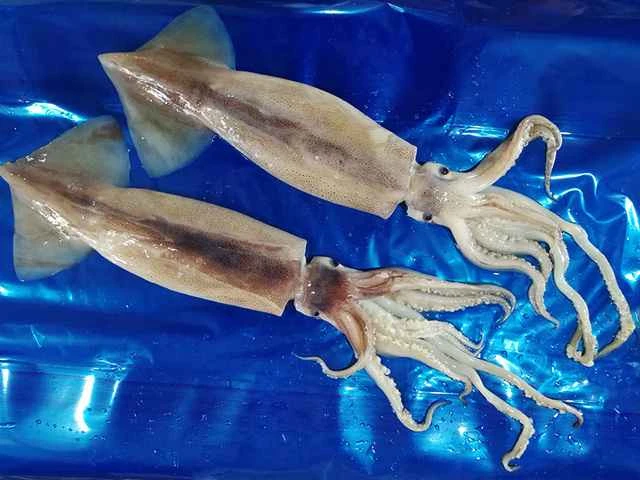
Argentine squid is currently one of the most heavily caught squid species and is also one of the most common squid species in China. Its body is conical in shape, with a shallow pore at the front of the funnel, but it lacks longitudinal folds and side sacs, and its overall surface is smooth. The Argentine squid has short and wide fins, with a fin angle of approximately 45 degrees, and the two fins meet in a slightly transverse rhomboid shape. Its color is brownish-yellow to whitish, with a brownish skin. It has a chewy texture, thick flesh, and a delicious flavor.
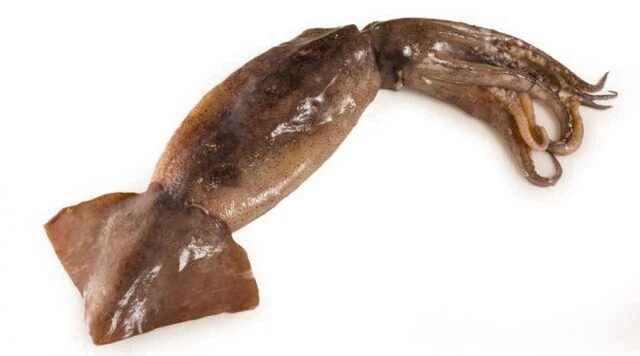
Argentine squid are mainly distributed in the 22°S to 54°S region of the southwestern Atlantic Ocean, including the continental shelf and slope near Uruguay, Argentina, and the Falkland Islands.
5. California squid
Features : Small-sized squid
Habitat : Coastal areas of California
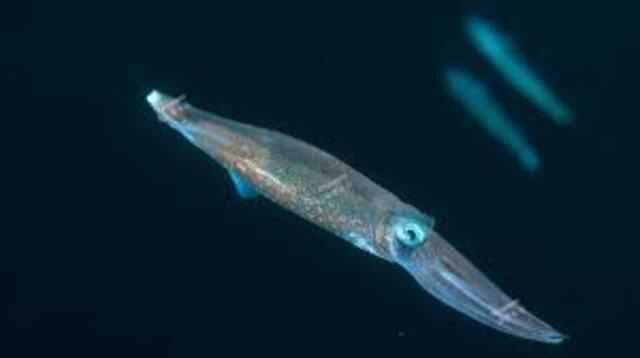
California squid, also known as California pen squid, is one of the ten most common squid species. Its main habitat is in the eastern Pacific Ocean, covering waters from Mexico to Alaska. The majority of its catch comes from California, with the California coast accounting for 85% of the total U.S. catch.

California squid can be caught year-round, but the main fishing season is in Southern California during the winter, starting in November or December and lasting until March of the following year. California squid are generally small, averaging between 45 and 165 grams. Common sizes are 8-9, 9-10, 10-11, 11-12, and 12-14 squid per pound. They are typically packaged in 25-pound (approximately 11.4 kg) boxes and exported in large quantities to the Chinese market.
6. North Pacific Squid
Features : Cylindrical front section / Conical rear section
Habitat : North Pacific Ocean
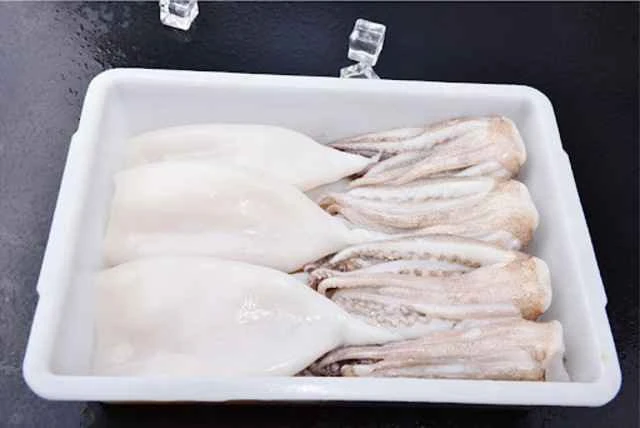
The North Pacific squid, also known as the North Pacific cuttlefish, is an important economic cephalopod resource in the Northwest Pacific Ocean. It inhabits subtropical and temperate waters, primarily distributed in areas where warm and cold currents meet in the North Pacific. The North Pacific squid is characterized by a cylindrical anterior portion that gradually tapers into a conical shape posteriorly, with a slightly pointed tail. Its dorsal margin is blunt triangular, and its ventral margin is slightly concave. The small sucker rings from its base to its stalk are smooth and lack sucker teeth. Male North Pacific squid can grow up to 45 cm in length, while females can reach 60 cm.
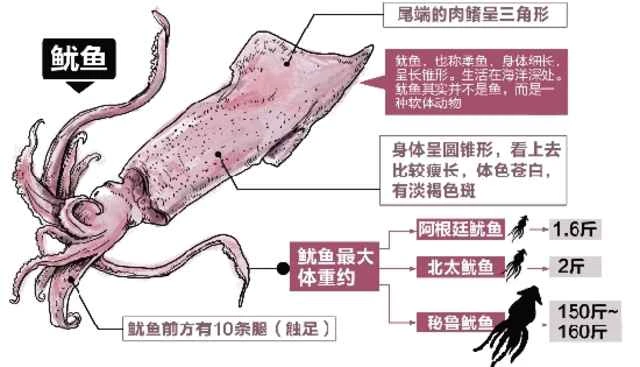
This type of squid is purplish-red in color, with thin flesh and a slightly doughy texture that isn't very chewy. However, adding a suitable amount of soy sauce, ginger slices, or chopped green onions during processing can better bring out its delicious original flavor.
7. Long's Mulberry Squid
Features : Deep-sea squid
Habitat : Subtropical and tropical seas
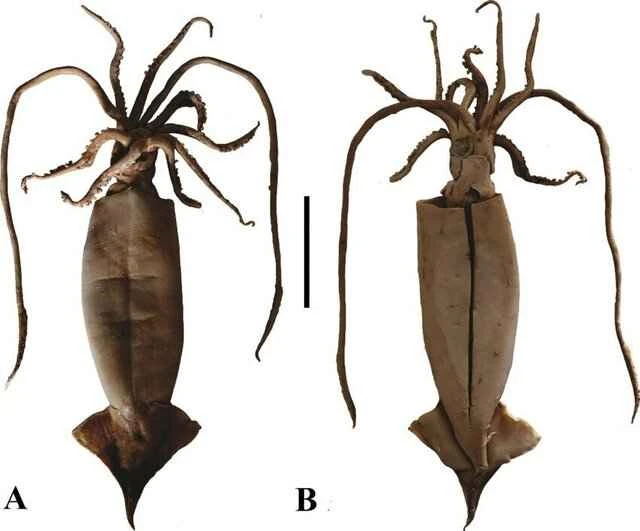
One of the most common squid species on the market is the mulberry squid (Cucurbita lanceolata), a type of squid belonging to the genus Cucurbita, which mainly inhabits subtropical and tropical waters. It has a relatively wide distribution in the South my country Sea and the waters south of the Japanese archipelago. As a deep-sea squid, the mulberry squid typically lives at depths of 700 to 900 meters. The chilled squid commonly found on the market is basically this species, primarily caught through trawling.
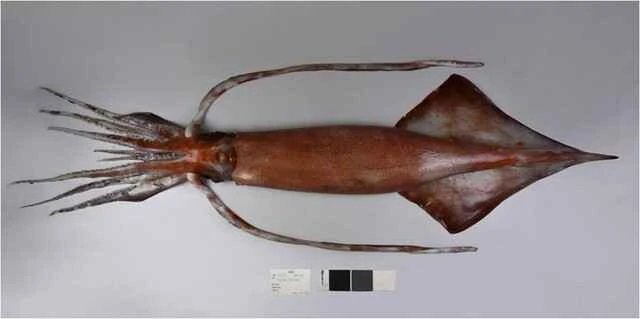
The fleshy fins of the Ryuji mulberry squid are concave at the rear and extend to the tip, with the fins being more than half the length of the body. The junction of the two fins is slightly rhomboid. Its flesh is delicious and has a delicate texture, making it a high-quality ingredient for sashimi and widely loved by diners.
8. Sword-tipped squid
Features : Shallow-sea squid
Habitat : Southern waters of Japan
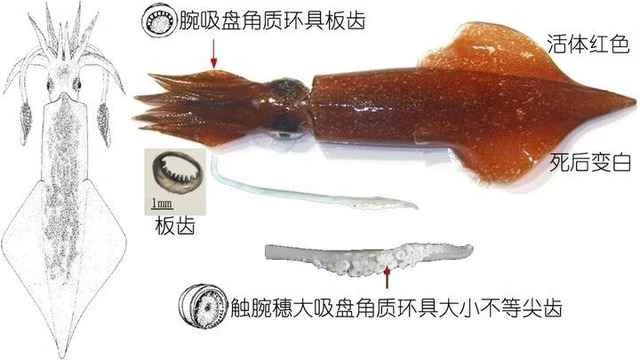
Sword-tip squid is mainly distributed in the waters south of Aomori Prefecture, Japan, as well as the Yellow Sea, East China Sea, South China Sea, and the area surrounding the Philippine Islands. It is a common type of squid. Its annual yield can exceed 20,000 tons, making it a valuable commodity that can be sold fresh or processed into dried products.
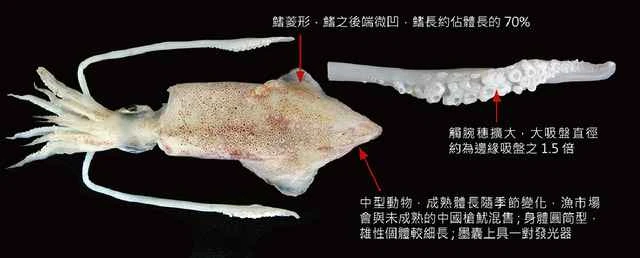
The swordtip squid has a conical body shape, medium-sized structure, and a relatively straight posterior. Males have longitudinal folds along the midline of their abdomen, relatively long fins, and suckers. It is a shallow-water squid, typically inhabiting waters at depths of 30 to 170 meters. In winter, it migrates to deeper waters to overwinter, while in spring and summer it migrates to shallower, near-shore waters. Based on their growth cycle, swordtip squid can be divided into spring-harvesting, summer-harvesting, and autumn-harvesting groups.
This type of squid is more active at night, especially in the late night and before dawn, when its feeding intensity is greatest. Therefore, many squid anglers are accustomed to going out to sea at night and returning in the early morning.
9. Firefly Squid
Characteristics : Small size / glows
Habitat : Sea of Japan and north of Shikoku, Japan
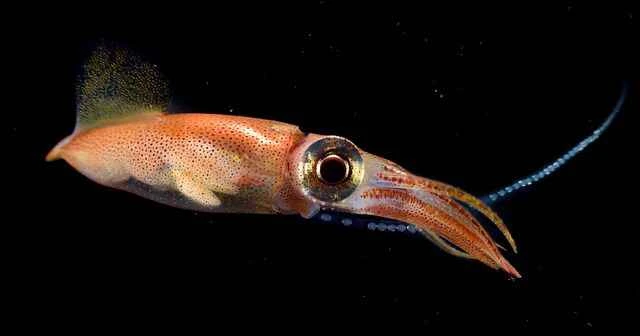
The firefly squid, also known as the glow squid or firefly cuttlefish, is a small squid with bioluminescent properties. It typically measures only 7.6 centimeters in length and has eight tentacles and two tentacles. Although its light-emitting organs are located on its tentacles, the firefly squid's entire body emits light, primarily used to lure prey.
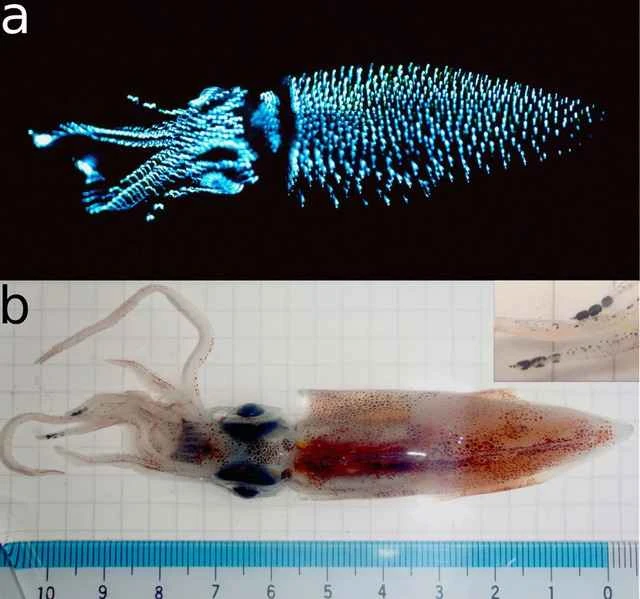
Firefly squid are widely distributed in the Sea of Japan and the Pacific coast north of Shikoku. Toyama Bay in Toyama Prefecture is one of the important fishing grounds for this squid. The deep waters here are rich in minerals and organic matter, and the V-shaped sea valley topography pushes the firefly squid ashore. Therefore, from March to June each year, firefly squid migrate to Toyama Bay to spawn.
10. Musketeer Squid
Characteristics : Small size / purple spots on the body surface
Habitat : Coastal areas of northern and southern China
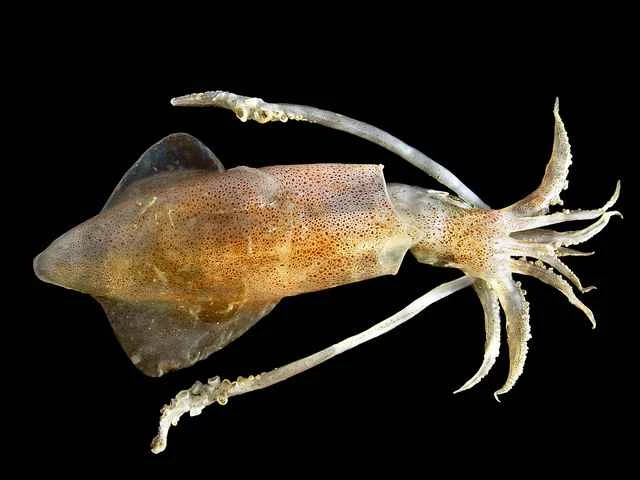
The musket squid, also known as the baby squid, is a common small coastal squid. It is widely distributed in the Bohai Sea, Yellow Sea, East China Sea, South China Sea, and the waters south of the Japanese archipelago, and is also found in the coastal waters of Korea and Indonesia. This squid inhabits the waters around near-shore islands and reefs, primarily feeding on small shrimp. Egg-bearing musket squid can be found almost year-round, but are more common in spring and summer, with peak production typically from August to September. The fishing season is from May to September each year.
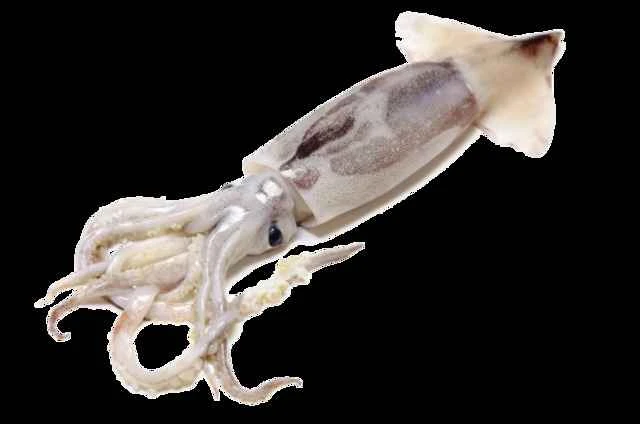
The musket squid has a conical body that tapers slightly at the rear. Its fins are more than half the length of the body, and the two fins meet on the sides, forming a slightly longitudinal rhomboid shape. The outer edge of its gelatinous ring has small sharp teeth, and its tentacles are longer than the body. Its inner shell is horny, thin, and transparent, while its back is covered with dense purple spots.
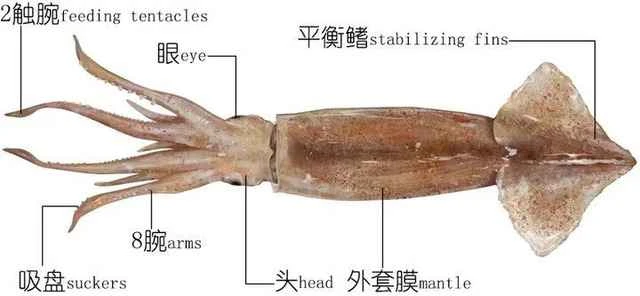
The list of the top ten squid species is based on the characteristics and quality of common squid, taking into account public awareness and other relevant information, and combining other relevant rankings/lists on the Internet to make a comprehensive ranking recommendation. The list is for reference only. If you have any questions, please feel free to comment/discuss at the end.
Other squid species include: colossal squid, European squid, New Zealand squid, Australian squid, tiger squid, and snapper...