When people talk about the largest land animals, they usually think of dinosaurs. We can imagine what it would be like for humans and marine animals to stand in front of dinosaurs.
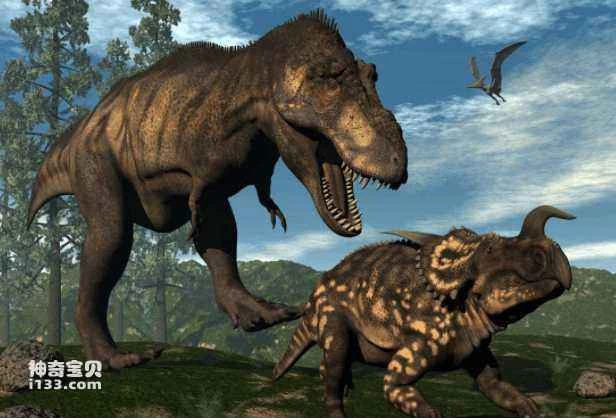
Dinosaurs are categorized into different types. For example, there are many species of pterosaurs that can fly, and many species of ichthyosaurs that can swim. Not to mention the countless dinosaurs that lived on land. So, among so many types of dinosaurs, which one was the largest? Many archaeologists struggle to determine the size of dinosaurs due to incomplete skeletons, sometimes only leg bones and skulls remain. One of China's most famous dinosaurs is the Mamenchisaurus. Its neck was much longer than its tail, almost half the length of its body. It was 21 to 25 meters long and weighed 30 to 50 tons, demonstrating its enormous size. However, the Mamenchisaurus needed to eat large amounts of plant fruits every day to maintain the normal functioning of such a massive body.
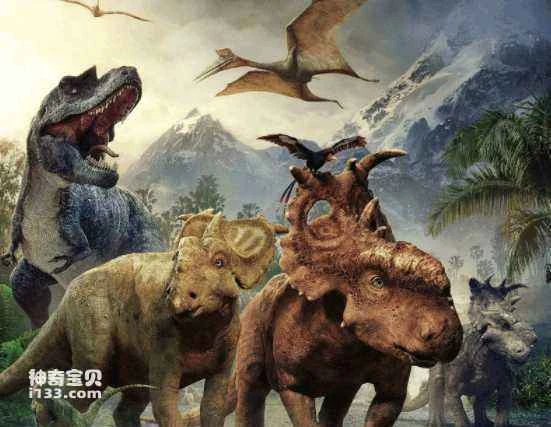
Additionally, the giant dinosaur Diplodocus, found in northwestern North America, could reach lengths of over 30 meters. It had a long head and tail; its neck was 7.5 meters long, and its tail was twice the length of its neck, approximately 13 to 14 meters. Its torso was short and slender, so it wasn't very heavy. Although Diplodocus had a long neck, it couldn't bend it freely. It fed on succulent plants.
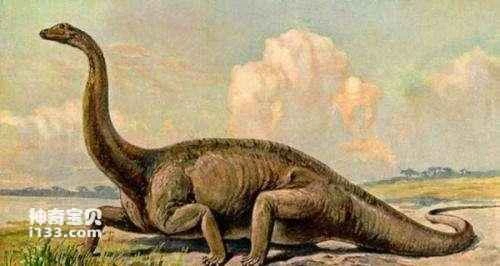
Many paleontologists believe that the largest dinosaur in the world was Seismosaurus, because its walk would cause the ground to tremble. When its skeleton was discovered by archaeologists, only the vertebrae, pelvis, and ribs were found, along with other hypothetical skeletons. Therefore, Seismosaurus was estimated to have been 32 to 36 meters long and weighed 31 to 40 tons. Due to its enormous size, if a group of Seismosaurus walked together, the ground would shake like an earthquake, hence its name.
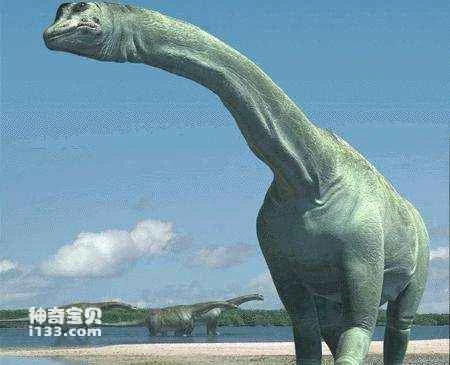
Some archaeologists believe that *Dreadnoughtus schlegelii* was the largest dinosaur, a type of Brontosaurus, and also a herbivorous dinosaur that fed on plants. *Dreadnoughtus schlegelii* weighed seven times more than Tyrannosaurus Rex, and even more incredibly, this 65-ton dinosaur died before its body was fully developed.