While there are over 150 species of land animals in Antarctica, most of them are parasites found on seabirds and marine mammals, and not true land animals. True Antarctic land animals include insects and spiders, which are native to the Antarctic continent and include ticks, mites, awls, and midges.
The mites, also known as wingless Antarctic flies, are the largest land animals in Antarctica, measuring only 2.5–3 millimeters in length. They are distributed in a narrow zone between 64° and 65°30′ south latitude on both sides of the Antarctic Peninsula, feeding on moss, lichen, and other detritus.
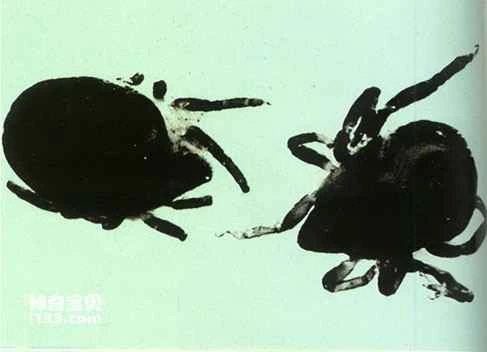
Land spider
Springtails (also called snap-tailed worms) and mites are most widely distributed in Antarctica, ranging from the coast to plateaus at altitudes of 2000 meters, and even as far inland as 84°S. Springtails are commonly found on rock surfaces where lichens grow, often living alongside lichens. They are sometimes found under rocks or in crevices of small pebbles, but this is less common. Mites are mostly found under rocks, rarely on rock surfaces, and primarily live alongside mosses. Mites can tolerate relatively low temperatures. The Fusarium mites of the Cryptoclawidae family are Antarctic mites that live alongside algae, feeding on them and able to survive in frozen sand.
In addition, the freshwater ponds, streams, and lakes of Antarctica are home to a few species of flatworms, roundworms, and other crustaceans such as water fleas. In the moss-covered shallows, marshes, and freshwater ponds live tardigrades, which are only 0.1–0.8 mm long, reddish-brown in color, covered with a cuticle, have antennae, short legs, are oviparous, and feed on moss and blue-green algae.

Land midge
Chinese biologists have discovered a spider-like creature in or under rocks near the Great Wall Station in Antarctica. It is several millimeters long, pink in color, and has a soft, transparent body that breaks easily. It usually grows on rocks covered with lichen and may feed on lichen.

ticks on moss
Although Antarctica has the aforementioned native terrestrial flora and fauna, their populations and numbers are pitifully small compared to other continents on Earth. The Arctic region has far more terrestrial animals than Antarctica, boasting abundant insects, land birds, and mammals such as hares, foxes, wolves, bears, reindeer, and musk oxen. Freshwater contains fish and amphibians. However, for terrestrial life in Antarctica, whether animal or plant, surviving in such an extremely harsh environment is already a remarkable achievement. They must struggle and contend with the perilous conditions, developing and cultivating adaptability to survive and reproduce.