The tallest dog breed on Earth is the Irish Wolfhound. Originating in Ireland around 100 BC, it is a true giant dog, typically standing 71-90 cm tall and weighing 40-55 kg, making it the tallest dog in the world. Its appearance is generally similar to a Greyhound, with a rather bushy coat; its body is sturdy and muscular, giving it an elegant posture. It is strong, displaying power, activity, courage, and symmetry. Irish Wolfhounds are intelligent and kind, a very trustworthy breed, and friendly towards children. This dog has the same activity level as small dogs, but due to breeders' desire to develop a larger wolfhound, future breeds may reach 81-86 cm in height.
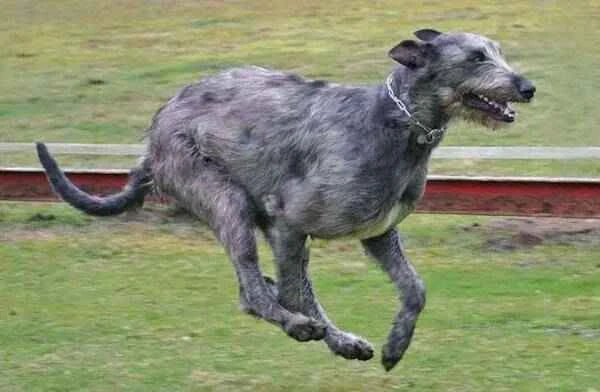
The Irish Wolfhound is a large, commanding breed, characterized by its strength, speed, and keen eyesight. A tall, running hound, its general appearance is similar to a Greyhound, with a somewhat disheveled coat; it is very muscular, strong, and elegantly structured; its movements are effortless and agile; its head and neck are carried high, and its tail is carried high, curving slightly at the tip. The minimum height at the shoulder and minimum weight for males are 32 inches and 120 pounds, respectively; for females, the minimum height at the shoulder and minimum weight are 30 inches and 105 pounds, respectively; these figures apply only to Irish Wolfhounds over 18 months of age. Dogs below these minimum standards will be excluded from competition. The desired size, including height at the shoulder and body length, should be between 32 and 34 inches, with a strong, stable build, displaying power, agility, courage, and proportion.
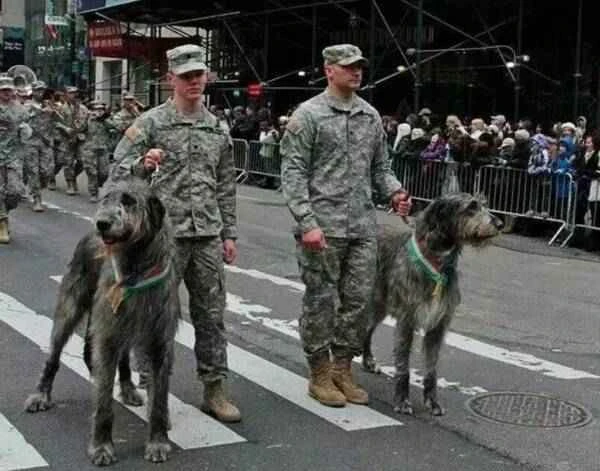
The Irish Wolfhound originated in the 19th century; its initial purpose was wolf hunting; its current purpose is as a companion animal. Originally used by the Celts for wolf hunting, this noble breed was later brought to Ireland by the Romans. In the latter half of the 19th century, using modern dogs related to the ancient wolfhounds, a new breed was successfully developed. Because of their gentleness and loyalty, they have become excellent companion dogs and faithful watchdogs. However, due to their large size, they require a lot of space, making them less ideal as urban companions. They are generally suited to outdoor life but not city living, can adapt to cold climates, get along well with other dogs, and are excellent guard dogs.
The Irish Wolfhound is the national dog of Ireland, but it faced extinction in the 19th century. It was only through crossbreeding with the Scottish Deerhound that the breed was preserved. History: Irish Wolfhounds were often given as gifts among the nobility, leading King Oliver Cromwell to issue an export ban. In the early 18th century, the last wolf in Scotland was killed, and in 1766, the Irish wolf population was wiped out, further diminishing the Irish Wolfhound's numbers. By the 19th century, British Army officer George Graham's efforts to breed it brought the breed back into the spotlight.
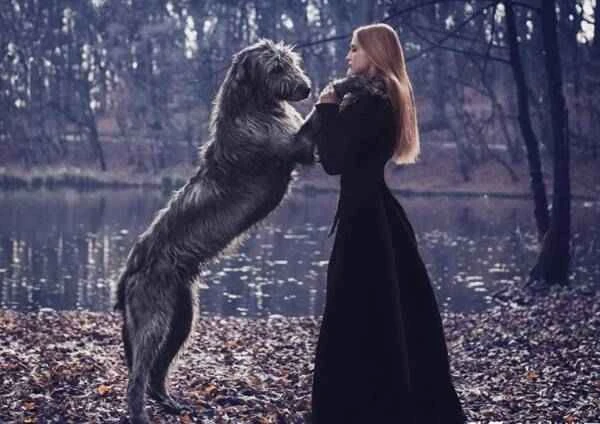
Originating in Ireland around 100 BC, the Irish Wolfhound is a true giant dog, the largest dog breed in the world. Its ancestors can be traced back many centuries, originating from ancient royal dogs. The Irish Wolfhound is the national dog of Ireland, and descriptions of it frequently appear in legends, stories, and literature. This large, rough-coated breed was often used for hunting wolves, deer, and wild boar. Irish Wolfhounds were popular among the nobility and were frequently given as gifts, leading Oliver Cromwell to issue an export ban on them.
The Irish Wolfhound is an intelligent and kind breed, highly trustworthy, and very friendly towards children. It has a robust and muscular build and loves to run around, requiring ample open space. This dog has the same level of activity as small dogs. However, due to breeders' desire to develop this breed into a larger wolfhound, future models may reach 81-86 cm in length.