Horses were extremely important in ancient times, serving not only as a means of transportation but also as a weapon in war and a symbol of aristocratic status. In ancient China, horses held profound significance in culture, history, and society.
Firstly, in ancient warfare, cavalry was a crucial force, and horses were the mounts of cavalry. Therefore, possessing a high-quality warhorse was something every military strategist desired. In war, an excellent warhorse could be key to victory because it allowed riders rapid maneuverability and quick relocation, and also enhanced the army's offensive capabilities on the battlefield.
Secondly, horses were also a symbol of aristocratic status and position. In ancient times, only wealthy nobles could own fine horses, using them as a way to display their glory and status. Owning a good horse could demonstrate a person's status, wealth, and power.
Furthermore, horses hold an important place in culture. In Chinese literature, horses are often used to symbolize heroes and qualities of loyalty and courage. For example, the line "A thousand-mile horse is common, but a discerning eye is rare" in the "Ode to the Red Cliff" reflects the importance of horse quality to military operations.
In general, horses played a very important role in ancient culture. They were not only tools of transportation and warfare, but also symbols of aristocratic status, wielding profound influence throughout history. This article reviews various dynasties and summarizes a ranking of the best horses in Chinese history. Among these ten most powerful horses are Red Hare, Dilu, Wuzhui, Jueying, Huangbiao, Zhaoye Yushizi, Zhaohuang Feidian, the Six Steeds of Zhaoling, the Seven Steeds of Qin Shi Huang, and the Eight Steeds of King Mu of Zhou. Let's get to know these most famous horses in history!
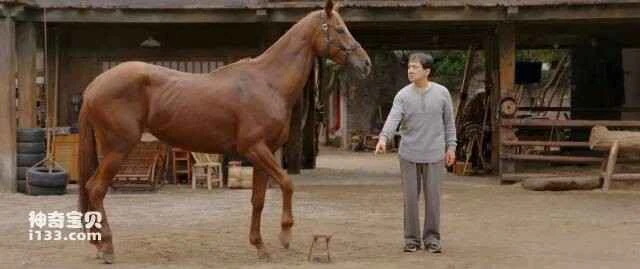
1. Red Hare
Red Hare was a famous warhorse during the Three Kingdoms period. Legend has it that Red Hare was fiery red all over, exceptionally powerful, and a true steed capable of traveling a thousand li in a day. In the novel *Romance of the Three Kingdoms*, Red Hare was a rare steed capable of traveling a thousand li in a day. Originally owned by Dong Zhuo, Dong Zhuo sent it to Lü Bu, encouraging him to kill his adoptive father Ding Yuan and join Dong Zhuo in 189. Later, Lü Bu was defeated in Xuzhou and killed by Cao Cao, who then acquired Red Hare. Later, Cao Cao attacked Liu Bei, who had captured Xuzhou. Liu Bei was defeated, and his general Guan Yu was captured by Cao Cao. To recruit Guan Yu, Cao Cao gave him Red Hare, which played a crucial role in Guan Yu's slaying of Yan Liang and his solo journey of a thousand li. Later, in 220, Guan Yu was defeated at Maicheng and captured alive by Ma Zhong, a general under Pan Zhang, and killed by Lü Meng. Red Hare was given to Ma Zhong, who then starved himself to death.
The saying goes, "Among men, Lü Bu; among horses, Red Hare." Red Hare could travel a thousand li in a day and eight hundred li at night, crossing rivers and climbing mountains as if walking on flat ground. While Red Hare was a real horse, this divine ability was mythologized in the novel *Romance of the Three Kingdoms*. The fictional character Lady Zhurong also rode a curly-haired Red Hare.
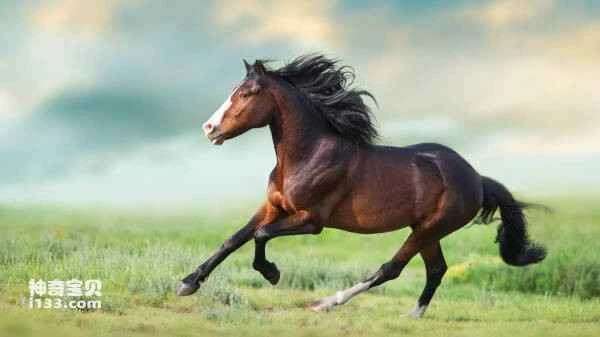
2. Delu
The famous horse Dilu, also known as Yuyan, ridden by Liu Bei during the Three Kingdoms period, was said to be a fierce horse. The original character for Dilu was "Dilu," meaning a fine horse with a white spot on its forehead. The *Xiangma Jing* (Classic of Horse Judging) states: "A horse with a white forehead and protruding teeth is called Yuyan, also known as Dilu. A slave riding it will die, and the owner will be executed; it is a fierce horse." In *Romance of the Three Kingdoms*, Dilu appears in Chapter 34, "Lady Cai Overhears Secret Talk Through a Screen, Liu Huangshu Leaps His Horse Across the Tanxi River." At that time, Liu Bei was under the command of Liu Biao, the governor of Jingzhou, and was ordered to conquer Zhang Wu and Chen Sun. Liu Bei saw Zhang Wu riding Dilu on the battlefield and was greatly impressed. His general Zhao Yun then killed Zhang Wu and seized the horse. This horse was then acquired by Liu Bei.
Later, Cai Mao plotted to assassinate Liu Bei at a banquet, but Liu Bei discovered the plot. Liu Bei fled the banquet, riding his horse Dilu to the vicinity of Tanxi, but the swift current prevented him from crossing. At this moment, pursuers arrived, and in desperation, Liu Bei spurred his horse into the stream. Dilu's forelegs sank into the water, and Liu Bei angrily cried out, "Dilu! Dilu! Today you've hindered me!" Suddenly, Dilu displayed its divine power, leaping three zhang (approximately 10 meters) high from the water and flying over to the west bank, allowing Liu Bei to escape. This leap established Dilu's status as a famous horse of the Three Kingdoms period. Although not as renowned as Red Hare, it still enjoyed considerable fame, and its status was further elevated by Xin Qiji's poem, "The horse Dilu flies swiftly, the bowstring twangs like thunder."
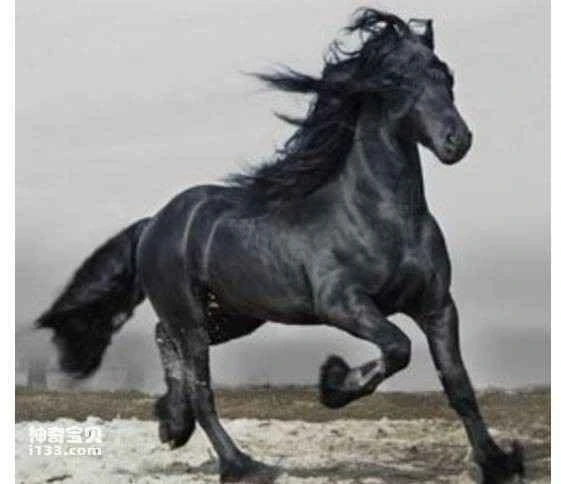
3. Wuzhui
Xiang Yu's (Xiang the King) prized horse, Wuzhui, was renowned for its ability to travel a thousand li a day. It fought countless battles over the years, accumulating numerous merits and being hailed as the finest horse in the land during Xiang Yu's reign. Wuzhui was entirely black, like glossy black satin, except for its four hooves, which were as white as snow. Legend has it that after Xiang Yu committed suicide at the Wujiang River, Wuzhui, loyal to its master, also jumped into the river and died. Xiang Yu's Wuzhui likely belonged to the Hequ horse breed, a renowned breed of Chinese horse. The Hequ horse, one of my country's finest military horse breeds, is primarily black and bluish-gray, though other colors also exist.
4. Shadowless
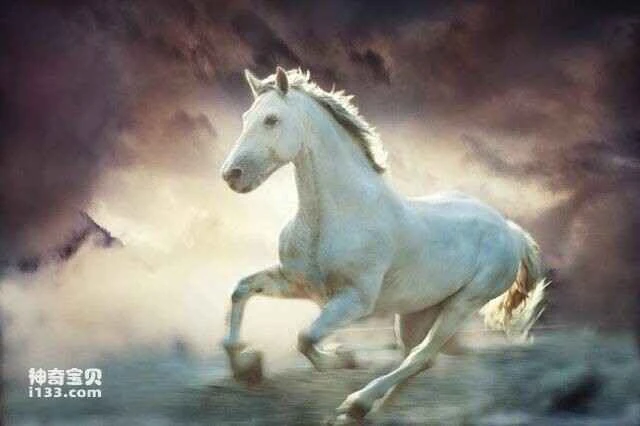
Jueying was Cao Cao's steed during the late Eastern Han Dynasty. When Cao Cao was attacking Zhang Xiu at Wancheng, he was ambushed by Zhang Xiu, who had surrendered and then rebelled. Cao Cao fled on Jueying. In the ensuing chaos, Jueying, carrying Cao Cao, was struck by stray arrows in the cheek and foot, while Cao Cao himself was also wounded in the right arm. Jueying was said to be a "blood-sweating horse," capable of galloping at incredible speed even after being struck by three arrows. Legend has it that even its shadow couldn't catch it, hence the name "Jueying" (meaning "absolute" or "unparalleled"). During the rescue of Cao Cao, Jueying finally collapsed after being struck in the eye by a stray arrow, thus fulfilling its purpose in this battle.
5. Yellow Horse
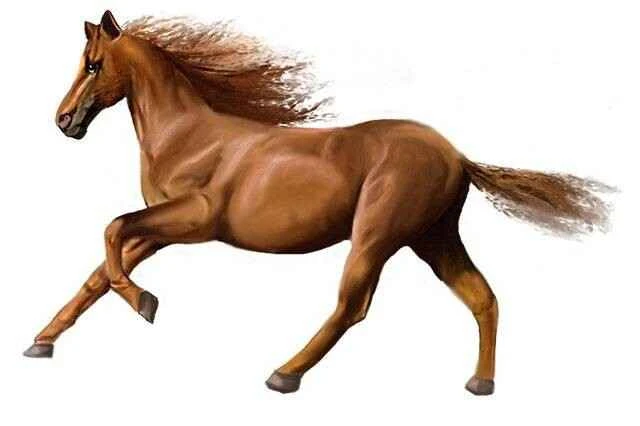
The term "Yellow Horse" refers to a yellow horse with white spots, primarily located on its belly and flanks. Most notably, it has white hair on its head, shaped like a full moon. Hence, it is also known as "Western Liang Jade-top Dry Grass Yellow Horse." Even when well-fed, the Yellow Horse's ribs remain visible, earning it the nickname "Penetrating Bone Dragon." It is a rare and exceptional steed. According to the Ming Dynasty texts *Sui Shi Yi Wen* and *Sui Tang Yan Yi*, Qin Shubao's mount was a Yellow Horse. Before Qin Shubao raised the Yellow Horse, it was extremely thin, but within ten months it became plump and strong.
6. Jade Lion Shining at Night
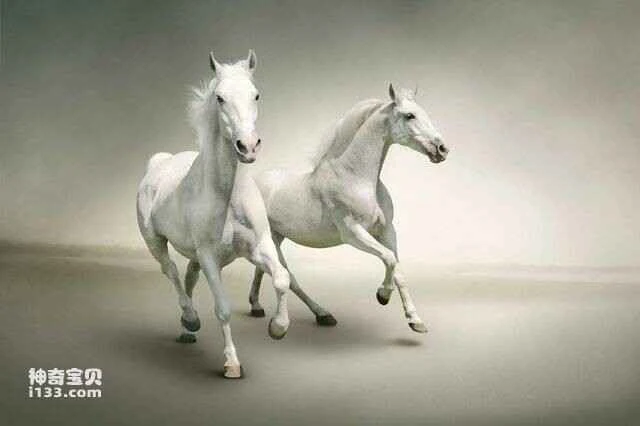
The Jade Lion Shining at Night is a prized horse appearing in the novel *Water Margin*. It is entirely white, without a single streak of other color, and is said to be able to travel a thousand li a day. Originating in the Western Regions, it is considered the finest of horses. The Jade Lion Shining at Night is possibly modeled after the Ferghana horse "Shining at Night White" in the paper-based Chinese painting *Shining at Night White* by the Tang Dynasty painter Han Gan. Legend has it that Duan Jingzhu, a character in *Water Margin*, was originally a horse trader in Zhuozhou, skilled in stealing and training horses. Because of his red hair, yellow beard, and lean, robust build, he was nicknamed "Golden-haired Dog." He was fluent in Mongolian, Tangut, and Liao languages. He stole a fine horse outside the Great Wall named "Jade Lion Shining at Night," a pure white horse capable of traveling a thousand li a day. Duan Jingzhu intended to present this prized horse to Song Jiang. However, it was stolen by the Zeng family's five tigers and became the mount of Shi Wengong, the instructor of Zengtou City, leading to Shi Wengong's famous arrow shot at Chao Gai.
This horse is born as fierce as a lion, but as it grows up, it is driven out of the herd and becomes docile. Many characters in Chinese historical novels ride this "Jade Lion Horse," such as Zhao Yun, who was rescued from Zhang He's trap at Changban Slope by this horse's leap. Other examples include Wu Yunzhao in Sui and Tang dynasty novels and Duan Jingzhu in *Water Margin*.
7. Clawed Yellow Flying Lightning
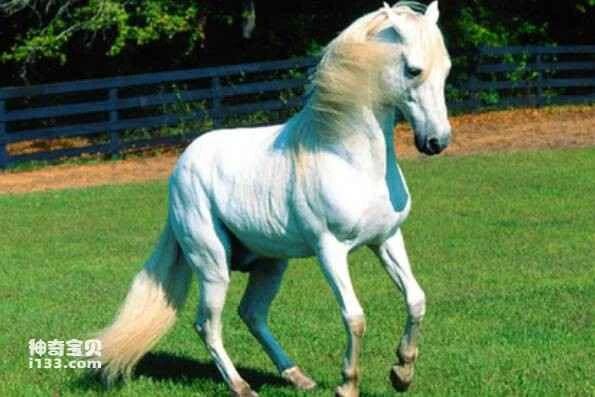
Zhaohuang Feidian was a famous horse during the Three Kingdoms period and Cao Cao's personal mount. Due to its noble bearing, Cao Cao rarely rode it into battle. Furthermore, Zhaohuang Feidian was one of the four most famous steeds of the Three Kingdoms, alongside Red Hare, Dilu, and Jueying. Zhaohuang Feidian was pure white with four yellow hooves, possessing an extraordinary and arrogant air. Even the name Zhaohuang Feidian evokes a sense of grandeur and distinction. Because of this exceptional temperament, Cao Cao generally did not ride it in battle, but rather used it to display his extraordinary power upon returning to court in triumph. Therefore, Zhaohuang Feidian was often perceived as more of a decorative, albeit impractical, steed.
The Clawed Yellow Flying Lightning is rarely mentioned in historical records or fictional accounts, appearing only in Chapter 20 of the Romance of the Three Kingdoms, "Cao Cao Hunts at Xutian, Dong Zhongshu Receives Imperial Edict": "Cao Cao rode the Clawed Yellow Flying Lightning horse, leading an army of 100,000, to hunt with the emperor at Xutian. The soldiers set up the hunting ground, which was more than 200 li in circumference. Cao Cao and the emperor rode side by side, only one horse's head apart."
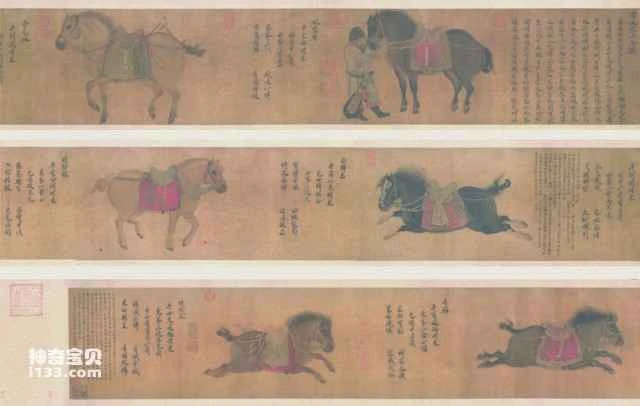
8. The Six Steeds of Zhaoling
The Six Steeds of Zhaoling refer to six stone relief carvings of galloping horses located on the east and west sides of the altar on the north side of Zhaoling Mausoleum, the tomb of Emperor Taizong of Tang (Li Shimin) in Liquan, Shaanxi Province. Each stone carving is approximately 205 cm wide, 170 cm high, 30 cm thick, and weighs about 2.5 tons. The Six Steeds of Zhaoling are beautifully shaped, with flowing lines and exquisite, rounded carving, making them precious ancient stone carving art treasures. These six steeds were warhorses ridden by Li Shimin before the establishment of the Tang Dynasty, named Quanmaohua, Shifachi, Baitiwu, Telepiao, Qingzhui, and Saluzi. To commemorate these six warhorses, Li Shimin commissioned the craftsman Yan Lide and the painter Yan Liben (Yan Lide's younger brother) to depict the six warhorses in relief and place them in front of the mausoleum.
According to records, Li Shimin personally wrote the following eulogies for the six steeds:
Telebiao: Responding to the winds, it soars into the sky, its voice echoing across half the Han River; it destroys the enemy through natural barriers and overcomes dangers and difficulties.
Qingzhui: A light-footed soldier, divinely inspired, swiftly advancing, securing my military uniform.
Shi Fa Chi: The Chan River is not yet calm, the axe and halberd display their might, the red-clad warriors gallop on, and the blue banners return in triumph.
Sa Lu Zi: Purple swallow leaps and bounds, bones soar like a divine steed, aura that shakes the three rivers, might that dominates the eight formations.
Quanmaogua: The moon spirit reins in the celestial steed, galloping across the land. A lone arrow is sheathed, and the dust and grime are cleared away.
White-hoofed Crow: A long sword reaching the sky, a swift steed chasing the wind; reins raised high on the plains, saddle turned back to pacify Shu.
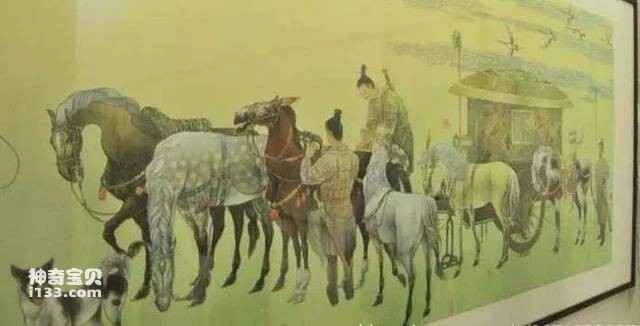
9. The Seven Steeds of Qin Shi Huang
The *Notes on Ancient and Modern Times* by Cui Bao of the Jin Dynasty records: "Qin Shi Huang had seven famous horses: Zhui Feng, Bai Tu, Nie Jing, Ben Dian, Fei He, Tong Jue, and Shen Fu." These seven horses can be considered among the ten most powerful horses in China, their speed as swift as the wind and lightning. The most famous of the seven was Shen Fu. When Qin Shi Huang toured the east, he rode Shen Fu, going wherever there was beautiful scenery. This horse leaped over mountains and streams as if walking on flat ground. However, despite having such a divine horse, Qin Shi Huang ultimately failed to find the elixir of immortality and died on the road.
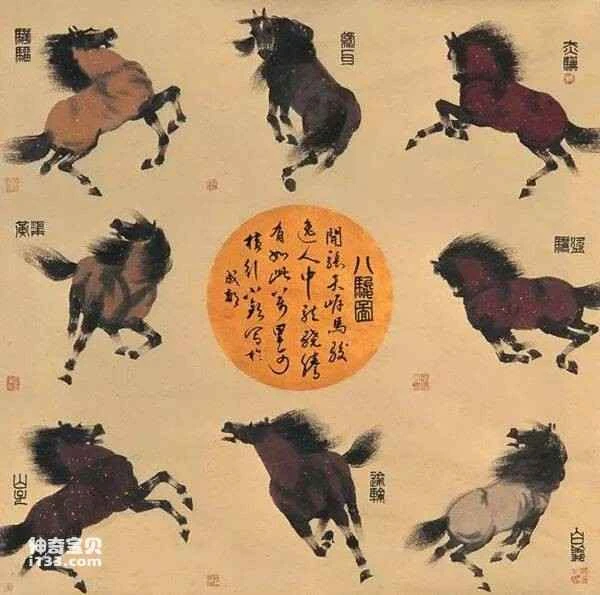
10. The Eight Steeds of King Mu of Zhou
The Eight Steeds of King Mu were eight legendary divine steeds owned by King Mu of Zhou. They were named "Juedi," "Fanyu," "Chaoying," "Benxiao," "Yuhui," "Chaoguang," "Tengwu," and "Xieyi." Capable of traveling ten thousand li in a day, King Mu often rode these eight steeds to inspect the Zhou Dynasty's territory.
According to the *Mu Tianzi Zhuan*, the eight horses were: Chiji, Daoli, Baiyi, Yulun, Shanzi, Quhuang, Hualiu, and Lüer. Chiji was fiery red, Daoli was pure black, Baiyi was pure white, Yulun was bluish-purple, Shanzi was grayish-white, Quhuang was goose-yellow, Hualiu had a black mane and tail, and Lüer was bluish-yellow. Of these eight steeds, Daoli was the most famous.
This list of the top ten famous ancient horses is compiled based on their public recognition, owners, pedigree, special skills, and other relevant information, while also referencing relevant online rankings. This list is for reference only; please feel free to comment/discuss at the end if you have any questions.