In the reptile kingdom, the king cobra (scientific name: *Ophiophagus hannah* ) is renowned for its enormous size and highly venomous venom . This snake is not only the longest venomous snake in the world but also a nightmare for many animals and humans. Many people are curious about the king cobra's venom: Is the king cobra venomous? How potent is its venom? Can its venom kill a human?
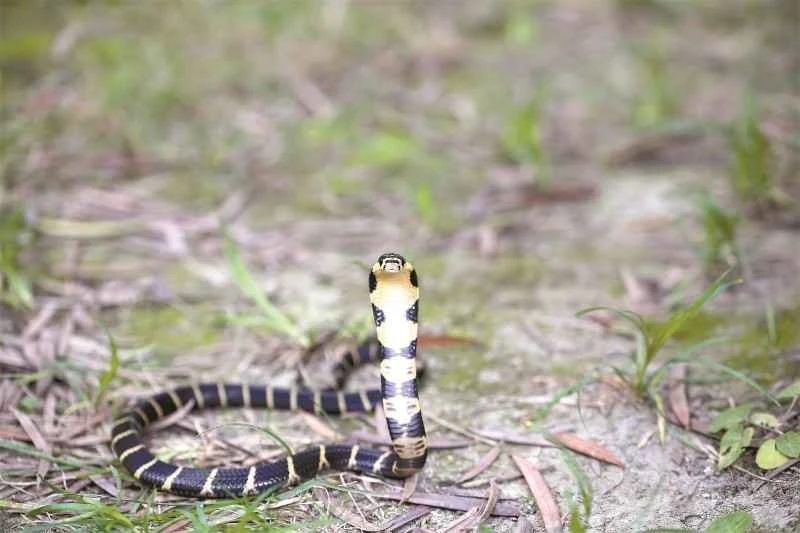
This article will delve into the king cobra's toxicity, physiological characteristics, attack methods, and threats to humans , providing you with a more comprehensive understanding of this mysterious snake.
1. Basic characteristics of the king cobra
Before we learn about its toxicity, let's take a look at some basic information about the king cobra.
1.1 Body type and appearance
✅ The king cobra is the world's longest venomous snake , typically measuring between 3 and 5 meters in length, with extreme individuals exceeding 5.5 meters .
✅ Their bodies are usually olive green, brown, or black , with a lighter-colored belly.
✅ When threatened, the king cobra raises the front third of its body and spreads the skin folds of its neck, forming its signature "spectacles" pattern to warn enemies.
1.2 Distribution Range
✅ It is mainly distributed in tropical and subtropical regions such as India, Southeast Asia, southern China, and the Philippines .
✅ Habitats include forests, bamboo groves, swamps, agricultural areas , and even areas close to human settlements.
1.3 Main Foods
✅ Unlike most snakes, the king cobra primarily preys on other snakes (including both venomous and non-venomous snakes).
✅ They also prey on lizards, birds, and small mammals.