Many people use "sparrow" as a general term for all small brown birds, but strictly speaking, "true sparrows" mainly refer to a group of birds belonging to the genus * Passer * . They are usually small in size (commonly around 15 cm ), with predominantly brown/grey plumage , short and thick beaks suitable for catching seeds, and are very adept at surviving in areas with human activity—they can be found from cities and villages to farmlands and the edges of deserts.
Below is a list of 13 representative Passer sparrow species, organized by " identification points + distribution/habitat + physical characteristics + diet + behavioral highlights " for easy browsing and comparison.
First, let's look at: How to quickly determine if "it looks like a Passer sparrow"?
Size : Small and stocky, with a round head and short neck.
Mouth shape : Short, thick, and conical (typical "sunflower seed cracker"), suitable for pecking grains and seeds.
Feather color : Mostly brownish-grey, often with markings; a few species may exhibit brighter yellow or chestnut.
Habits : They prefer to live in pairs or small groups, and foraging on the ground is very common.
Relationship with humans : Many species are highly adapted to human settlements, often nesting in eaves, caves, building crevices, or tree hollows.
Detailed Explanation of 13 Species of Sparrows ( Passer Genus)
1) House sparrow / Sparrow ( Passer domesticus )
Identification features : The most common "urban sparrow". Males are usually more conspicuous, often with a black "bow" on their throat, and have a stronger head contrast; females are more plain and grayish-brown.
Distribution : It has an almost global distribution and is a typical bird that spreads with humans .
Habitat : Cities, towns, farmland, markets, and areas around train stations; can also be found in grasslands or forest edges.
Diet : Mainly feeds on seeds, grains, and debris; during the breeding and brooding period, it will catch a lot of insects to feed the young birds.
Highlights : Extremely adaptable, they dare to approach people and often use buildings as "natural rock walls" to build their nests.
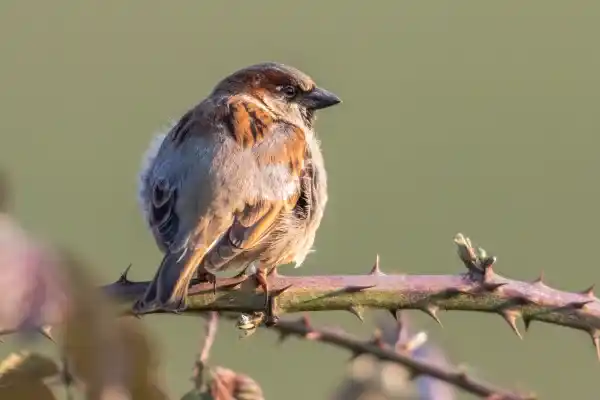
2) Tree Sparrow ( Passer montanus )
Identification features : The top of the head is usually chestnut brown , and there are obvious black round spots on the cheeks; males and females look very similar, with almost no obvious differences between the sexes .
Distribution : Widely distributed in temperate regions of Eurasia.
Habitat : They prefer farmland, orchards, forest edges, and bushes around villages , and even if they are near a city, they often choose more "natural" places to breed.
Diet : Primarily seeds, with an increased proportion of insects during the brooding period.
Highlights : It is easily confused with the house sparrow, but the " black cheek spots + same coloration for males and females " are very useful distinguishing features.

3) Great Sparrow ( Passer motitensis )
Identification features : It is one of the larger types in the sparrow genus, with a lighter-colored abdomen, a grayish forehead, and brownish wings; it may have arc-shaped contrasting stripes on the sides of its face.
Distribution : Southern Africa, especially South Africa.
Habitat : Arid savanna and open areas.
Diet : Seeds, grass seeds, grains, and small insects.
Highlights : They often forage in open areas and frequently use shrubs or sparse trees as warning posts.

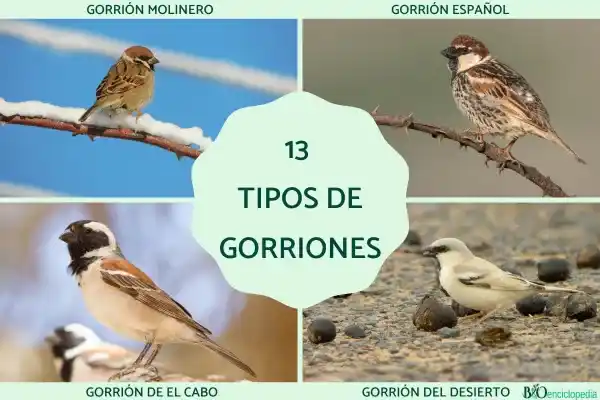
4) Spanish Sparrow ( Passer hispaniolensis )
Distinguishing features : Males are usually more flamboyant: their heads are reddish-brown/chestnut , their cheeks are whitish, and their bodies are grayish-brown, creating a strong contrast; females are more plain.
Distribution : Centered on the Mediterranean region, it extends to Makaronesia and North Africa, and can also reach parts of Asia to the east; in some areas, it shows a trend of expanding into the Balkans and other regions.
Habitat : Highly adapted: can survive in farmland, villages, sparse forests, and shrub edges.
Body length : typically around 15 cm .
Diet : Seeds, grains, and weed seeds; also preys on insects during the breeding season.
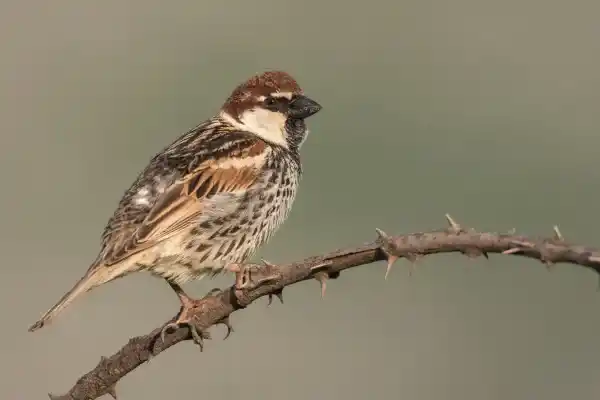
5) Italian Sparrow ( Passer italiae )
Distinguishing features : It resembles similar species from the Mediterranean region in appearance, but its head is often more distinctly brownish-brown ; its cheeks are whitish, its body is grayish, and its wings are brown.
Distribution : Mainly distributed in Italy , and closely related to local human settlements.
Habitat : cities, villages, farmland, courtyards, parks, etc.
Diet : Mainly seeds and grains, with an increase in insects during the brooding period.
Highlights : It has strong "local representation" in Italy and is often regarded as one of the most recognizable birds in Italy.
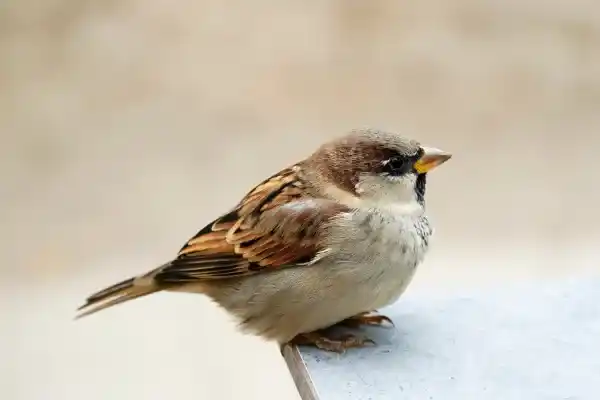
6) Red Egret/Cinnamon Sparrow ( Passer rutilans )
Distinguishing features : Overall "cinnamon" hue: reddish-brown is commonly seen on the crown and back; the underside is creamy. Males are usually redder and brighter.
Distribution : East Asia and the Himalayas, covering parts of China and surrounding high mountain/foothill areas.
Habitat : forest edges, thickets, valley villages, and farmland adjacent to forests.
Diet : Seeds + insects (insects are more important during the brooding period).
Highlights : Compared to "urban sparrows", it often relies more on bushes and forest edges, and its activities are "closer to nature".
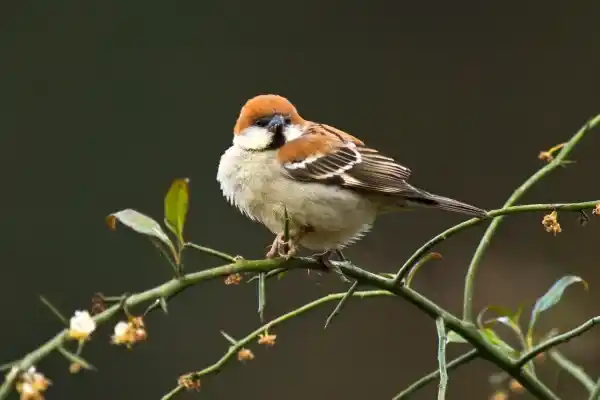
7) Yellow-bellied Sparrow ( Passer flaveolus )
Distinguishing features : The abdomen has a distinct yellow tinge ; the back and head are reddish-brown, and the wingtips are decorated with black spots. Males often have more prominent black lines around the eyes and throat, while females have darker lines.
Distribution : Islands and peninsulas in Southeast Asia.
Habitat : Forest edges, secondary forests, plantations, and rural areas—places with both trees and open foraging grounds.
Diet : Seeds, grains, fruit residue; insects are eaten during the brooding period.
Highlight : Among sparrows that are generally brownish-gray, the yellow-bellied sparrow stands out, making it easy for beginners to quickly identify.
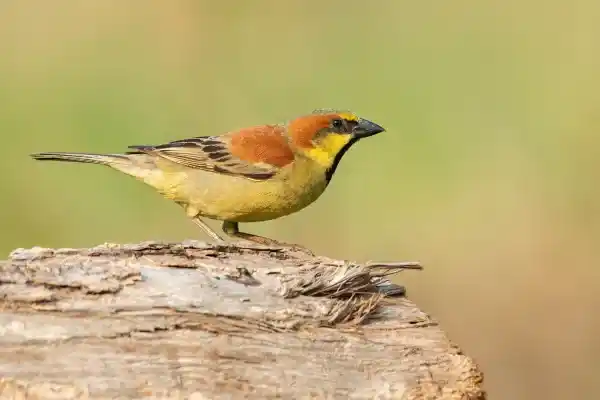
8) Chestnut Sparrow / Passer eminibey
Distinguishing features : Males are often dark chocolate/dark brown throughout their head, chest, and back, with even darker wings; females are lighter in color and more greyish-brown.
Body length : Very small for this group, often described as being around 11 cm .
Distribution : Mainly found in drier regions of Africa, but may also appear near areas of human activity.
Habitat : Semi-arid shrublands, village edges, and farmland perimeters.
Diet : Grass seeds, grains, small insects.
Highlights : Small in size and dark in color, it is quite different from the "common gray-brown sparrow".

9) Arabian Golden Sparrow ( Passer euchlorus )
Identification features : The colors are very exaggerated for sparrows: males can be bright yellow , while females are slightly paler; wings are brown with two white wing patches .
Distribution : Arabian Peninsula and parts of Somalia.
Habitat : Arid shrublands and sparse vegetation areas, often near water sources or river valleys (where food is concentrated).
Diet : Primarily seeds, but also insects.
Highlight : If you see a "yellow sparrow" in an arid region, you'll most likely think of it.
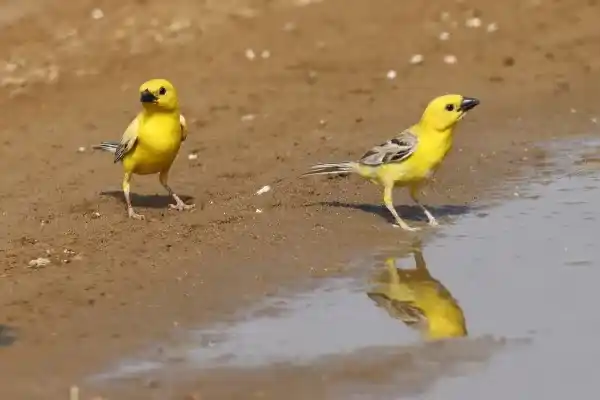
10) Grey-headed Sparrow ( Passer griseus )
Distinguishing features : The forehead or head has a distinct gray tinge , while the body is lighter overall; the wings are brown with black details.
Distribution : Tropical Africa.
Habitat : Highly adaptable, able to freely switch between forest edges, woodlands, village perimeters, human activity areas, and natural environments.
Diet : Seeds, grains, insects.
Key takeaway : This flexibility to "get through any environment" is a major reason for its success.

11) Cape Sparrow ( Passer melanurus )
Distinguishing features : The head markings are distinctive: there are often two light-colored stripes around the eyes forming a clear division, sometimes resembling a "V" shape. The male has a stronger black and white contrast, while the female has a grayer and softer appearance.
Distribution : South Africa.
Habitat : Relatively less arid areas, farmland, sparse forests, urban green spaces; already adapted to urban life.
Diet : Primarily seeds, but also eats insects during the breeding season.
Highlight : In South African cities and suburbs, sparrows with "particularly clear head markings" are prime candidates.
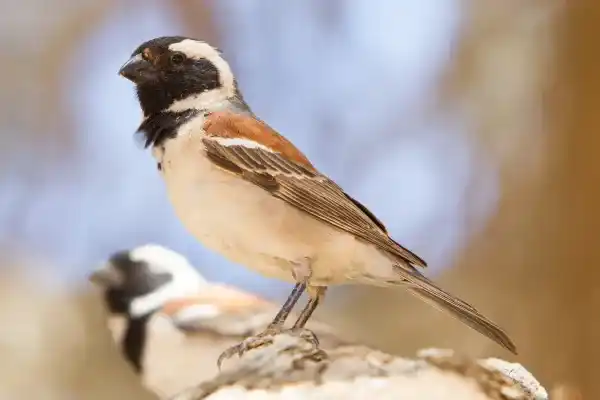
12) Desert Sparrow ( Passer simplex )
Identifying features : Typical sandy camouflage : Overall light beige/light sandy. Males often have a more contrasting appearance: a darker gray head, more prominent black feathers on the wings, and small black spots visible on the chest.
Distribution : Sahara Desert region.
Habitat : True desert areas, often near sparse shrubs or seasonal vegetation.
Behavior : They may engage in seasonal or conditional migration/movement to avoid extremely difficult times.
Diet : Primarily eats desert plant seeds, and also insects when conditions permit.
Highlight : Its "color scheme" is designed for survival: the more it resembles sand, the less likely it is to be discovered.
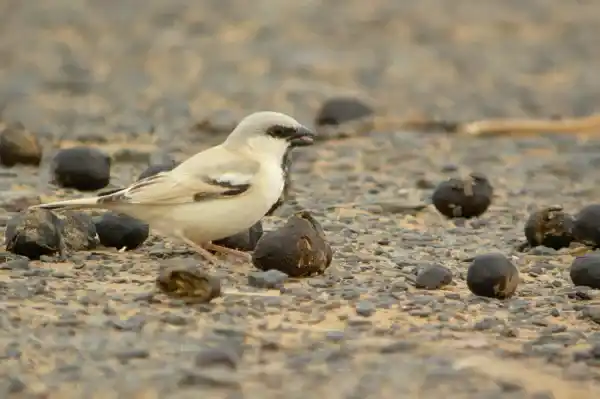
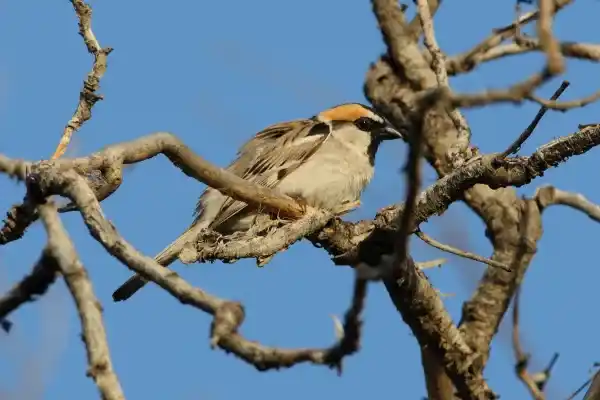
13) Haloxylon ammodendri ( Passer ammodendri )
Identification features : Male birds often have orange patches near their eyes and whitish cheeks; there are black lines around their eyes that resemble "eyeliner," and there are also obvious dark stripes on their throats.
Distribution : Arid regions of Central Asia.
Habitat : Desert and semi-desert environments, often associated with desert vegetation systems such as **Saxaul** (providing shelter, food sources and habitats).
Diet : Seeds and insects; commonly forages on the ground and among low vegetation.
Highlight : Sparrows with orange eye spots are relatively rare, making them highly recognizable.
Quick comparison: Which one do you see?
The most common bird in cities, with the male having a distinct black bib : the house sparrow.
Chestnut-colored head with black polka dots on the cheeks; males and females are almost identical : Tree Sparrow
Mediterranean/North African region, males have a more prominent reddish-brown head : Spanish Sparrow
The most typical "local sparrow face" in Italy : Italian sparrow
East Asian/Himalayan, overall warmer cinnamon reddish-brown : Red Eurasian Sparrow (Cinnamon Sparrow)
Southeast Asia, yellowish abdomen : Yellow-bellied sparrow
Arabian Peninsula, yellow in color with two white wing spots : Arabian Golden Sparrow
Sahara, resembling sand in its entirety, with a small black spot on the male's chest : Desert Sparrow
Central Asian desert, male bird with distinct orange spots around its eyes : Sahara Sparrow
Additional information: Why is the sparrow so "successful"?
Its diet is stable : it can eat seeds and grains, and can also prey on insects when needed.
They are flexible in building nests : they can utilize tree holes, rock crevices, eaves, and building holes.
Highly social : Group foraging makes it easier to find food sources and also allows them to be more alert to predators.
Adapting to the human environment : garbage, grain warehouses, garden plants, and roadside grass seeds can all be turned into "resources".