Antarctica itself has sparse biodiversity; however, the ocean surrounding it—the Southern Ocean—is a vibrant biological world. The waters near the Inter-Antarctic Convergence are particularly rich in life.
The Southern Ocean, formerly known as the Antarctic Ocean or the Southern Ice Ocean, is bounded to the north by the Antarctic Convergence—the boundary of dramatic changes in water temperature and salinity—located between 48° and 62° south latitude. This line also marks the boundary of the average distribution of the Southern Ocean's ice periphery. With an area of 75 million square kilometers, the Southern Ocean is the only ocean in the world that completely encircles the Earth without being divided by any continent. It possesses unique hydrological characteristics, is rich in biomass, and has a significant impact on global climate.
The Southern Ocean is home to thousands of marine species, ranging from single-celled phytoplankton to giant seaweed several meters long; from small zooplankton to large mammals such as seals and sea lions, and even whales weighing hundreds of tons; from flying seabirds to flightless penguins—a diverse array of species. In terms of distribution, they can be found on everything from coastal reefs and beaches to the intertidal zone; from shallow waters to the deep sea thousands of meters below the surface; from seawater to ice floes and ice sheets. They are widely distributed, densely populated, and abundant in populations, a vibrant tapestry of life.
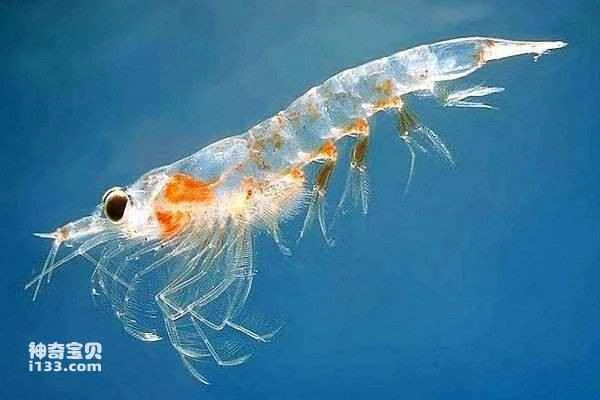
Compared to other major oceans in the world, the Southern Ocean has fewer species but far greater numbers of organisms. For example, Antarctic krill reserves are estimated at 400 to 600 million tons. Before World War II, whaling in the Southern Ocean accounted for 70% of the world's total whaling. There are over 100 million penguins. Seals also have the largest population in the world. The density of phytoplankton is also quite high, sometimes containing hundreds of millions of cells per cubic meter of seawater.
The abundance of species, though few in number, is one of the characteristics of life in the Southern Ocean. It is precisely because of the abundance that the lack of species is masked, allowing the Southern Ocean to remain vibrant.
Another characteristic of Southern Ocean organisms is their slow growth, low metabolism, tolerance to cold and darkness, large size, and long lifespan. For example, some Antarctic fish grow only a few centimeters per year; Antarctic cod can tolerate temperatures as low as -1.89°C; plankton that are resistant to darkness and have empty bellies have been found on the Ross Ice Shelf; emperor penguins can tolerate temperatures as low as -60°C to 70°C and have an average weight of 43 kg; blue whales can weigh up to 150 tons; elephant seals can weigh up to 6 tons; and the largest squid weighs up to 143 kg. Isotope dating has shown that a certain Antarctic fish is 1600 years old… These are all excellent examples of the characteristics mentioned above.
The dense marine life and abundant biological resources in the Southern Ocean have long attracted the attention of countries around the world. Developing and utilizing the marine biological resources of Antarctica will be one of the first economic benefits that people will gain from exploring and researching Antarctica.