In 1928, the renowned American geologist and paleontologist, Professor Graeme, published a monumental scientific work, *Geological History of China*. In this book, he first coined the term "Jehol Biota" to represent the comprehensive fossil assemblage distributed in the Lycopterae rock system of East Asia. The name "Jehol" derives from the classic site of the fossil assemblage, which was then the eastern part of Rehe Province. From the 1930s and 40s onward, the name Jehol Biota was widely used in various geological publications. After the founding of the People's Republic of China, Rehe Province was abolished, with its western part assigned to Hebei Province and its eastern part to Liaoning Province. The classic site of the original Jehol Biota thus fell to what is now western Liaoning Province, specifically the Liaoxi region. However, the name Jehol Biota, which has had a profound influence in the field of geology and paleontology, has been retained. In 1962, Gu Zhiwei, a renowned Chinese geologist and paleontologist, summarized the "Jehol Biota" or "Jehol Fossil Assemblage" in his classic work "The Jurassic and Cretaceous Systems of China," which was represented by the Oriental Leaf-Branched Bacteroidetes, the Three-tailed Pseudoplankton, and the Wolf-finned Fish.


Fossils of *Lepidoptera orientalis*, *Triplophysa*, and *Lycoptera* from the Jehol Biota.
Since the 1950s, scientists from the Chinese Academy of Sciences and China's geological, petroleum, and coal sectors have conducted extensive research in western Liaoning. According to incomplete statistics, the Institute of Vertebrate Paleontology and Paleoanthropology of the Chinese Academy of Sciences and the Nanjing Institute of Geology and Paleontology alone have published over 200 research papers and monographs on the Jehol Biota. In recent years, research on the Jehol Biota has made groundbreaking progress, with the discovery of birds, feathered dinosaurs, mammals, amphibians, and early angiosperms from the Early Cretaceous. Research papers on these categories have been continuously published in the world's two most authoritative academic journals, *Nature* and *Science*.
The Jehol Biota is now incredibly rich in biota, encompassing numerous phyla of terrestrial fossils from the Early Cretaceous, including fish, amphibians, reptiles, birds, mammals, ancient plants and their spores and pollen, as well as invertebrates such as bivalves, gastropods, arthropods (including shrimp, insects, and spiders), and ostracods. The discovery of early birds, feathered dinosaurs, primitive mammals, and early angiosperms is among the most significant paleontological discoveries of the 20th century. Their findings address the origins and early evolution of many important phyla in modern life, providing invaluable clues and examples for exploring the evolutionary processes and patterns of Earth's terrestrial ecosystems.
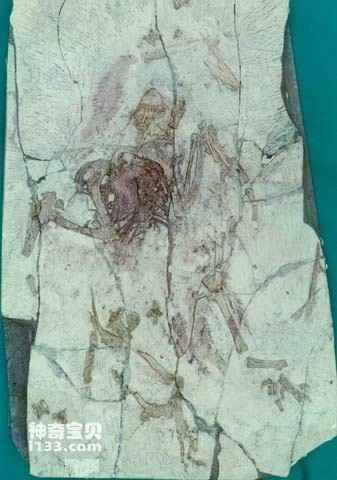
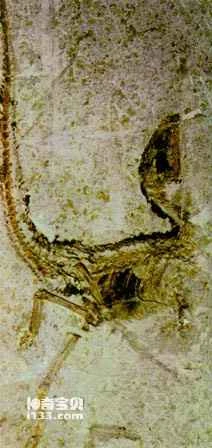
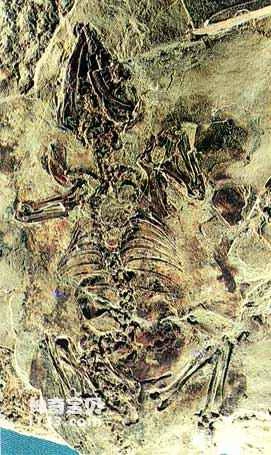
Ancient birds, feathered dinosaurs, and primitive mammals of the Jehol Biota
Among the numerous discoveries and studies, the discovery and research on early birds are arguably the most brilliant. The discovery and research of a series of early birds in the Jehol Biota, including *Sinornithosaurus*, *Chaoyangornithosaurus*, *Huaxiaornithosaurus*, *Confuciusornithosaurus*, and *Liaoningornithosaurus*, shattered the more than 100-year-long dominance of *Archaeopteryx* in the field of bird origin research. Therefore, a leading international scholar hailed these discoveries as "lighthouses of Mesozoic primitive birds," while American paleoornisologist Martin stated, "Our understanding of early bird evolution has been truly revolutionary in the last five years in China… Their appearance has rewritten the history of bird evolution."
Besides the dozen or so Mesozoic birds, other discoveries that have amazed paleontologists worldwide include feathered dinosaurs that resembled dragons, such as Sinosauropteryx and Archaeopteryx. These discoveries have led many scientists to believe that some small theropod dinosaurs were warm-blooded animals, and that birds evolved from one of these warm-blooded small theropod dinosaurs.
The strata containing the Jehol Biota are located in the Yixian Formation and Jiufotang Formation at the lower part of the Jehol Group in the stratigraphic sequence. The entire Jehol Group is a set of fluvial-lacustrine sedimentary rocks containing volcanic rocks, including the Yixian Formation, Jiufotang Formation, Shahai Formation, and Fuxin Formation from bottom to top. The Jehol Group is widely distributed in the western part of Liaoning Province in Northeast China, and its depositional age has been one of the most debated issues in the Chinese geological community.
In recent years, many geologists and paleontologists have been trying to explore and verify the age of the Jehol Group using their respective research on fossil phyla, isotope dating, and magnetostratigraphy. Recent studies indicate that the Yixian Formation dates to the Early Cretaceous period, with an absolute age of approximately 135 million years ago.