Bears are large mammals originating in the Americas and Eurasia. They are solitary animals with thick fur covering their entire bodies, can be temperamental at times, and hibernate. As palmoplantar animals, they walk with their paws completely on the ground, allowing them to walk upright and even climb trees. There are many different species of bears, each with its own unique characteristics. This article will introduce you to eight different types of bears, and which bear is the most dangerous in the world.

Table of contents
Brown bear (Ursus arctos)
Polar bear (Ursus maritimus)
American black bear (Ursus americanus)
Asiatic black bear (Ursus thibetanus)
Malayan sun bear (Helarctos malayanus)
Spectacled Bear (Tremarctos ornatus)
Honey bear (Melursus ursinus)
Giant panda (Ailuropoda melanoleuca)
Brown bear (Ursus arctos)
Brown bears are omnivorous, with a diverse diet including salmon (during spawning season), berries, and honey. Their claws can reach 10 centimeters in length and are used for hunting and defense. Brown bears hibernate during the winter to survive the harsh season.
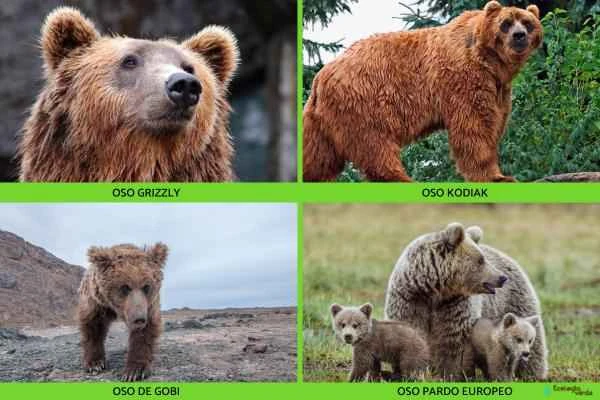
Widely distributed, covering Eurasia and North America, it has 16 subspecies, the most famous of which include:
Grizzly bear (Ursus arctos horribilis) : A subspecies found in North American forests, often considered one of the most dangerous bears in the world.
Kodiak brown bear (Ursus arctos middendorffi) : A large animal that lives in Alaska.
Gobi brown bear (Ursus arctos gobiensis) : distributed in Mongolia.
European brown bear (Ursus arctos arctos) : Extending from the Iberian Peninsula to the Russian region.
Polar bear (Ursus maritimus)
Polar bears are the largest and strongest land carnivores, weighing up to 1 ton and reaching heights of up to 3 meters. Their pure white fur is adapted to the frigid Arctic environment, and their paws are lined with hair for grip. Polar bears are entirely carnivorous and primarily inhabit the ice-covered Arctic regions.
For details regarding the conservation status of polar bears and whether they are endangered, please click on the relevant content.

American black bear (Ursus americanus)
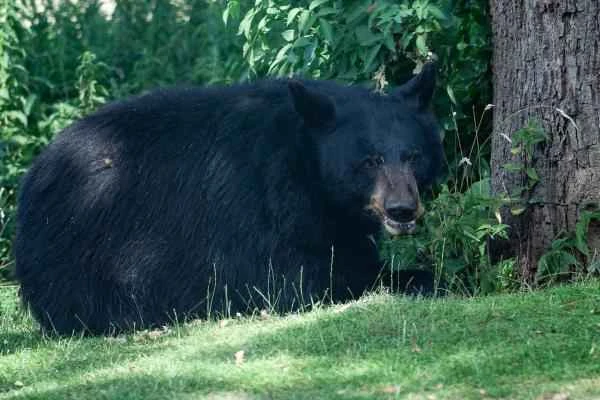
American black bears stand 1.2 to 1.9 meters tall, with predominantly dark black fur, though some varieties are lighter or brown. They are widely distributed across the diverse ecosystems of North America, with an estimated population of around 900,000, making them the most common bear species in North America.
Asiatic black bear (Ursus thibetanus)
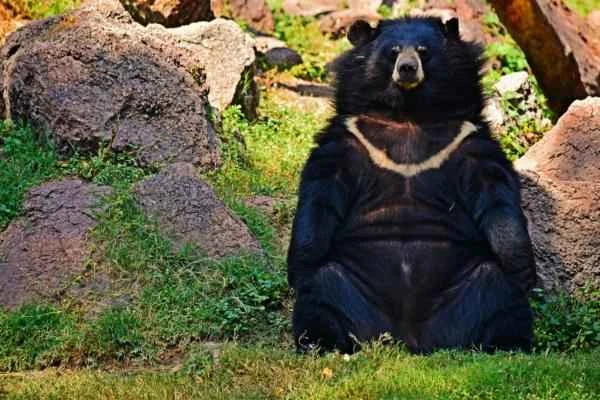
The Asian black bear differs from the American black bear; although similar in size, it has a distinct white V-shaped marking on its chest and thicker fur on its shoulders. It is distributed throughout the forests of Asia and has several subspecies. Black bears in tropical regions do not hibernate; only pregnant females hibernate.
Malayan sun bear (Helarctos malayanus)
Sun bears are shy and active during the day, becoming nocturnal when disturbed. They live in the forests of Asia, feeding on insects, fruits, buds, honey, and small animals, and occasionally prey on deer. Due to the tropical climate without severe cold, they do not hibernate. They are adept climbers and are among the most arboreal bear species. They face endangerment due to illegal hunting and deforestation.
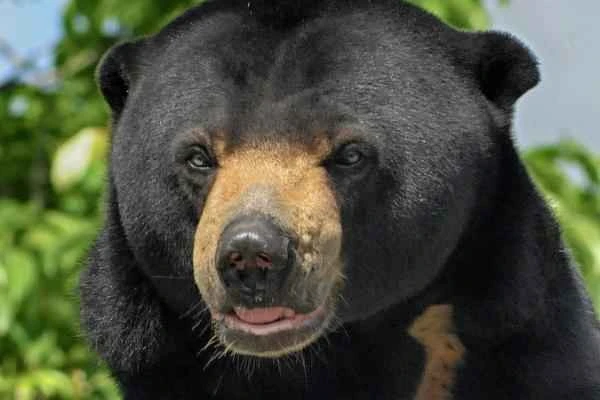
Spectacled Bear (Tremarctos ornatus)
Spectacled bears are mainly found in the cloud forests of the Andes Mountains in South America, and stand 1 to 1.8 meters tall. They are excellent climbers, and their diet consists of fruits, insects, small amounts of meat, and plants. Their coat is primarily black, with light-colored markings around their faces resembling "spectacles." Due to poaching and habitat destruction, their population has declined drastically, and several conservation organizations are currently dedicated to protecting their survival.
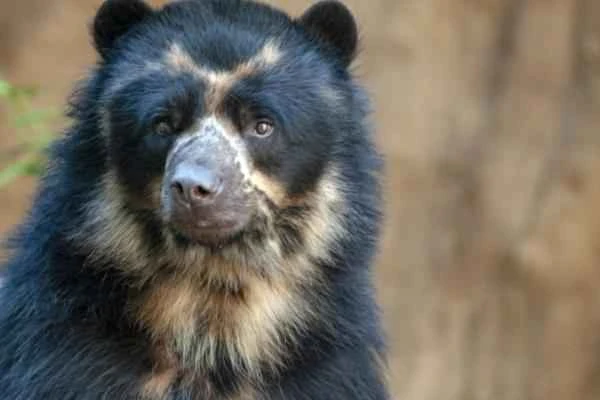
Honey bear (Melursus ursinus)
Honey bears have thick, bushy fur and live in India and surrounding areas, inhabiting diverse environments. They possess strong claws, allowing them to dig termite nests and feed on termites using their protruding snouts. They range in length from 1.4 to 1.9 meters. Commonly known as "lazy bears," they are nocturnal and move slowly.

Giant panda (Ailuropoda melanoleuca)
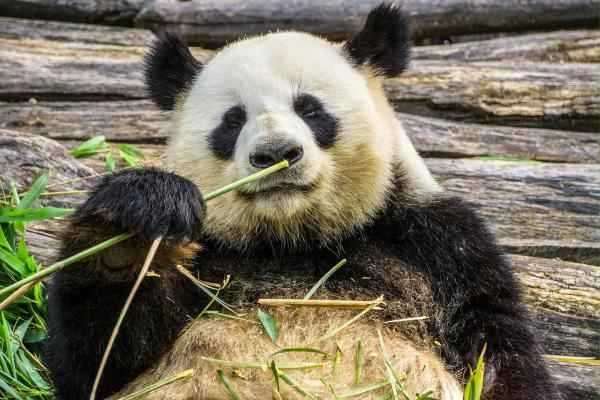
The giant panda is the only extant bamboo-eating bear species. Its body is predominantly white, with black eyes and ears. It spends most of its daytime resting, feeding on bamboo when awake. Because bamboo is low in nutrients and has a slow metabolic rate, it is mainly distributed in the forested mountainous regions of China.
Giant pandas have pupils that resemble the vertical pupils of felines, hence their common Chinese name "cat-bear." For detailed information on whether giant pandas are endangered, please refer to relevant science articles.
If you would like to learn more about bears, please visit our "Wildlife" section for more fascinating content.
bibliography
Beatty, R., Beer, A., and Deeming, C. (2010). The Book of Nature. Doreen Kindersley, UK.