When you think of ferocious beasts in nature, what names come to mind? Perhaps the massive bear, the cooperative wolf, or the small but incredibly powerful wolverine. These three animals each have their own unique characteristics, but if they were to face off, who would prevail? Today, we'll provide a comprehensive analysis of their strengths, answering your questions in a lighthearted and detailed way.
Table of contents
Three players made their appearance
Comparative analysis of physical fitness
Body size and weight
Strength and bite force
Speed and flexibility
Behavioral and ecological characteristics
Hunting strategy
social structure
Offensive and defensive capabilities
Hypothetical Scenario: Analysis of a Battle Between Three Ferocious Beasts
Wolverine vs. Bear
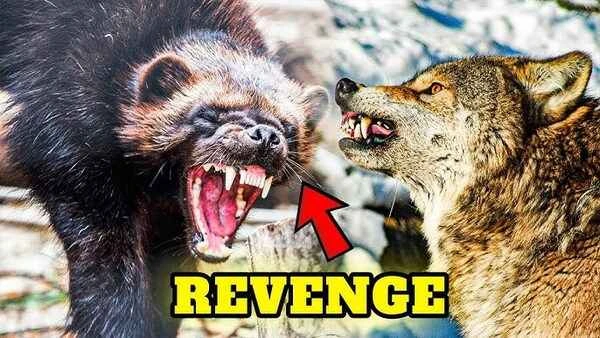
Wolverine vs. Wolf
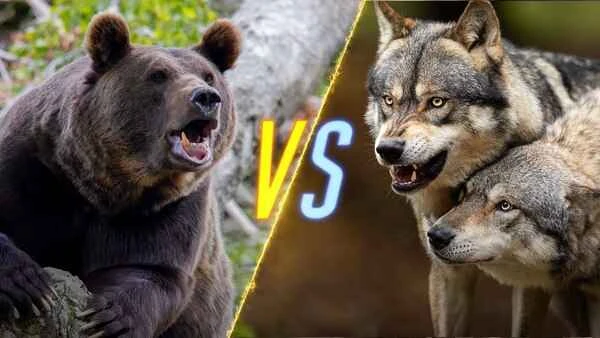
Bear vs. Wolf
Overall assessment: Who is the king of the wild?
In conclusion: Nature has no "strongest," only the most suitable survivors.
1. Three contestants make their appearance.
Wolverine
Nicknamed "Little Tank," it is the largest member of the weasel family.
Despite its small size, its fighting power is off the charts, capable of taking on prey several times its own size, or even bears!
Habitat: Cold forests and tundra regions of North America and Eurasia.
Bear
Whether it's a brown bear, a polar bear, or a black bear, they all give off an invincible feeling.
They are known for their strength, bite force, and size, and are true giants of the forest.
Habitat: Widely distributed from the Arctic to tropical forests.
Wolf
A master of strategy in grasslands and forests, renowned for his cooperative hunting methods.
While individual wolves may not be as strong as bears or wolverines, the intelligence and teamwork of a wolf pack make up for it.
Habitat: Found throughout North America, Europe, and Asia.
2. Comparative Analysis of Physical Fitness
Body size and weight
| animal | average weight | average length | Main features |
|---|---|---|---|
| wolverine | 9-25 kg | 65-90 cm | Small in size but muscular |
| Bear | 90-700 kg | 1.5-3 meters | Enormous and powerful |
| Wolf | 22-45 kg | 1.2-1.8 meters | Elegant figure, flexible bones |
Strength and bite force
Wolverine : Despite its small size, it can carry prey several times its own weight and even tear apart hard bones.
Bears : Bite force can reach 1200 PSI (brown bears), easily crushing bones.
Wolves : Bite force of about 400 PSI, suitable for tearing muscles, but slightly less than that of bears.
Speed and flexibility
| animal | speed | flexibility |
|---|---|---|
| wolverine | 30 km/h | Tall, skilled in climbing and short-distance sprinting |
| Bear | 56 km/h | In the middle, its straight-line speed is amazing, but it is rather clumsy when turning. |
| Wolf | 64 km/h | He is tall, and especially good at long-distance running. |
3. Behavioral and ecological characteristics
Hunting strategy
Wolverines : They win by perseverance, track prey, and even scavenge the carcasses of large animals for food.
Bears are omnivorous and can hunt large animals as well as use their sense of smell to search for plants, honey, or fish.
Wolves are adept at cooperative hunting and can surround and hunt prey larger than themselves, such as elk or bison.
social structure
Wolverine : A solitary animal with a strong sense of territory, it does not tolerate intruders.
Bears : They are usually solitary, but mother bears will bring their cubs.
Wolves : Highly social, with a clear group structure and a hierarchical leader system.
Offensive and defensive capabilities
Wolverine : Extremely aggressive, it almost never backs down from danger.
Bears : Moderately aggressive, but when threatened, their explosive power is unmatched.
Wolves : They rely on teamwork and will cautiously probe when facing danger alone.
4. Hypothetical Scenario: Analysis of a Battle Between Three Ferocious Beasts
Wolverine vs. Bear
| Features | wolverine | Bear |
|---|---|---|
| Aggressive | Extremely high | Medium (primarily defensive) |
| strength | Relatively weak, but with strong explosive power | overwhelming advantage |
| Battle strategy | Fight desperately, never retreat. | Use size and strength to overpower your opponent |
Winner: The Bear . The wolverine's resilience is admirable, but its chances of winning against the bear's immense strength are slim.
Wolverine vs. Wolf
| Features | wolverine | Wolf |
|---|---|---|
| Aggressive | high | Medium (depending on the environment) |
| flexibility | powerful | high |
| Hunting strategy | Individual combat | Teamwork is superior. |
Winner: Wolves (team advantage). However, in a one-on-one fight, the wolverine is very likely to have the upper hand.
Bear vs. Wolf
| Features | Bear | Wolf |
|---|---|---|
| strength | Invincible Beast | Not in a dominant position |
| Attack strategy | Simple and direct, crushing the opponent | Use group harassment to gradually wear down the opponent. |
| defensive capabilities | Thick skin and obvious body size advantages | More reliant on speed and dodging |
Winner: Bear . Wolves typically don't engage bears one-on-one; instead, they use harassment tactics to force the bears to retreat.
5. Overall Evaluation: Who is the King of the Wild?
If we're talking about strength: the bear is undoubtedly the champion, almost invincible in a one-on-one fight.
If we're talking about teamwork: wolves win because of their intelligence and team spirit.
In terms of resilience and fighting spirit: the wolverine won the championship with its courage and fearless spirit.
6. Conclusion: In nature, there is no "strongest," only the most suitable survive.
These three predators are all top predators in their respective environments, each with its own unique survival strategies, and there is no absolute winner. The wolverine demonstrates the courage of a small predator, the bear embodies overwhelming strength, and the wolf amazes with its intelligence and teamwork.
Who do you think will be the winner? Feel free to share your thoughts in the comments!