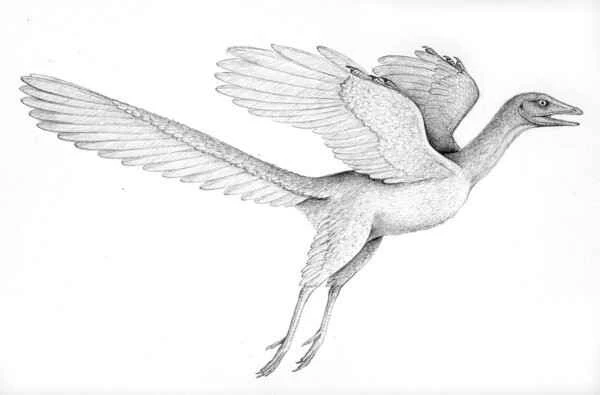
Many features of early and modern birds first appeared in theropod dinosaurs. Feathers, furcula, modified "flapping" forelimbs, and hollow bones were found in Coelurosaurus.
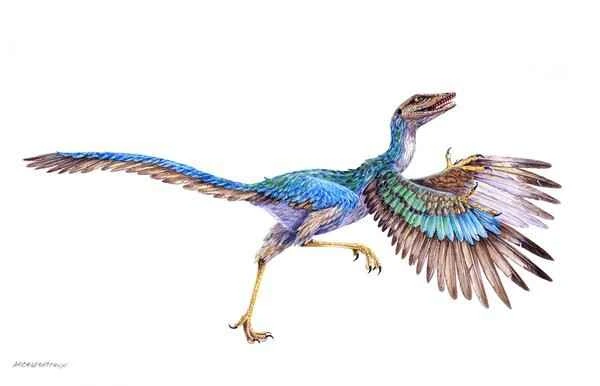
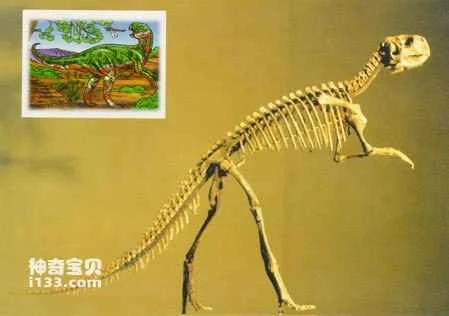
Coelurosaurus is a theropod dinosaur that includes Tyrannosaurus Rex and Dromaeosaurus.
The latter includes members such as Bambiraptor and Velociraptor, which share a more recent common ancestor with birds. Considering who came first, perhaps we should stop describing dinosaurs as having bird-like behavior and start thinking of birds as behaving like dinosaurs.
Melong is a non-avian coelurosaur from China whose fossilized skeleton shows its head "hidden" under its forelimbs. This posture is similar to the "sleeping" posture commonly used by modern birds. This inferred behavior strengthens the connection between non-avian dinosaurs and birds.
Examples of bird-like dinosaurs include:
*Caudatanius*. Fossil from China, Early Cretaceous, 130–122 million years ago. Classification: Theropoda; Oviraptorosauria. The name *Caudatanius* means "tail feathers," referring to the tail feathers possessed by this non-avian dinosaur, which may have been fanned out for display. The rest of the body was covered with short, primitive feathers, with longer feathers on the arms and tail.
*Sinosauropteryx*. A fossil from China, Early Cretaceous, 130–122 million years ago. Classification: Theropoda; Compsognathidae. Discovered in 1996, *Sinosauropteryx* is one of the most important fossil discoveries of this century. It was the first non-avian dinosaur discovered with feather-like structures, providing further evidence for the link between dinosaurs and birds. The shape of the melanosomes (tiny pigment sacs in cells) in its feathers indicates that it had a ginger-yellow body and white and ginger-yellow stripes on its tail. Its name means "China's first reptile wing."
Sinornithosaurus. A fossil from China, Early Cretaceous, 130-122 million years ago. Classification: Theropoda; Dromaeosauridae. Sinornithosaurus may have been adapted to jumping. Its strong tail served for balance, precise positioning, and the release of powerful claws. It's difficult to say whether this helped in attacking prey or leaping between branches. Sinornithosaurus is one of the earliest feathered dinosaurs discovered.
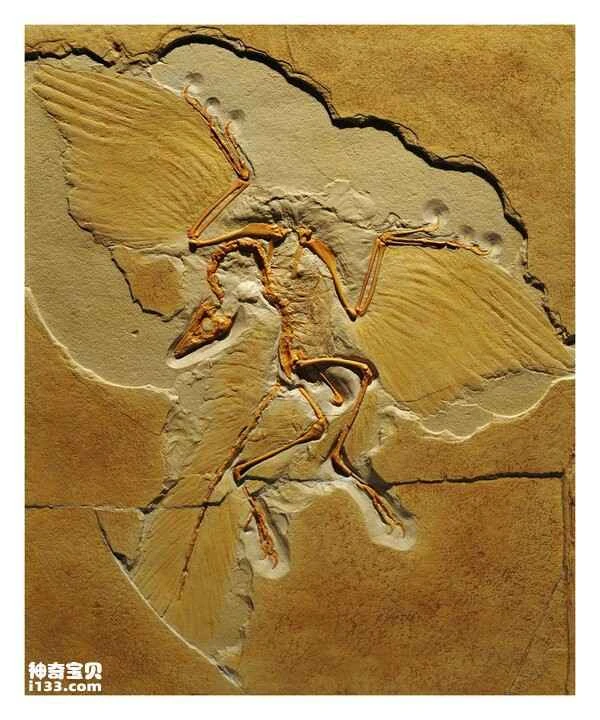
The earliest known feathered dinosaur
Although it is generally believed that a small group of theropod dinosaurs evolved into birds, feathered dinosaurs that predate the earliest known bird, Archaeopteryx (150myo), have proven elusive in the fossil record. It wasn't until 2009 that *Anchiornis huxleyi* was announced. This species, discovered in China, dates back 161 to 151 million years and had well-developed feathers on all four limbs. This was followed by the announcement of another stunning new feathered dinosaur, *Haplocheirus sollers*, also from China, dating back approximately 160 million years. *Haplocheirus sollers*, a type of *Avalachosaurus*, belonged to a group of dinosaurs once thought to be flightless birds, but lacked bird-like features found in later *Avalachosaurus*, such as fused wrist bones and a posteriorly projecting pubis.
The Dinosaur-Bird Transformation
Modern birds, early birds, and coelurosaurs share many physical characteristics:
feather
Hollow thin-walled bone
Wrist bone
Improved shoulders and forelimbs allow the hands to fold over the forearms.
Improve the wrist (lunula).