The Jehol Group in western Liaoning is a famous Mesozoic terrestrial stratum in China and has always held an important position in the history of Chinese paleontological stratigraphy. However, although this stratum has yielded numerous plant fossils, invertebrate fossils, and fish fossils, the discovery of dinosaur fossils was extremely rare before 1996.
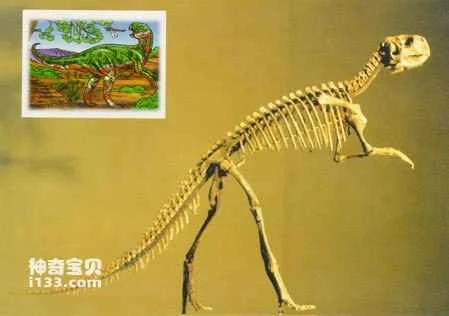
Psittacosaurus mongolica
Psittacosaurus is one of the few dinosaur species previously discovered. It was previously only found in the Lower Cretaceous Jiufotang Formation of Meileyingzi, Shengli Township, Chaoyang County, Liaoning Province. Psittacosaurus belongs to the Ceratopsian suborder of the order Ornithischians and is a bipedal, herbivorous dinosaur. The Jiufotang Formation of Psittacosaurus includes two genera and species: *Psittacosaurus mongolicus* and *Psittacosaurus meleyingziensis*.
Since the mid-1990s, the "sleeping dragon land" of the Jehol Group in western Liaoning Province has suddenly awakened. In just 5 to 6 years, a large number of dinosaur fossils have been discovered, which has not only greatly enriched our understanding of the dinosaur world, but also provided sufficient evidence for the theory that birds originated from dinosaurs.
The rise of dinosaur fever in the Jehol Biota of western Liaoning is largely attributed to the discovery and dramatic research process of *Sinosauropteryx*. The holotype specimen of *Sinosauropteryx* was excavated in 1996 by local farmer Mr. Li Yinfang from the lower shale layer of the Yixian Formation in Sihetun, Shangyuan Town, Beipiao City, Liaoning Province. For various reasons, half of the specimen (the positive membrane) is now in the collection of the Geological Museum of China, while the other half (the negative membrane) has been acquired by the Nanjing Institute of Geology and Palaeontology, Chinese Academy of Sciences. Initially, researchers such as Ji Qiang considered *Sinosauropteryx* to be one of the most primitive birds on Earth, but this was later corrected to classifying it as a dinosaur belonging to the Compsognathidae family of theropods.
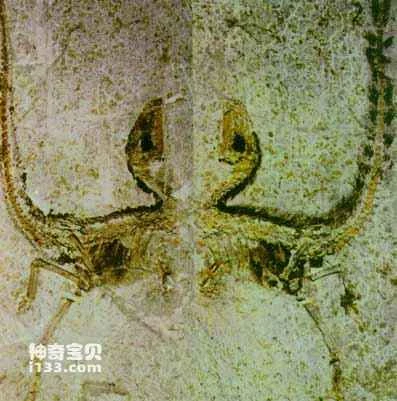
Sinosauropteryx
The Sinosauropteryx was about the size of a chicken, and its fossil form resembled a rooster crowing at dawn—head held high, tail raised. It had a large head, with its upper and lower jaws filled with sharp teeth bearing small serrations; its forelimbs were very short, and its tail was unusually long. On its back, from head to tail, grew a row of filamentous skin derivatives, which researchers such as Ji Qiang believe to be a type of primitive feather.
After that, various dinosaurs from the Jehol Group in western Liaoning were discovered in great numbers.
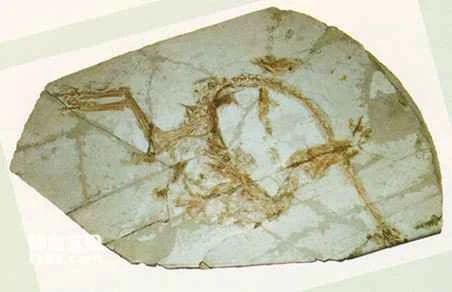
The second theropod dinosaur discovered in the lower part of the Yixian Formation is the robust, primitive Archaeopteryx. It looks remarkably like the dinosaur from the movie "Jurassic Park." Most surprisingly, it possessed real feathers on its tail!
Archaeopteryx
*Caudatania zouensis* is the second known theropod dinosaur in the world to possess true feathers. Incredibly, the fossils of *Caudatania zouensis* are found in a highly concentrated area; all known fossils were discovered in Zhangjiagou, less than two kilometers north of Sihetun, within the lower shale layer of the Yixian Formation. One explanation is that *Caudatania zouensis* was a gregarious animal.
The Caudineus, roughly the size of Archaeopteryx, likely belonged to the Oviraptorosauria suborder, representing a primitive type of oviraptorosaur. It had a short, high head and only a few teeth in its mouth; its forelimbs and tail were also short. Interestingly, its stomach contained a cluster of small stones with a completely different lithology from the surrounding rock, clearly similar to gastroliths commonly found in the stomachs of modern birds, functioning to grind and aid digestion. The discovery of gastroliths in a theropod dinosaur is exceptionally rare! The Caudineus had a fan-shaped tuft of tail feathers at the end of its tail and a row of feathers on its forelimbs. These feathers had distinct shafts and developed vanes, very similar to modern bird feathers; the only difference was that the Caudineus's feathers were symmetrically distributed, while the vanes of bird feathers, including Archaeopteryx, are asymmetrically distributed. Scientists generally believe that asymmetrical feathers are necessary for flight, and the symmetrical feathers of the Caudineus likely represent a more primitive stage of feather evolution, not yet possessing the ability to fly. On the other hand, the skeletal morphology of the tailed bird also indicates that it was an animal that was good at running but could not fly.
Recently, Zhou Zhonghe, a researcher at the Institute of Vertebrate Paleontology and Paleoanthropology of the Chinese Academy of Sciences, named a newly discovered tailed bird, *Dong's tailed bird*.
In addition, scientists have also discovered important dinosaur fossils such as the unexpected Beipiaolong and Millennium Sinornithosaurus in the Jehol Group in western Liaoning. The ongoing in-depth research on these fossils will unravel more mysteries of dinosaurs.