There are countless well-known sea snail species in the world, varying greatly in size and value. This article compiles ten of the most famous and representative sea snail species globally: the Triton's Clam, the Crown Clam, the Phoenix Clam, the Nautilus, the Silver Clam, the Dragon Palace Clam, the Textured Clam, the Red Clam, the Cone Clam, and the Phoenix Clam. Let's learn more about them!
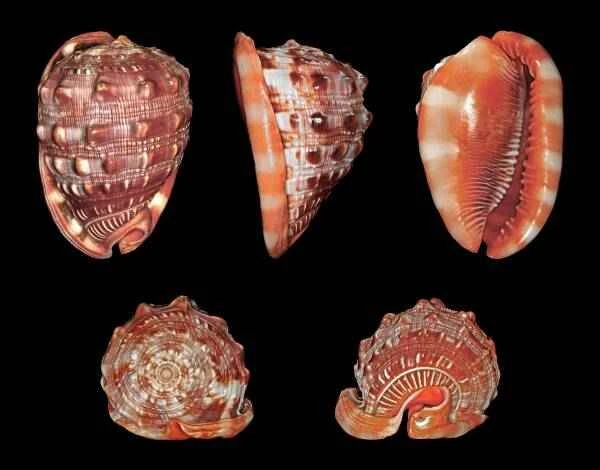
1. Treasure Shell
The Treasure Shell (Ceratophyllum demersum) is a type of snail in the family Garlandidae, considered one of the most ornamental species in the family. It is widely distributed around coral reefs in the tropical Pacific and Indian Oceans. Along with the Triton's Crown, the Phoenix Tail, and the Nautilus, it is renowned as one of the world's four most famous snails. The Treasure Shell is a relatively large shellfish, entirely golden in color, exuding an air of nobility. Its smooth and lustrous texture, coupled with its rarity and difficulty to catch, makes it highly valuable for collection, appreciation, and decoration. According to folklore, keeping a Treasure Shell at home can bring wealth and good fortune. Furthermore, some snail enthusiasts like to place Treasure Shells in their aquariums because their vibrant colors overshadow other decorations, making them appear like a giant red jewel shining in the water.
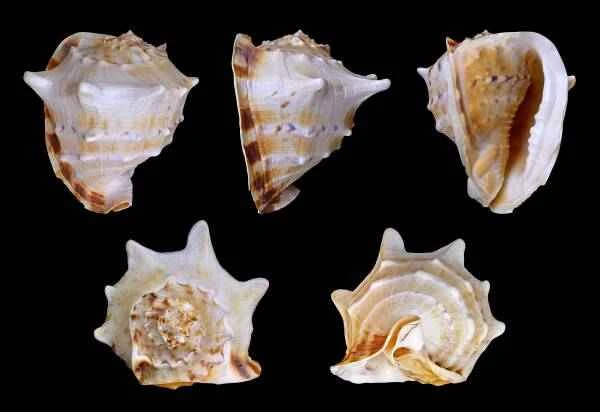
2. Triton's crown snail
The Triton's Crown Conch has a large, thick shell, reaching up to 30 centimeters in length and height, ranging in color from grayish-white to golden-yellow with a metallic luster. Its shape resembles a Tang Dynasty crown, hence its name. Due to its unique and beautiful appearance, the Triton's Crown Conch has become a prized possession for home decoration and collection, commanding a correspondingly high market price. Besides its ornamental value, the meat of the Triton's Crown Conch is edible, and its shell can be used for carving. It is mainly distributed in warm waters around the world, such as the coast of East Africa, Malaysia, Indonesia, the South China Sea, and Taiwan, typically inhabiting areas below the low tide line. Currently, the Triton's Crown Conch is listed as a Class II protected animal in China.
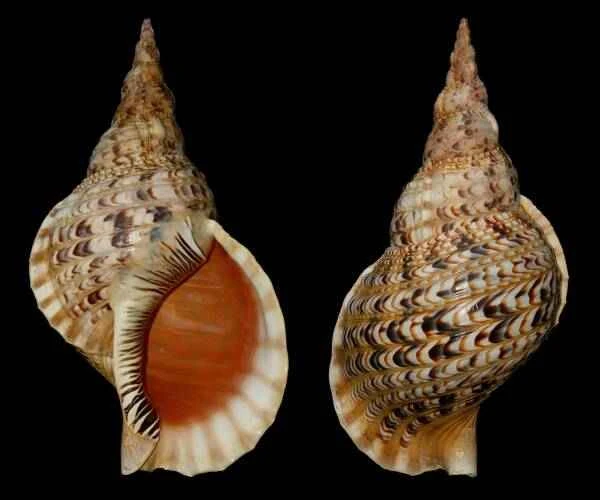
3. Conch
The conch shell, also known as the peacock conch, is a tall, pointed cone-shaped shell, often with a worn or damaged apex. It is mainly distributed in coral reefs in warm waters of the Indian Ocean, New Zealand, the Philippines, Japan, and China. The shell displays a magnificent pattern resembling a phoenix's tail, with evenly distributed and vibrant colors. The surface of the shell is richly decorated and can even be used as a horn. The conch shell displays a majestic and majestic appearance, and is considered a symbol of power. It is said to have the power to ward off evil spirits and bring peace, and therefore was regarded as a sacred object in ancient times, worshipped in some temples and monasteries. Due to its beautiful peacock tail-like patterns and rarity, the conch shell is one of the most precious conches in the world.
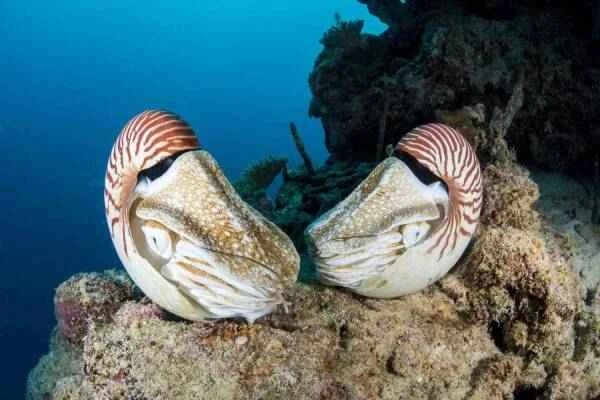
4. Nautilus
Nautiluses comprise two genera and six species. They possess smooth, disc-shaped spiral shells, resembling the beak of a parrot, hence their name. As one of the oldest primitive marine organisms on Earth, nautiluses existed as early as the Paleozoic Era. Today, only six species exist in the deep waters of the South Pacific Ocean, earning them the title of "living fossils of the ocean." Nautiluses are of immense value to research in fields such as biological evolution and paleontology. Like the giant panda in China, they are a rare species. Currently, nautiluses are listed as a Class I protected animal in China. To sell them, a resource protection fee of 30,000 yuan must be paid to the state for each nautilus, and approval from the Chinese Ministry of Agriculture is required for any such business.
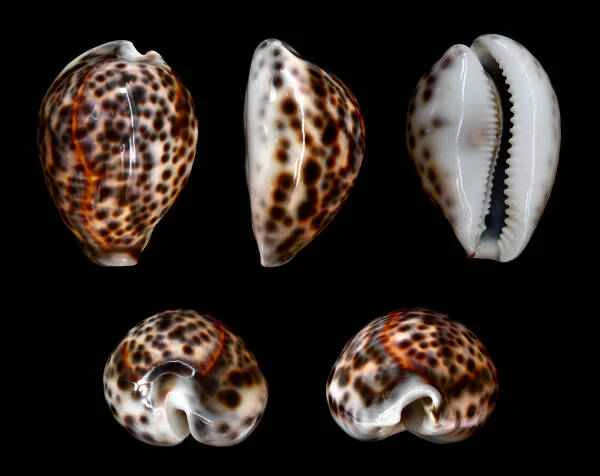
5. Conch
Cowrie shells are widely distributed in tropical and subtropical warm seas, commonly found in intertidal zones, rocky reefs, coral reefs, and muddy seabeds. There are a great variety, with 307 species. Cowrie shells are prized for their edibility, ornamental value, and decorative appeal, making them very popular. Among them, the black-spotted cowrie is particularly striking, its shell covered in black spots forming a jaguar-like pattern, its bright and eye-catching color captivating collectors. Due to the high quality and value of its shell, harvesters often bury it in sand, allowing the flesh to decompose before cleaning and selling it. Another species, the yellow cowrie, has been closely associated with humans since ancient times, historically used as a form of currency in various parts of the world.
6. Dragon Palace Old Man Snail
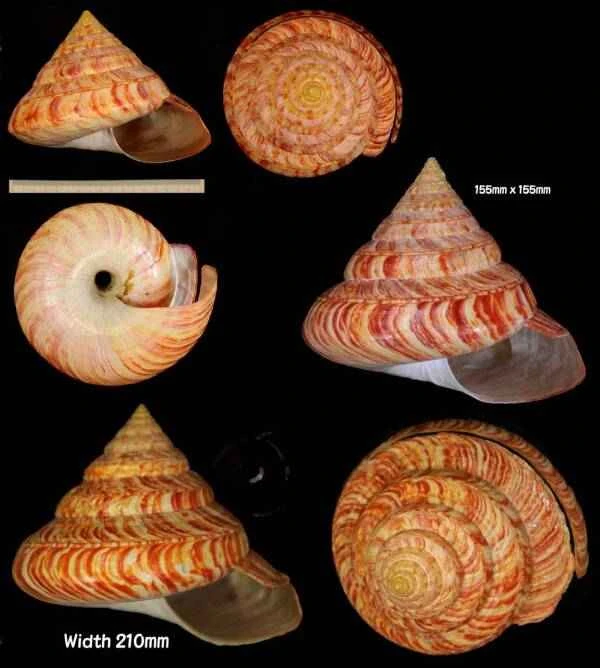
Sea snails are a type of snail with a long history, first appearing 570 million years ago during the Cambrian period. Today, they are mainly distributed in the waters of the West Indies, Indonesia, Japan, South Africa, and Central America. According to incomplete statistics, there are more than 15 extant species of sea snails. Among them, the Ryugu sea snail is one of the largest and most beautiful varieties. Having undergone hundreds of millions of years of evolution, the Ryugu sea snail still retains the same morphology as its ancestors, earning it the title of "living fossil of the ocean" from biologists. Therefore, it possesses extremely high rarity and has become a sought-after target for collectors in the sea snail collecting world. The collecting culture of Ryugu sea snails has a long history in Europe, America, and Taiwan. In Taiwan, a Ryugu sea snail in good condition once sold for as much as NT$250,000.
7. Textured snail
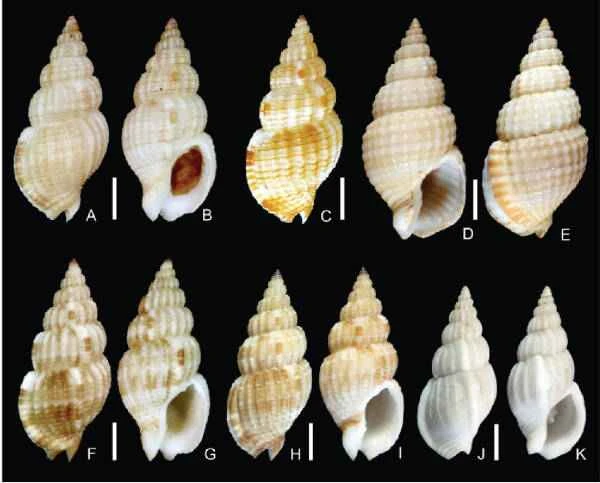
The whelk, also known as the sea snail or wheat snail, is a small snail, about 1 cm long and 0.5 cm wide, with an operculum about the size of a fingernail. In the past, it was one of the main edible snails in the southeastern coastal areas of China, and in places like Putian, Fujian, there was even a custom of eating snails during festivals. Cooked whelks have a distinctly colored appearance, are white and round, and have tender, slightly chewy flesh. However, in recent years, due to marine pollution and frequent red tides, the toxicity of salicylic acid (a toxin) in whelks has increased. Consuming them can cause dizziness, vomiting, and numbness in mild cases, and even death in severe cases. To protect public health, the Ministry of Health of China has explicitly banned the sale of whelks.
8. Red snail
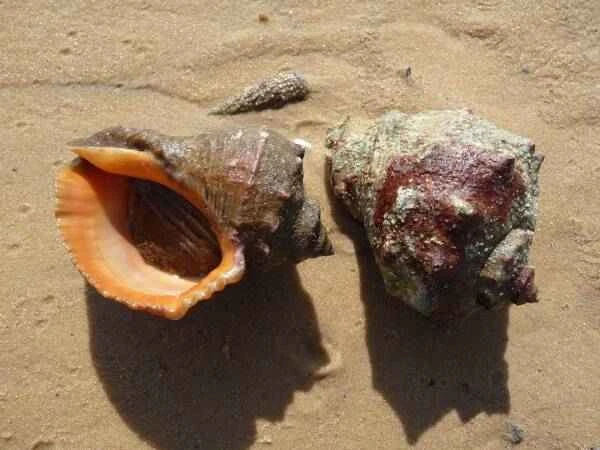
The red whelk is a type of mollusk with a large, thick, rough shell, a wide opening, and a smooth interior, appearing red or grayish-yellow. It is hermaphroditic. In China, two common types of red whelks are widely distributed and quite common. One type is found along the southern and northern coasts, while the other, the wrinkled red whelk, is found only along the southern coast. The meat of these whelks, especially the foot muscle, is very plump, similar to abalone, and is considered a high-quality seafood. In fact, besides consuming the meat, the shell of the red whelk is also very useful. Shell carving factories often use it to make smoking accessories or other small handicrafts, which are very popular. People who enjoy visiting the seaside also like to collect red whelk shells as souvenirs.
9. Phoenix Conch
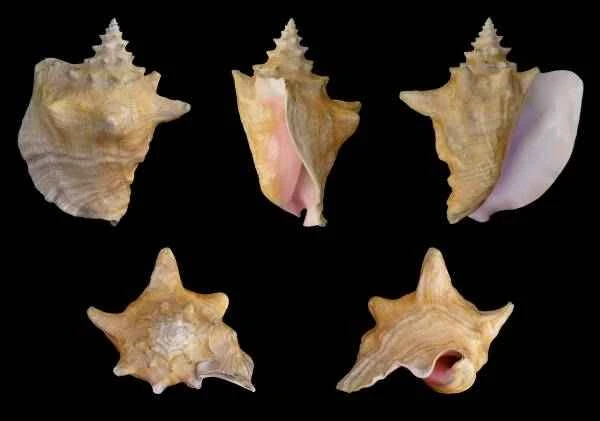
The whelk is a distinctive mollusk, most notably characterized by its well-developed eyes and sharp, retractable tentacles on its eyestalks. Furthermore, its shell is adorned with a rich variety of decorative patterns, making it very eye-catching. It is mainly distributed in tropical and subtropical waters, such as the Indo-Pacific region south of Amami Island, Japan, north of Australia, and east of East Africa. There are as many as 139 species of whelks, among which the most representative include the East African water snail, the vase whelk, and the black-mouthed whelk. The meat of the whelk is edible, and its uniquely shaped, beautifully colored, and glossy shells are highly valued for their ornamental qualities and can also be used to make decorative items.
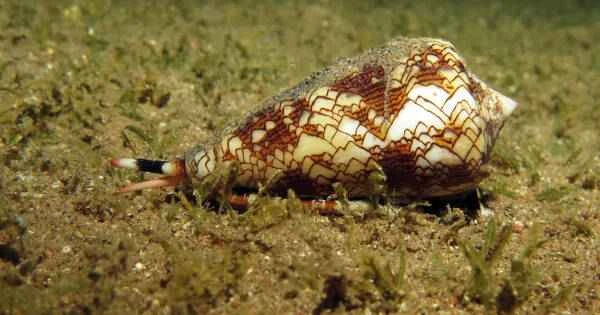
10. Cone snail
Cone snails, also known as heart-shaped conches, mainly inhabit the waters off the coast of Africa, the Red Sea, India, Ceylon, Japan, and the Xisha Islands. They are beautiful shellfish living on coastal coral reefs and beaches. There are over 500 species of cone snails worldwide. Their shells are slender at the front and thick at the back, resembling a chicken's heart or a taro. Their bodies display a variety of colors and patterns, creating a vibrant and colorful spectacle. Despite their high ornamental value, cone snails are highly venomous. Their venom contains hundreds of different components; the venom from a single cone snail is enough to kill ten people. Among them, the Cone Snail (also known as the General Cone Snail) and the Variegated Cone Snail (also known as the Brocade Cone Snail) are considered the most representative and enjoy extremely high popularity.
The list of the world's top ten famous conches is primarily based on the social value and popularity of different types of conches. This list is for reference only; please feel free to comment and discuss any questions at the end.