When you hear the name "Aardvark," you might first think of its strange name. But did you know that this African creature, which looks like a "pig + kangaroo + ant bear," is actually the only one of its kind in the entire mammal world? They are addicted to digging burrows, are insect-eating fanatics, and may even be the source of inspiration for Egyptian mythology... Today, let's get to know this mysterious yet real underground overlord.
First, the name "Aardvark" is quite strange; it means "earth pig."
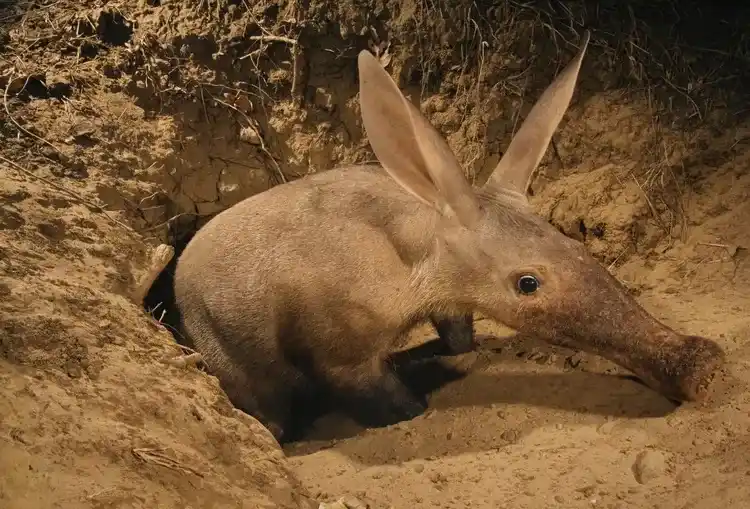
After sunset, nocturnal guinea pigs leave their burrows.
The name "Aardvark" originates from 17th-century Dutch colonists and means "earth pig." This is because they love to burrow into the ground and have a pig-like snout, hence the name. They are also known as "African anteaters" or "Cape anteaters," but the word "aardvark" consistently places it on the first page of English dictionaries and children's animal books.
Second, it has only one "relative" in the entire world.
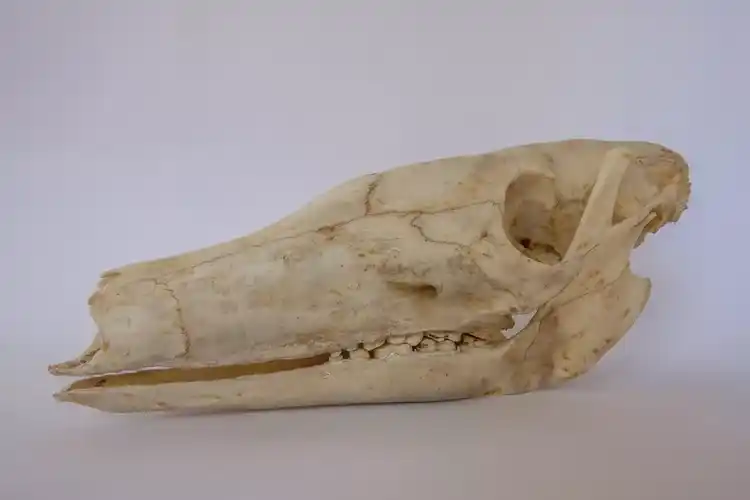
The skeletal remains of the aardvark revealed its back teeth.
The aardvark is the only mammal belonging to the order Tubulidentata, and its scientific name is *Orycteropus afer* . Its teeth have a very unique structure—instead of the common incisors or molars, they are composed of thousands of tubular columnar teeth filled with a dentin-like substance. Strangely, it is born with "normal teeth," but these soon fall out and are replaced by the tubular teeth.
Third, it is much larger than you might imagine.
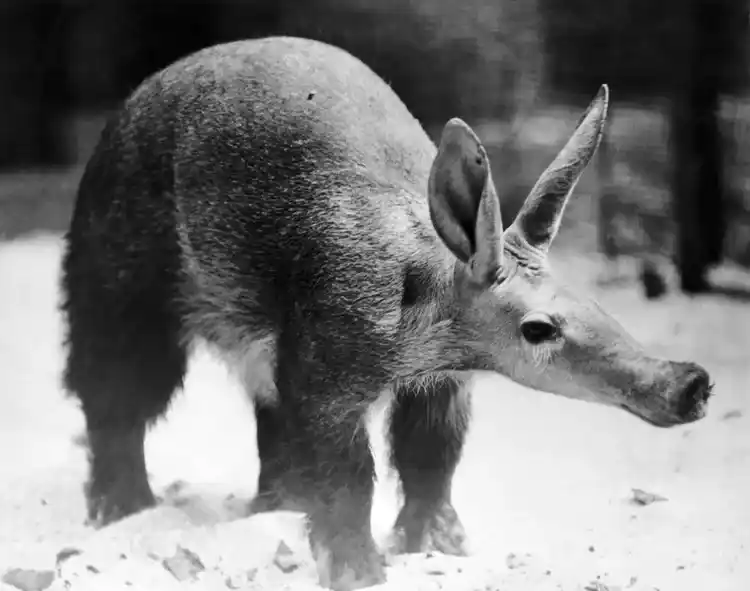
A close-up of an aardvark.
Don't be fooled by their cute cartoon appearances. Adult aardvarks weigh between 60 and 80 kilograms , equivalent to an adult human! They have arched bodies, short and sturdy legs, four toes on their front feet and five toes on their hind feet, and each toe is equipped with hook-like claws that resemble shovels—designed specifically for "crazy digging."
Fourth, the tunnels it dug are comparable to underground labyrinths.
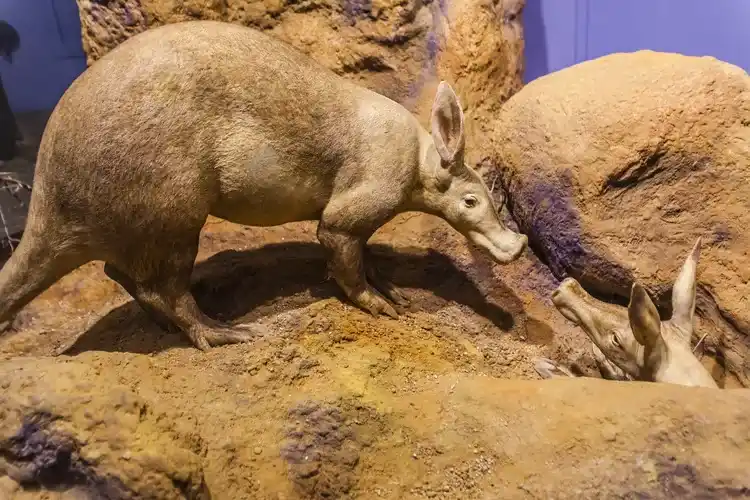
Aardvarks are expert burrowers, and their burrows can reach up to 40 feet (about 12 meters).
Aardvarks don't just dig any old burrow. They can excavate tunnel systems 30 to 40 feet (over 10 meters) long , providing excellent shelter for cooling, defense, and breeding. They also build multiple "temporary burrows" as temporary residences. Even more impressively, after they move, these tunnels are often "taken over" and utilized by warthogs, meerkats, snakes, owls, and other animals, making them veritable real estate tycoons of the African savanna!
Fifth, they are distributed throughout sub-Saharan Africa.
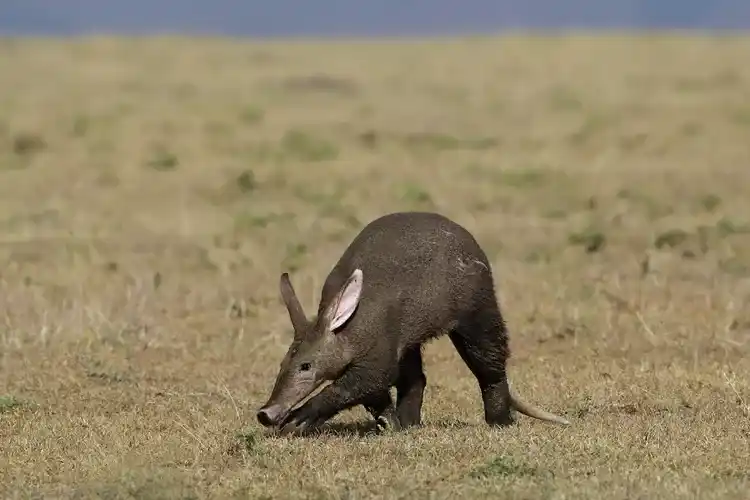
Some aardvarks live on grasslands, while others live in jungles, savannas, or mountains.
Aardvarks are found almost everywhere on the African continent, in grasslands, scrublands, savannas, and even mountainous areas. They avoid wetlands and swamps , however, because the soil there is too shallow, making it easy to encounter water while burrowing, which is detrimental to their survival. They have also never set foot on Madagascar, because geologically, the island separated from the African mainland long before the aardvark appeared.
6. Eating 50,000 ants a day? And relying on its "stomach" to chew them?
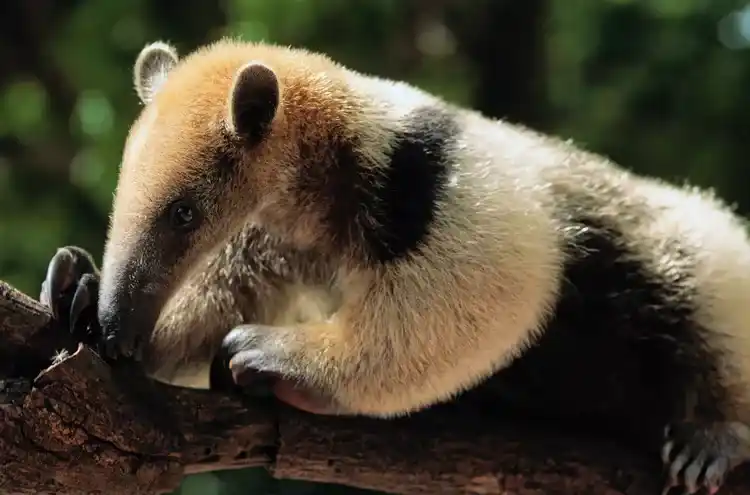
Anteaters forage on wood and can eat up to 30,000 ants and termites a day, while aardvarks eat even more, up to 50,000.
Aardvarks are nocturnal, using their sticky tongues, up to 30 centimeters long, to lick up ants and termites, consuming up to 50,000 in a single night. Since their teeth cannot chew, they swallow their food whole, then digest it by "grinding" it with their strong stomach walls. In addition, they occasionally eat a special plant called "aardvark cucumber," which even relies on aardvark feces to spread its seeds—a mutually beneficial arrangement.
7. It may be the mammal with the most sensitive nose in the world.
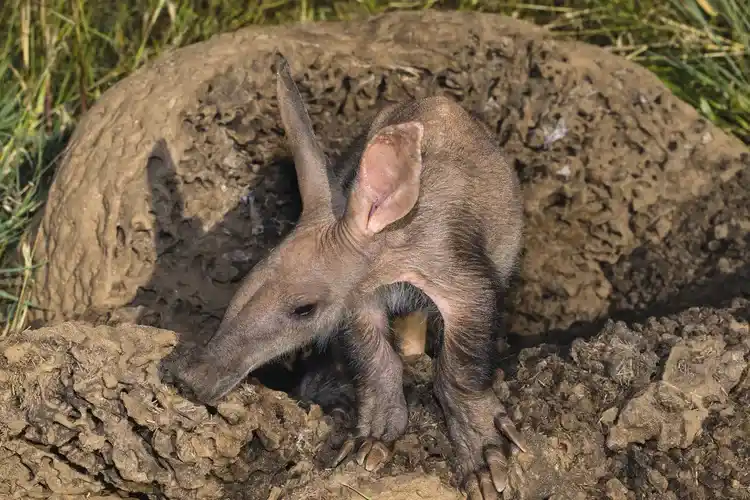
An aardvark is searching for its next meal on a termite mound.
Don't assume that dogs have a keen sense of smell. Aardvarks have about 10 nasal turbinate bones in each nasal cavity (dogs only have 4-5), plus a large area of odor-sensing epithelial tissue on the inner wall, which allows them to easily sniff out the traces of ants or termites underground. Their olfactory lobe is also exceptionally well-developed, making them true "masters of smell."
8. It is completely different from the "American anteater".
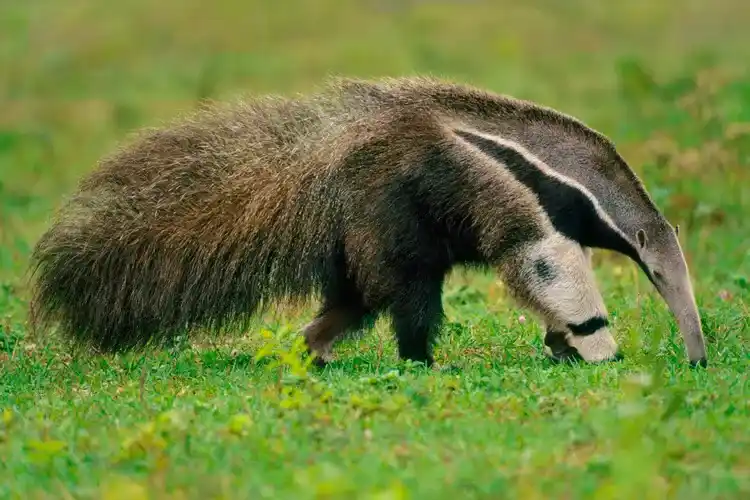
A large anteater forages for food in the grass.
Although they look like "relatives," aardvarks and South American anteaters are almost completely unrelated in biological classification. They are creatures from entirely different continents, and the fact that they are mistaken for each other simply because they "look alike" and "both eat ants" is actually a classic case of "convergent evolution."
9. It may have been the inspiration for the ancient Egyptian god Set.
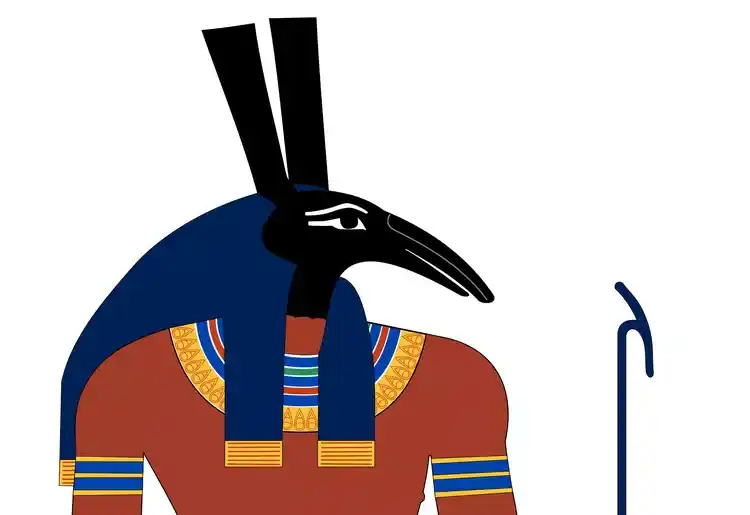
Some people believe that the head of the Egyptian god Set looks like that of an aardvark.
In ancient Egyptian mythology, there is a god named Set , often depicted as a mysterious creature with long ears and a pointed snout. Some scholars believe this may originate from descriptions of aardvarks in trade between ancient Egyptians and southern Africa. However, others suggest Set resembled a donkey, a jackal, a fox, or even a giraffe. While Set's true form remains a mystery, the claim that he "looked like an aardvark" is certainly intriguing.
10. It's actually the protagonist of 300 issues of the comic!

The comic book anti-hero, Cerberus the aardvark.
You might not know that an aardvark was once the most famous animal character in North American comic book history! From 1977 to 2004, Canadian cartoonist Dave Sim created a satirical comic called Cerebus, featuring a grumpy anthropomorphic aardvark as the main character. The story spanned 300 issues and thousands of pages, making it a unique masterpiece in the world of comics.
In conclusion
The aardvark, this seemingly unassuming "underground hermit," possesses unparalleled adaptability, a unique appearance, and rich cultural symbolism. It may not be the most dazzling animal, but it is an indispensable part of the African ecosystem.
If you enjoy this kind of niche yet interesting animal science, please follow us! We'll take you to unlock a new wild world every day!